
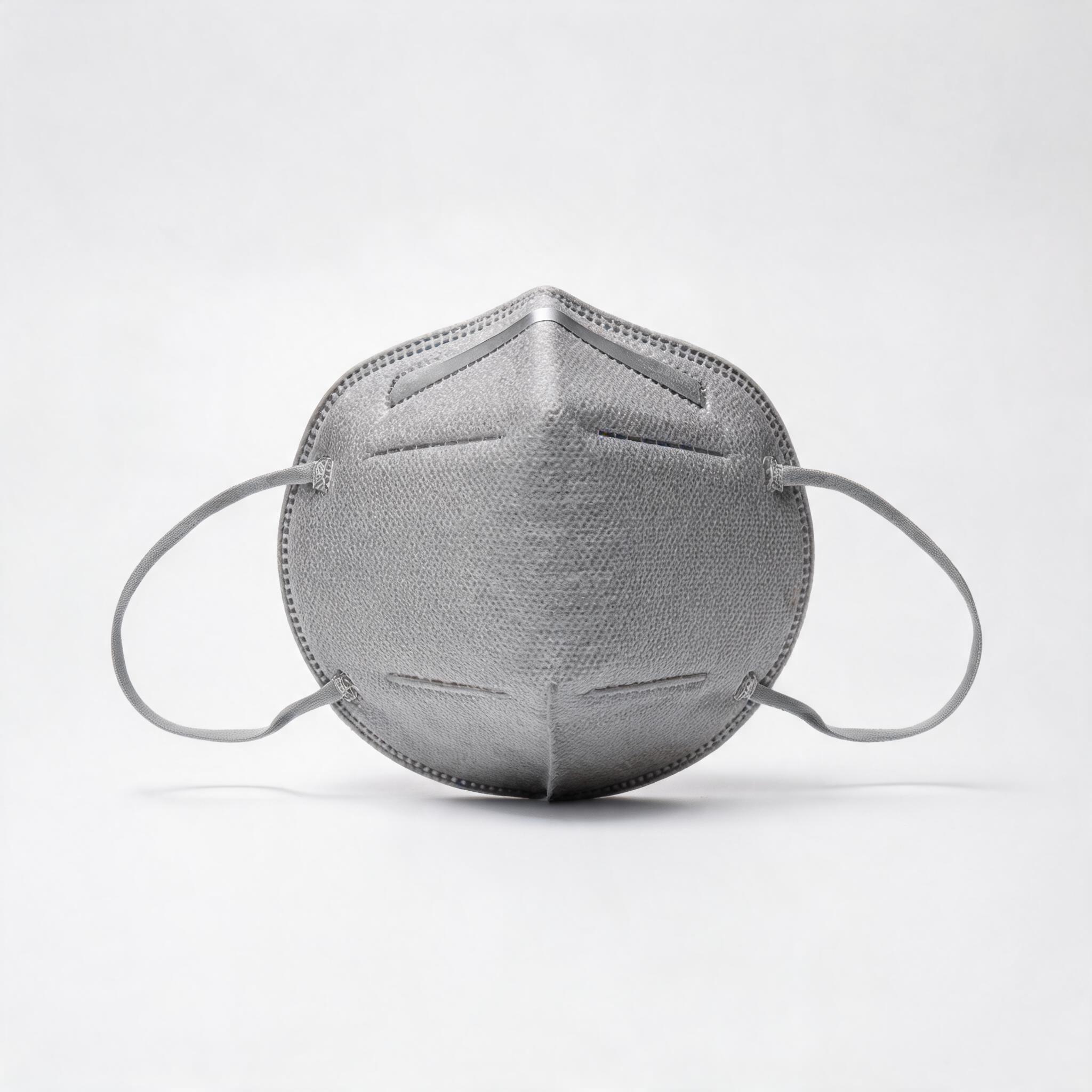
دليل شامل حول قابلية التنفس والراحة في أجهزة التنفس KN95 لفرق مشتريات B2B، يتناول معايير مقاومة التنفس، وعوامل التصميم، والمتطلبات الخاصة بكل تطبيق، وتقييم الموردين.
Breathability is one of the most overlooked yet consequential parameters in KN95 respirator procurement. While filtration efficiency dominates specification sheets and compliance documents, it is breathing resistance that determines whether a respirator will actually be worn correctly for the full duration of a shift. A respirator that filters at 99% but causes labored breathing will be removed, adjusted improperly, or worn inconsistently-eliminating any protection benefit.
Understanding Breathing Resistance in KN95 Standards
Breathing resistance refers to the pressure drop a wearer experiences when inhaling and exhaling through a respirator. It is measured in Pascals (Pa) and tested under standardized conditions specified by the GB2626-2006 standard under which KN95 respirators are certified.
The GB2626-2006 standard sets the following limits for KN95-class respirators:
- Inhalation resistance: ≤350 Pa at 85 L/min flow rate
- Exhalation resistance: ≤250 Pa at 85 L/min flow rate
These limits ensure that the respirator does not impose an unacceptable breathing burden on the wearer. However, a respirator that meets the maximum allowable resistance is not necessarily comfortable for extended wear. The most comfortable respirators achieve filtration targets at significantly lower resistance values.
Buyer's note: When evaluating supplier test reports, look not just for pass/fail against the GB2626 limit, but for the actual measured value. A respirator testing at 120 Pa inhalation resistance will be far more comfortable than one testing at 340 Pa, even though both pass.
How Breathing Resistance Affects User Compliance
The relationship between breathing resistance and user compliance is well-documented in occupational health research. As breathing resistance increases, wearers experience:
- Increased work of breathing: The respiratory muscles must work harder to pull air through the filter, leading to fatigue, particularly during physical exertion.
- CO2 retention: Higher exhalation resistance means more CO2 is trapped in the respirator's dead space, leading to rebreathing of carbon dioxide. Symptoms include headache, dizziness, and reduced cognitive performance.
- Heat and moisture buildup: Exhaled air that cannot escape efficiently raises temperature and humidity inside the respirator, causing discomfort and skin irritation.
- Mask adjustment and removal: Discomfort drives wearers to touch, adjust, or remove the respirator-which breaks the seal and introduces contamination risk.
For procurement teams managing large-scale respiratory protection programs, the cost of non-compliance due to discomfort far exceeds the marginal cost difference between a standard and a high-comfort respirator.
Factors That Determine KN95 Breathability
Several design and material factors influence a KN95 respirator's breathing resistance. Understanding these helps buyers evaluate whether a respirator's comfort profile is appropriate for their application.
Meltblown Basis Weight and Density
The meltblown layer provides filtration, but it also presents the primary resistance to airflow. Higher basis weight (gsm) meltblown fabric offers better filtration but increases breathing resistance. Manufacturers must balance filtration efficiency against breathability. The meltblown quality directly affects this balance-tighter fiber packing and higher electrostatic charge allow lower basis weight while maintaining filtration, resulting in better breathability.
Electrostatic Charge Efficiency
Electrostatic charging allows the meltblown layer to capture particles through attraction in addition to mechanical filtration. This means that a charged meltblown fabric can achieve the same filtration efficiency as a thicker, uncharged fabric at lower density-and therefore lower breathing resistance. The electrostatic charge is the single most important factor enabling high-filtration, low-resistance respirator design.
Respirator Design: Cup vs Flat-Fold
The physical design of the respirator affects airflow dynamics. Cup-style respirators maintain a consistent breathing cavity-the space between the filter surface and the wearer's mouth and nose. This cavity distributes airflow across a larger filter surface area, reducing local resistance. The valved respirator design further reduces exhalation resistance by providing a dedicated exhalation pathway that bypasses the filter.
Flat-fold respirators, while more compact for storage, can collapse against the face during heavy breathing, reducing the effective filter surface area and increasing localized resistance. This is a key reason why cup-style respirators are preferred for extended-shift and high-exertion applications.
Exhalation Valve
A one-way exhalation valve dramatically reduces exhalation resistance by providing a direct path for exhaled air to exit the respirator without passing through the filter medium. For applications where source control (protecting others from the wearer's exhalations) is not required, valved respirators offer the lowest breathing burden.
| Design Type | Typical Inhalation Resistance | Typical Exhalation Resistance | Best Application |
|---|---|---|---|
| Cup, no valve | 120-200 Pa | 100-180 Pa | Healthcare, source control required |
| Cup, with valve | 120-200 Pa | 30-60 Pa | Industrial, high-exertion, warm environments |
| Flat-fold, no valve | 150-250 Pa | 120-220 Pa | General use, short-duration wear |
Delta P: The Breathability Metric Buyers Should Request
In addition to the GB2626 breathing resistance test, many international standards use a metric called Delta P (differential pressure) to express breathability. Delta P measures the pressure drop across the mask material per unit area, expressed in Pa/cm². A lower Delta P indicates better breathability.
For context, EN 14683 Type II surgical masks require Delta P ≤40 Pa/cm². While this is a different standard than GB2626, buyers who need to compare respirator comfort across product types can request Delta P data from their supplier as a supplementary comfort indicator.
Comfort Features Beyond Breathing Resistance
While breathing resistance is the primary comfort metric, several additional design features affect wearer comfort during extended use:
Inner Layer Material
The inner layer of a KN95 respirator contacts the wearer's skin. Soft, hypoallergenic spunbond polypropylene reduces dermal irritation, which is a significant factor in extended-wear compliance. Some respirators include a foam nose cushion that improves both comfort and seal quality.
Strap Design
Ear loop straps concentrate tension on the ears, which can cause pain and headaches after several hours. Head strap designs distribute tension across the back of the head, allowing longer wear without discomfort. For shifts exceeding 4 hours, head strap designs are strongly recommended.
Nose Clip Design
A well-designed nose clip should be malleable enough to conform to facial contours without excessive pressure. Poorly designed clips can create pressure points on the nasal bridge, leading to skin breakdown during extended wear. Cup-style respirators with pre-formed nose pieces eliminate this issue.
Weight
Heavier respirators increase neck strain during extended wear. Lightweight designs (under 5g per unit) minimize this burden. The ergonomic design of the respirator affects not only comfort but also the likelihood of proper donning and consistent wear.
Breathability Testing in Supplier Evaluation
When evaluating KN95 suppliers, request the following breathing resistance data as part of the technical documentation:
- Inhalation resistance (Pa) at 85 L/min flow rate per GB2626-2006
- Exhalation resistance (Pa) at 85 L/min flow rate per GB2626-2006
- Delta P (Pa/cm²) if available, for cross-standard comparison
- CO2 dead space volume (mL) - the internal volume of the respirator that traps exhaled air
- Test report from an accredited laboratory (not self-declared data)
Suppliers that cannot provide measured breathing resistance data-only a pass/fail statement-should be treated with caution. The actual resistance value tells you far more about wearer comfort than a simple pass against the maximum limit.
Application-Specific Breathability Requirements
Different applications have different breathability requirements. Procurement teams should match the respirator's comfort profile to the intended use case:
- Healthcare (8+ hour shifts): Prioritize low inhalation resistance (<200 Pa) and soft inner lining. Cup style preferred for consistent breathing cavity. No valve if source control is required.
- Industrial (high exertion): Valve strongly recommended. Exhalation resistance should be as low as possible. Head straps preferred over ear loops for extended wear.
- Warm climate deployment: Valve is essential. Heat and moisture buildup inside the respirator is the primary discomfort driver in tropical or desert environments.
- Public/general use (short duration): Flat-fold without valve is acceptable. Cost optimization can take priority over maximum comfort.
The Cost of Ignoring Breathability
Procurement teams that focus solely on filtration efficiency and certification compliance while ignoring breathability often discover the consequences in the field:
- Higher consumption rates: Uncomfortable respirators are removed and replaced more frequently, increasing per-shift usage by 20-40%.
- Compliance failures: Workers who remove respirators due to discomfort are unprotected, creating liability and regulatory exposure.
- Productivity loss: CO2 retention and breathing fatigue reduce cognitive performance and physical output, particularly in industrial settings.
- Worker complaints and grievances: Respirator comfort is a leading source of worker complaints in respiratory protection programs, consuming management time and resources.
Conclusion
Breathability is not a luxury feature-it is a functional requirement that determines whether a respirator delivers its rated protection in real-world conditions. By requesting specific breathing resistance data, matching respirator design to application requirements, and prioritizing comfort alongside filtration efficiency, B2B procurement teams can source respirators that workers will actually wear-consistently and correctly-for the full duration of their shifts. The marginal cost of a more breathable respirator is invariably less than the cost of non-compliance, increased consumption, and productivity loss that results from sourcing on filtration alone.