
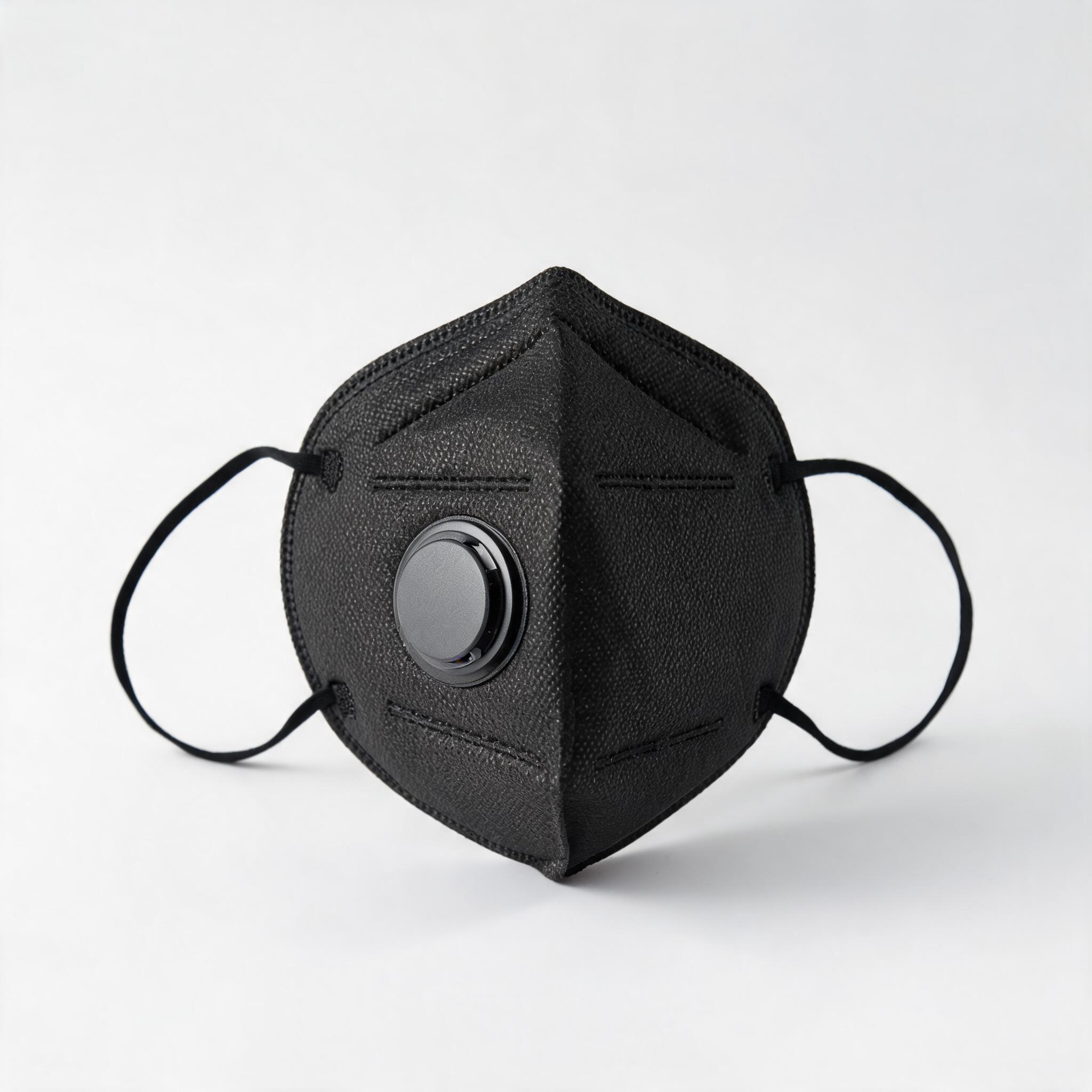
مقارنة شاملة بين أجهزة تنفس KN95 المزودة بصمام وغير المزودة به، تغطي الفروق في الراحة، وقيود التحكم في المصدر، والتوصيات الخاصة بكل تطبيق، وتحليل التكلفة، والاعتبارات التنظيمية.
KN95 Mask Comfort Comparison: Valve vs Non-Valve Designs for Different B2B Applications
One of the most consequential design choices in KN95 respirator procurement is whether to specify a valved or non-valved model. This single decision affects wearer comfort, compliance rates, source control capability, and even the regulatory acceptance of the product in certain markets. For B2B buyers managing diverse end-user populations, understanding when each design is appropriate is a core procurement competency.
This article provides a systematic comparison of valved and non-valved KN95 respirators, examines the physiological and practical differences, and offers a decision framework for matching respirator design to specific B2B application requirements.
How the Valve Works: Technical Design and Function
A KN95 exhalation valve is a one-way mechanical check valve typically made of a flexible rubber or silicone diaphragm seated in a plastic housing. During inhalation, negative pressure inside the mask pulls the diaphragm closed against the valve seat, forcing all inhaled air through the filter material. During exhalation, positive pressure pushes the diaphragm open, allowing exhaled air to exit through the valve opening without passing through the filter.
Key valve specifications that affect performance:
- Opening pressure: Typically 15-50 Pa. Lower opening pressure means easier exhalation but requires a tighter seal to prevent inward leakage.
- Flow capacity: The valve must handle exhalation flow rates up to 150+ L/min during heavy exertion without creating significant back-pressure.
- Diaphragm material: Silicone diaphragms offer better durability and chemical resistance than rubber, maintaining valve function across the respirator's storage life.
- Valve size: Larger valves (25-30mm diameter) provide better flow capacity but add weight and visual prominence. Smaller valves (15-20mm) are more discreet but may restrict flow during heavy exertion.
Side-by-Side Comfort Comparison
| Comfort Factor | Non-Valved KN95 | Valved KN95 |
|---|---|---|
| Exhalation resistance | 100-250 Pa (air passes through filter) | 15-50 Pa (air exits through valve) |
| Heat buildup | High - warm air trapped inside | Low - warm air exits immediately |
| Moisture accumulation | Moderate to high | Low |
| CO₂ dead space concentration | 1.5-3.5% during exertion | 0.5-1.5% during exertion |
| Fogging of eyewear | Common, especially with poor nose seal | Rare, exhaled air exits through valve |
| Extended wear tolerance (6+ hrs) | Poor - frequent removal complaints | Good - most wearers complete full shift |
| Weight | ≈4.0g | ≈5.0-5.5g (valve adds ≈1g) |
| Cost per unit | Lower | Higher (valve component cost) |
Source Control: The Critical Limitation of Valved Respirators
The single most important consideration when choosing between valved and non-valved designs is whether source control is required. Source control means protecting others from the wearer's exhaled particles. A valved respirator allows unfiltered exhaled air to enter the surrounding environment.
Applications where source control is mandatory:
- Healthcare settings with patient contact: When the wearer may be infectious (known or unknown), a valved respirator does not protect patients or colleagues from the wearer's exhalation.
- Cleanroom environments: Exhaled air carries moisture and particles that can contaminate sterile manufacturing areas.
- Food processing facilities: Exhaled air can introduce microbial contaminants into food production environments.
Applications where source control is not required:
- Construction and demolition: The hazard is ambient dust; the wearer's exhalation does not pose a risk to others in the area.
- Industrial manufacturing: Particle hazards are from the process, not from workers.
- Outdoor work: Sufficient ventilation dissipates exhaled air rapidly.
Some valved respirators now include a source-control filter patch over the valve opening, addressing this limitation. However, these add breathing resistance and should be tested for both filtration and comfort performance. For more on valve design considerations, see the valve vs non-valve respirator guide.
Application-Specific Recommendations
Hospital and Healthcare Procurement
Non-valved respirators are the standard for healthcare settings where source control is required. The fit testing and seal check guide provides additional context on healthcare respirator programs. For surgical procedures, a fluid-resistant respirator without a valve is the appropriate specification.
Industrial and Construction Procurement
Valved respirators should be the default for industrial applications. The comfort improvement directly translates to higher compliance rates and fewer incidents of respirator removal. The KN95 Valve Respirator Black is specifically designed for these applications, with a five-layer filtration stack and one-way exhalation valve rated for extended industrial wear.
Government Stockpiling and Emergency Response
For strategic stockpiles, consider stocking both designs. Non-valved respirators for healthcare deployment, and valved respirators for emergency response, construction, and cleanup operations. The dual-stock approach ensures the right respirator is available for each scenario.
Distribution and Resale
Distributors serving mixed markets should carry both valve and non-valve options, clearly labeled with their appropriate applications. End-user education materials should explain when each design is appropriate to prevent misuse.
Cost Analysis: Valve Premium vs Compliance Savings
Valved respirators typically cost 15-30% more per unit than equivalent non-valved models. However, the total cost of ownership calculation should include:
- Compliance rate improvement: If valved respirators increase consistent wear from 70% to 95% of shift hours, the effective protection per dollar increases substantially despite the higher unit cost.
- Reduced break time: Workers wearing comfortable valved respirators take fewer breaks to remove their respirators, maintaining productivity.
- Reduced turnover of respiratory protection program: Comfortable respirators reduce complaints and program friction, lowering the administrative cost of managing compliance.
- Extended wear vs replacement: Some buyers argue that non-valved respirators need replacement more frequently because moisture accumulation degrades the filter. However, both designs are rated for single-use and should be replaced after each shift.
Regulatory Considerations by Market
Some regulatory frameworks treat valved and non-valved respirators differently:
- EU: Both valved and non-valved FFP2/FFP3 are acceptable under EN 149. Valved respirators must meet additional valve opening/closing resistance requirements.
- US: NIOSH approves both valved and non-valved N95 respirators. During the COVID-19 pandemic, some healthcare facilities prohibited valved respirators due to source control concerns.
- China: GB2626 covers both designs. Valved respirators must meet valve-specific requirements for opening pressure and leakage.
Always verify that the specific valved model has been tested and certified, not just the non-valved variant of the same product line.
Key Takeaways
- Valved respirators provide significantly better comfort: Lower exhalation resistance, reduced heat, lower CO₂, and longer wear tolerance.
- Source control is the deciding factor: If protecting others from the wearer's exhalation is required, non-valved is mandatory.
- Match design to application: Healthcare = non-valved; industrial = valved; stockpiles = both.
- Cost premium is justified by compliance improvement: Higher unit cost is offset by better wear rates and productivity.
- Verify certification for the specific design: A valved variant may have different certification status than its non-valved counterpart.
By systematically evaluating the valve vs non-valve decision for each procurement scenario, B2B buyers can ensure they are providing end-users with respirators that are both protective and wearable - because a respirator that is removed due to discomfort provides zero protection, regardless of its filtration efficiency rating.