
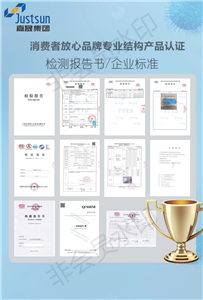
يُعدّ الامتثال لمعيار GB2626 الأساسَ الذي يقوم عليه شراء أجهزة التنفس KN95. يتناول هذا الدليل جميع متطلبات المعيار، بما فيها الترشيح ومقاومة التنفس والتسرب الداخلي الكلي ومتانة حزام التثبيت، ومستويات KN95 مقابل KN90 مقابل KN100، وتغييرات مراجعة 2019، والتكافؤ الدولي، ووثائق الامتثال لمشتري قطاع الأعمال B2B.
KN95 Mask GB2626 Standard Compliance: Complete Technical Requirements Guide for B2B Buyers
The KN95 respirator is defined by GB2626-2006, the Chinese national standard for respiratory protective equipment. For B2B procurement teams, understanding the complete requirements of this standard - not just the 95% filtration headline - is essential for evaluating supplier compliance, comparing KN95 with international standards, and specifying respirators that meet the protection requirements of their end-use applications. This guide provides a comprehensive breakdown of every GB2626 requirement that affects procurement decisions.
Important update: GB2626-2019 was published as a revision of the 2006 version, with a transition period. The 2019 version introduces stricter requirements for some parameters. Procurement teams should verify which version the supplier certifies to and understand the differences.
GB2626-2006 Key Requirements: Beyond the 95% Headline
GB2626-2006 specifies requirements for non-powered air-purifying particle respirators. The KN95 classification is one of several protection levels within the standard. Understanding the full parameter set helps procurement teams evaluate whether a respirator truly meets the standard.
| Requirement | KN95 Specification | Why It Matters for Procurement |
|---|---|---|
| NaCl particle filtration | >=95% at 0.075 um CMD | Core protection metric |
| Inhalation resistance | <=350 Pa at 85 L/min | Comfort and compliance |
| Exhalation resistance | <=250 Pa at 85 L/min | CO2 clearance |
| CO2 dead space | <=1% | Rebreathing safety |
| Head harness strength | Withstand 10 N for 10s | Structural integrity |
| Valve leak rate (if valved) | <=30 mL/min | Valve integrity |
| Visual field | Downward >=60 degrees | Operational safety |
| Total inward leakage (TIL) | <=8% (KN95) | Real-world protection |
KN95 vs KN90 vs KN100: Protection Levels Within GB2626
GB2626 defines three protection levels for non-powered particulate respirators. Understanding the differences helps procurement teams select the appropriate level for their application.
- KN90: >=90% NaCl filtration. Suitable for low-toxicity dust and particles. Not appropriate for healthcare or infectious disease protection.
- KN95: >=95% NaCl filtration. The standard level for healthcare, industrial, and public health applications. Equivalent to N95 and FFP2 in filtration capability.
- KN100: >=99.97% NaCl filtration. High-efficiency level for highly toxic particles. Equivalent to N100 and FFP3.
For most B2B procurement applications, KN95 provides the appropriate protection level. KN100 may be specified for high-risk environments (e.g., handling hazardous drugs, radioactive materials) but carries higher breathing resistance and cost.
GB2626-2019: Key Changes That Affect Procurement
The 2019 revision of GB2626 introduced several changes that procurement teams should be aware of:
- Stricter TIL requirements: The total inward leakage limit was tightened, requiring better mask-to-face fit.
- Enhanced marking requirements: More detailed product marking, including standard version, protection level, and manufacturing date.
- Additional test methods: New testing protocols for certain parameters, potentially affecting comparison with older test reports.
- Stricter factory audit: More rigorous quality system requirements for maintaining certification.
Procurement teams should specify GB2626-2019 compliance in new purchase orders, as it represents the current state of the standard. Suppliers certifying to the 2006 version should be asked about their transition plan.
International Equivalence: KN95 vs N95 vs FFP2
One of the most common procurement questions is whether KN95 is equivalent to N95 or FFP2. The answer is nuanced:
| Parameter | KN95 (GB2626) | N95 (NIOSH 42 CFR 84) | FFP2 (EN 149) |
|---|---|---|---|
| Filtration requirement | >=95% NaCl | >=95% NaCl | >=94% NaCl + paraffin |
| Test particle size | 0.075 um CMD | 0.075 um CMD | 0.3 um MMD |
| Flow rate | 85 L/min | 85 L/min | 95 L/min |
| Inhalation resistance | <=350 Pa | <=343 Pa | <=70 Pa (30 L/min) / <=240 Pa (95 L/min) |
| TIL requirement | <=8% | Not specified (fit test separately) | <=8% (50 subjects) |
| Regulatory recognition | China, accepted in many markets | US, widely accepted globally | EU, EEA |
For practical purposes, KN95, N95, and FFP2 provide broadly equivalent respiratory protection. However, regulatory acceptance varies by country - KN95 may not be accepted in US healthcare settings (where NIOSH approval is required) or in EU medical device applications (where CE marking under EN 149 is required). For KN95 vs N95 selection, the decision is often driven by regulatory acceptance rather than filtration performance.
Compliance Documentation: What to Request from Suppliers
For GB2626 authentication and compliance verification, procurement teams should request:
- Type Approval Certificate showing the product model and protection level (KN95)
- Test report from a CNAS-accredited laboratory covering all GB2626 parameters
- Factory Quality System Certificate confirming manufacturing capability
- Product technical data sheet specifying all performance parameters
- Declaration of Conformity stating compliance with the standard version (2006 or 2019)
Conclusion: Compliance as a Procurement Foundation
GB2626 compliance is the foundation of KN95 respirator procurement - but it is a starting point, not an endpoint. The standard specifies minimum performance requirements, but procurement teams need to go beyond minimums by specifying target values for critical parameters, verifying compliance through testing, and understanding how the standard compares to international equivalents. By mastering the complete GB2626 requirement set, B2B buyers can make informed decisions that balance protection, comfort, cost, and regulatory acceptance for their specific applications.