
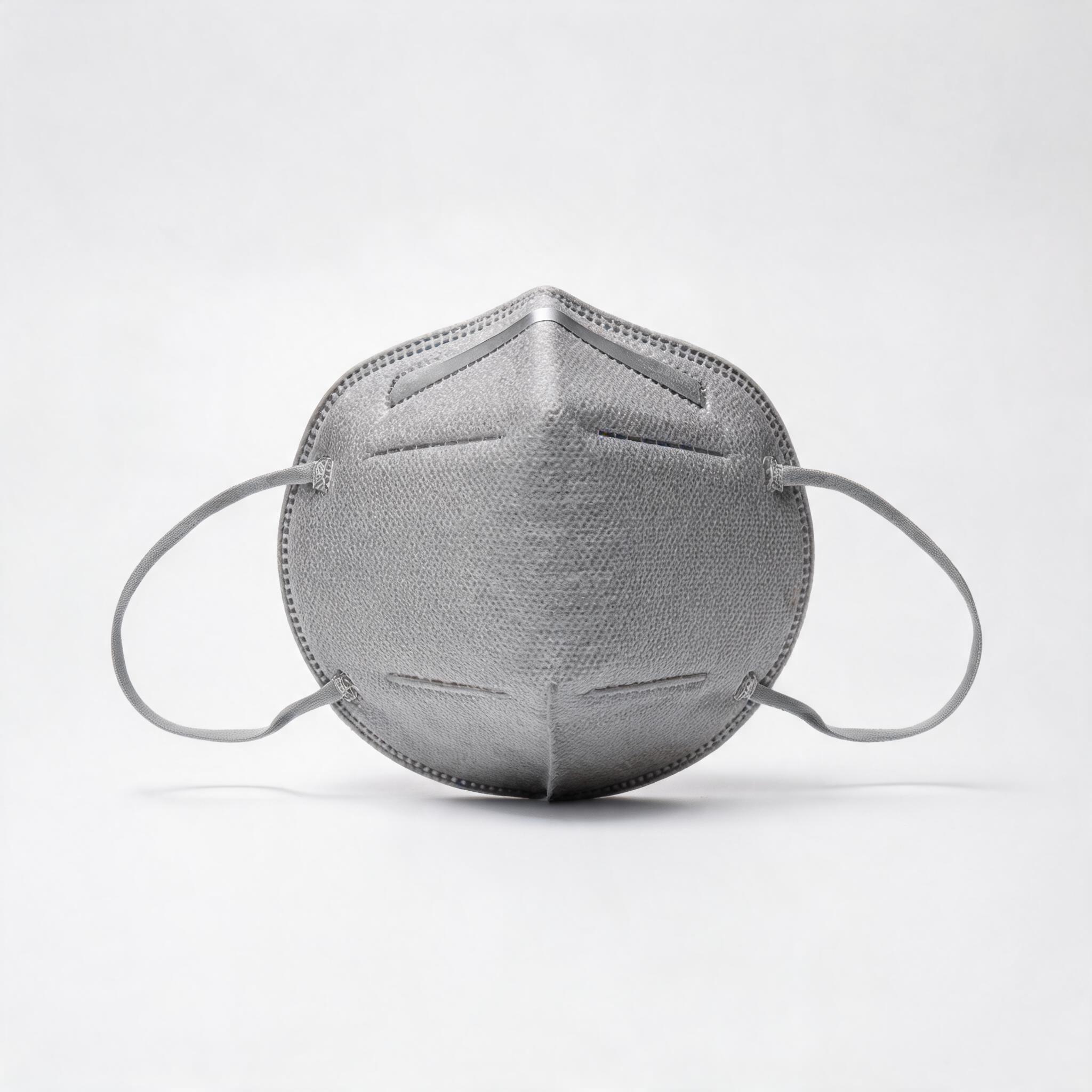
مقارنة ثلاثية بين معايير KN95 وFFP2 وN95: متطلبات الترشيح، وقبول السوق، وفوارق التكلفة، واستراتيجية التوريد متعدد الأسواق لمشتري B2B العالميين.
Procurement Guide · Three-Way Standard Comparison
KN95 vs FFP2 vs N95: Complete Procurement Guide for Global Buyers
When your organization sources respiratory protection across multiple markets, you need to understand all three major standards: KN95 (China), FFP2 (EU), and N95 (USA). This guide compares them side by side so you can make informed procurement decisions for any destination market.
Summary: All three standards require ≥94-95% filtration at 0.3µm. The differences are regulatory origin, certification body, and market acceptance. KN95 is typically the most cost-effective for non-US markets. N95 is required for US healthcare. FFP2 is the EU domestic standard.
Side-by-Side Comparison
| Feature | KN95 | FFP2 | N95 |
|---|---|---|---|
| Standard | GB2626-2006 | EN 149 | 42 CFR 84 |
| Origin | China | EU | USA |
| Filtration | ≥95% | ≥94% | ≥95% |
| Particle size | 0.3µm | 0.3µm | 0.3µm |
| CE marking | Available | Required | Not applicable |
| NIOSH approval | No | No | Required |
| OEM branding | Widely available | Limited | Not available |
| Relative cost | Lowest | Medium | Highest |
Which Standard for Which Market?
United States
N95 is the standard for healthcare and industrial use. KN95 acceptance depends on current FDA/NIOSH guidance. FFP2 is not typically used in the US. For US import, see our KN95 vs N95 FDA approval gap analysis.
European Union
FFP2 is the domestic standard. CE-marked KN95 is accepted as equivalent. N95 is not the EU standard. For EU sourcing, CE-certified KN95 cup respirators offer the best value. Review CE certification requirements before ordering.
Rest of World
KN95 with CE marking is widely accepted across Asia, Middle East, Africa, and Latin America. It offers the lowest cost and broadest OEM options. For bulk pricing, see what drives mask price variability across standards.
Cost Comparison Across Standards
For a typical bulk order of 100,000 respirators, relative cost breakdown:
- KN95: Lowest per-unit cost. Manufacturing scale in China drives competitive pricing.
- FFP2: 20-40% higher than KN95. EU manufacturing and certification costs are higher.
- N95: 40-80% higher than KN95. Limited US manufacturer pool and NIOSH certification overhead.
For detailed cost analysis, our KN95 wholesale pricing breakdown covers all cost components.
Multi-Market Sourcing Strategy
Organizations supplying multiple markets should consider a dual-sourcing approach:
- KN95 with CE marking for EU, Asia, Middle East, Africa, and Latin America markets. The KN95 valve respirator covers industrial applications across these regions.
- N95 for US healthcare and government stockpile contracts that explicitly require NIOSH certification.
This approach minimizes cost while ensuring compliance in every market. For supplier evaluation, use our complete supplier selection criteria.
FAQ
Can one respirator model meet all three standards?
No. Each standard requires separate certification from the relevant body (Chinese lab for GB2626, Notified Body for EN 149/CE, NIOSH for 42 CFR 84). Some manufacturers certify the same physical product under multiple standards, but each certification is independent.
Which standard has the strictest requirements?
All three are comparable. KN95 has a slightly higher filtration threshold (≥95% vs ≥94% for FFP2). N95 and KN95 have the same ≥95% requirement. The practical protection level is equivalent across all three.
Conclusion
For global procurement, KN95 with CE marking offers the best combination of cost, compliance, and OEM flexibility for non-US markets. N95 is necessary for US-specific requirements. FFP2 is the EU standard but CE-marked KN95 provides equivalent protection at lower cost. Choose based on your destination market's regulatory requirements and your budget constraints.