
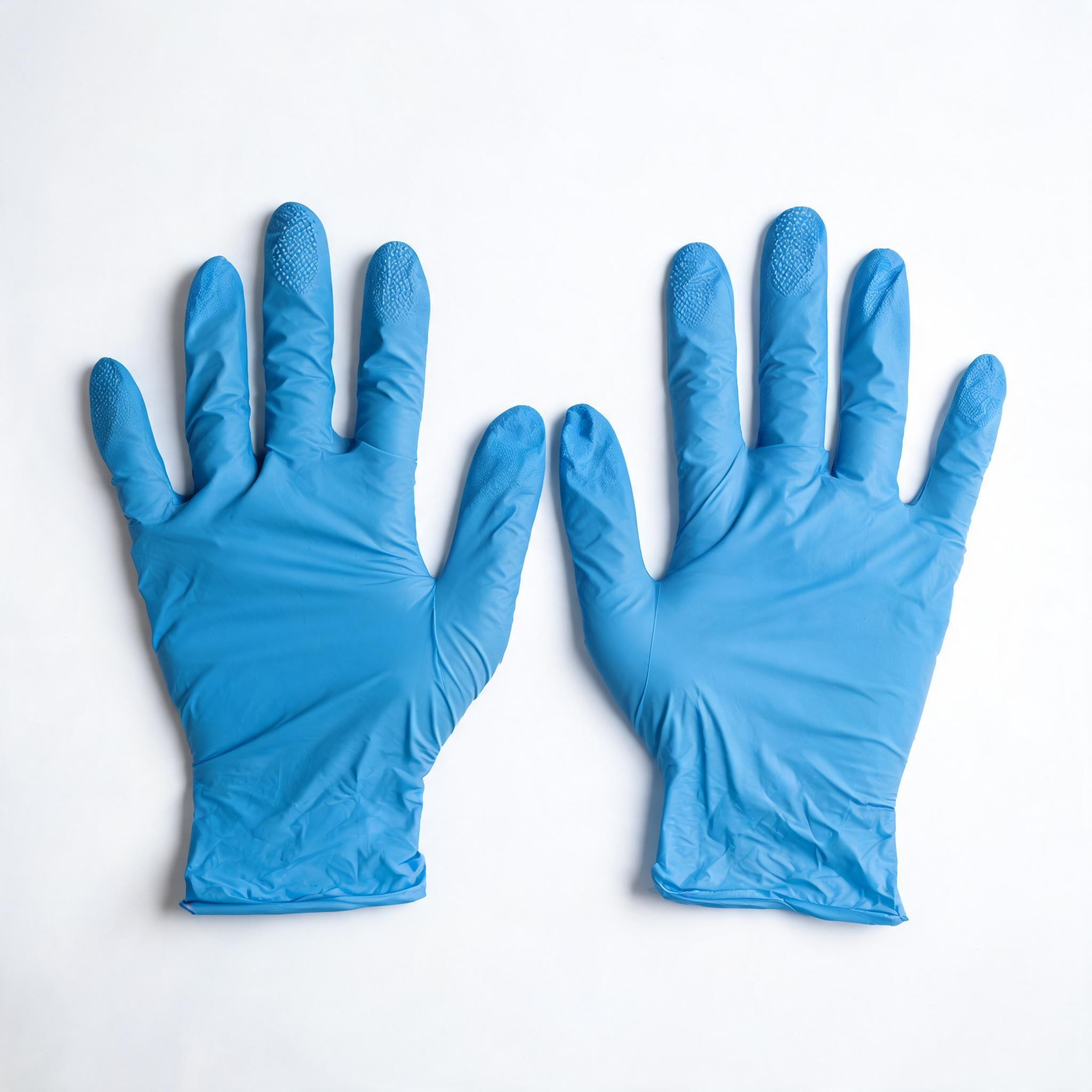
Nitrile gloves are made from a synthetic rubber — an acrylonitrile-butadiene copolymer — that contains no natural rubber latex protein. This article explains how the raw material becomes a finished glove, why the same material is compounded into exam grade and industrial grade products, which grade fits each use case, where nitrile is the wrong choice, and what a buyer should put in a purchase specification.
Buyers searching for what nitrile gloves are made of usually have a second question behind the first: which grade should I actually order, and will it hold up in my application? The two answers are connected, because the material itself determines both the properties and the limits of every glove made from it.
Key points
- Nitrile gloves are made from a synthetic rubber: a copolymer of acrylonitrile and butadiene, known as NBR. No natural rubber latex protein is present.
- The raw rubber is compounded, formed into film on a former, cured and finished. Powder-free is the standard finish for the exam-grade products described here.
- Exam grade and industrial grade use the same base polymer family but differ in film thickness, acceptance quality limit (AQL), standards claimed and grip design.
- Match grade to the risk of the task, not to the colour. A 0.11 mm exam glove and an 8 mil industrial glove are not interchangeable.
What are nitrile gloves made of, in plain terms?
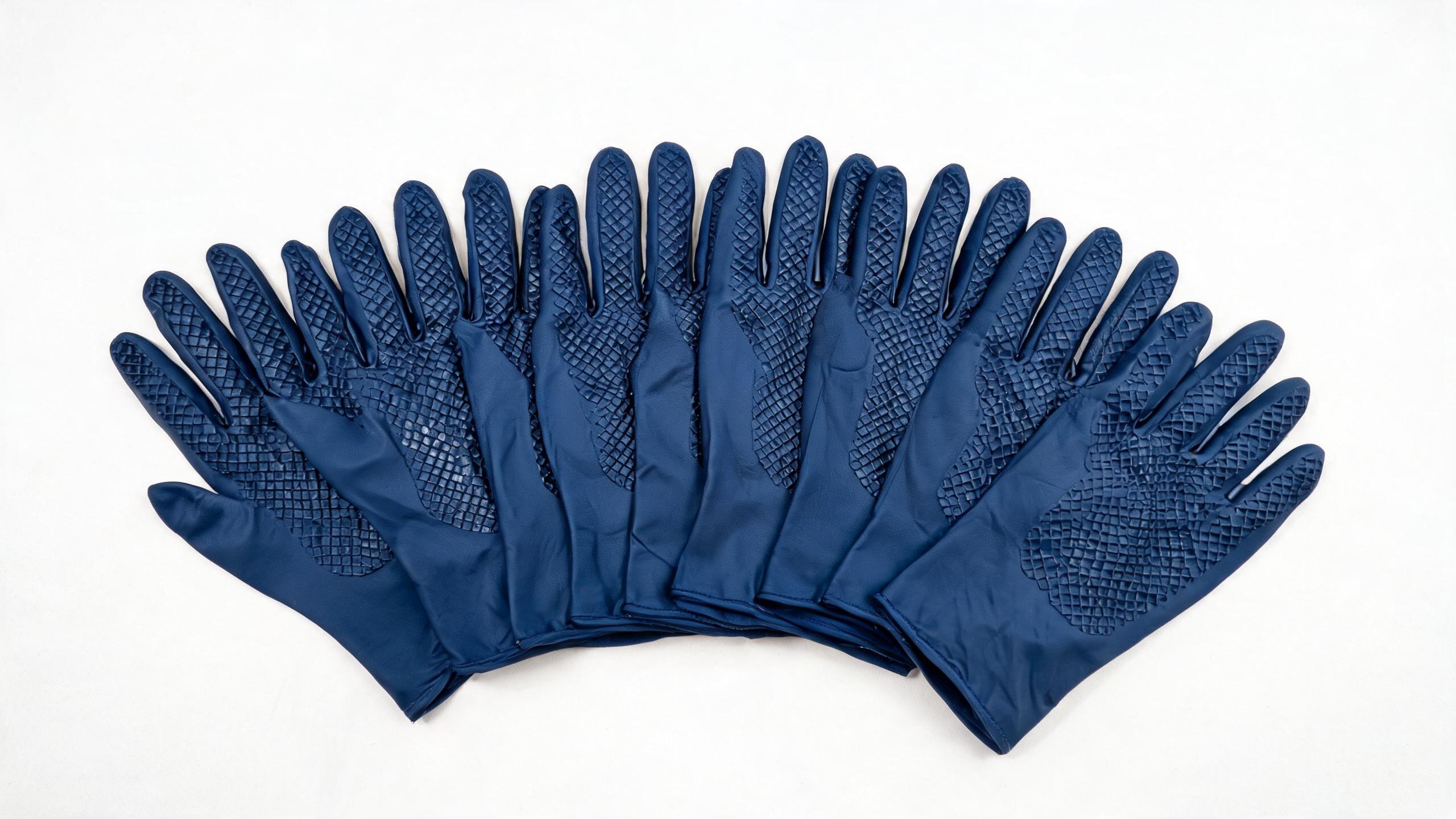
Nitrile is a synthetic rubber. The polymer is a copolymer of acrylonitrile and butadiene, which is why the material appears in technical documents as NBR (nitrile-butadiene rubber). Neither monomer comes from the rubber tree, so a nitrile glove contains no natural rubber latex protein — the component behind most latex allergy concerns.
The name on the box tells you the polymer family, not the finished formulation. A usable glove also contains curing agents, accelerators, fillers and pigments, and the balance of these determines colour, softness, film strength and how the glove feels in the hand. Two suppliers can both sell "nitrile exam gloves" and still deliver noticeably different products, which is why specifications matter more than the material name alone.
How the raw material becomes a glove
The manufacturing route is a dipping process. A ceramic former shaped like a hand passes through a coagulant bath, then into the compounded nitrile dispersion, where a film forms on the former. The film is cured in an oven, cooled, and finished. Powder-free gloves go through additional rinsing and surface treatment so the finished film is easy to don without powder.
What you receive as a buyer is the result of that chain: film thickness, surface texture, cuff length and consistency all come from machine settings and process control, not from the polymer name. That is the technical reason a purchase order should state thickness and AQL rather than just "nitrile gloves".
Why the same material becomes exam grade and industrial grade
Exam grade and industrial grade answer different questions. Exam grade is built around barrier integrity and biocompatibility for short contact with patients; industrial grade is built around mechanical durability and grip for handling work. The differences show up as concrete orderable values.
| Attribute | Exam grade (our products) | Industrial grade (our products) |
|---|---|---|
| Typical film thickness | 0.11 mm powder-free exam; 0.15 mm sterile exam; textured black exam | 8 mil dark blue; 0.15 mm heavy-duty orange |
| Acceptance quality limit | AQL 1.5 | Sold against EN 374 on the industrial range |
| Standards referenced | EN 455-1/-2/-3 on the powder-free blue exam glove; EN 455 on sterile and textured black | EN 374 |
| Sterility | Optional: gamma-irradiated sterile nitrile exam glove, 100 pairs per box | Not applicable |
| Grip and reach | Ambidextrous, blue; textured black version for a firmer feel | Diamond-texture grip; 12-inch cuff on the dark blue industrial glove |
| Packing | 100 gloves per box (blue exam); 100 pairs per box (sterile) | 100 per box (heavy-duty orange) |
The AQL figure is the part buyers most often skip. AQL 1.5 is a sampling-based acceptance limit for pinholes and other defects; it describes how tight the quality control is, not a promise that every glove is perfect. When a buyer asks for "better quality" without naming a thickness or AQL, the specification has nothing to hold on to.
On the medical side, powder-free blue exam gloves from Justsun are available in sizes XS to XL, ambidextrous, 100 gloves per box. Sterile nitrile exam gloves at 0.15 mm are gamma-irradiated and packed 100 pairs per box. The powder-free blue nitrile exam glove page lists the full specification.
What are nitrile gloves used for? A grade-by-application matrix
The useful question is not "is nitrile good" but "which nitrile glove, at what thickness, for this task". The table below maps common applications to the grade we would quote.
| Application | Grade to specify | Why |
|---|---|---|
| Patient care and clinical examination | Powder-free blue exam, 0.11 mm, AQL 1.5, EN 455-1/-2/-3 | Barrier integrity and low-defect rate are the governing requirements |
| Sterile procedures | Sterile nitrile exam, 0.15 mm, gamma-irradiated, 100 pairs per box | Pairs are packed for sterile donning |
| Laboratory bench work | Powder-free blue exam or textured black exam, AQL 1.5 | Thin film for dexterity; textured surface for grip on dry items |
| Dental | Powder-free blue exam, sizes XS–XL | Short-contact work with a wide size range across the team |
| Pharmaceutical handling | Powder-free exam; sterile where the process requires it | Powder-free finish avoids particle shedding from powder |
| Food handling | Powder-free blue exam; confirm the food-contact documentation your market requires before ordering | Nitrile is used in food operations, but the compliance document set is country-specific |
| Automotive and chemical work | Industrial dark blue 8 mil, EN 374, 12-inch cuff, diamond texture; heavy-duty orange 0.15 mm for heavier handling | Longer cuff and thicker film for mechanical wear; check the chemical against the supplier's EN 374 data |
| Tattoo and beauty | Textured black exam, AQL 1.5, EN 455 | Colour and texture preferred in studio settings |
Two product lines cover most of the industrial side: the dark blue 8 mil industrial nitrile glove with a 12-inch cuff and diamond-texture grip, and the heavy-duty orange nitrile glove at 0.15 mm. For studio and salon work, the textured black exam glove is the closer match.
Where nitrile is not the answer
Nitrile is a strong default, not a universal glove. There are three situations where a buyer should look elsewhere or ask harder questions before committing.
- Specific aggressive chemicals. No glove material suits every chemical. EN 374 on a glove tells you the standard it was tested against; it does not tell you the glove will resist the particular solvent in your process. Check the chemical against the supplier's permeation data before you order, and never extend a test result from one chemical to another.
- Buyers who need natural rubber latex specifically. If a process or a clinician requires latex, nitrile is the wrong substitution. We also supply latex examination gloves for that case. The full material trade-off between the two is set out in our nitrile versus latex comparison, and is not repeated here.
- Heavy abrasion or cut risk. A nitrile film is a barrier and a grip surface. If the task's main hazard is a sharp edge or sustained abrasion, a glove engineered for that hazard is the right starting point, not a thicker exam glove.
Note on sterility: nitrile is not sterile by nature. Only gloves that have been through a validated sterilisation process, such as our gamma-irradiated sterile line, should be described as sterile.
What to put in a purchase specification
A specification that can be quoted and inspected contains five things. Missing any one of them leaves room for a supplier to substitute.
- Material and finish: nitrile, powder-free, and the colour if it matters to your users.
- Thickness: 0.11 mm, 0.15 mm or 8 mil, stated in the unit you will measure on receipt.
- AQL: AQL 1.5 on exam products.
- Standards: EN 455-1/-2/-3 for exam gloves, EN 374 for industrial, and sterility method where relevant.
- Packing and sizes: gloves per box or pairs per box, and the size range you need (XS to XL on the powder-free exam line).
Justsun holds CE and FDA certification and runs a 26,100 m² facility with more than 400 employees, which is the context in which those specifications are produced and inspected.
Frequently asked questions
Is nitrile the same as latex?
No. Latex is natural rubber from the rubber tree; nitrile is a synthetic acrylonitrile-butadiene copolymer. Nitrile contains no natural rubber latex protein. The practical comparison is covered in our dedicated nitrile versus latex article.
Are nitrile gloves powder-free?
They can be, and powder-free is what we supply: the powder-free blue exam glove and the textured black exam glove are both powder-free, and the sterile line is gamma-irradiated. If a specification must be powder-free, state it in writing, because "nitrile" alone does not guarantee the finish.
Can nitrile gloves be used for food handling?
Nitrile gloves are used in food operations, and powder-free exam grade is the usual choice because there is no powder to shed. Food-contact requirements differ by market, so confirm which documentation your destination requires before placing the order rather than assuming a standard carries over.
What thickness should I order?
Start from the task. Short-contact clinical and laboratory work fits 0.11 mm exam film, which keeps dexterity. Sterile procedures use the 0.15 mm sterile glove. Handling work with mechanical wear fits the 8 mil industrial glove with a 12-inch cuff, or the 0.15 mm heavy-duty orange glove for heavier handling. If a task sits between two grades, order samples of both and test them in the actual working conditions.
Next step. If you are specifying nitrile gloves for a tender or a repeat order, send us the application, the thickness and AQL you need, the standards you must meet, and your size range. We will quote against that specification rather than against a generic product name.