
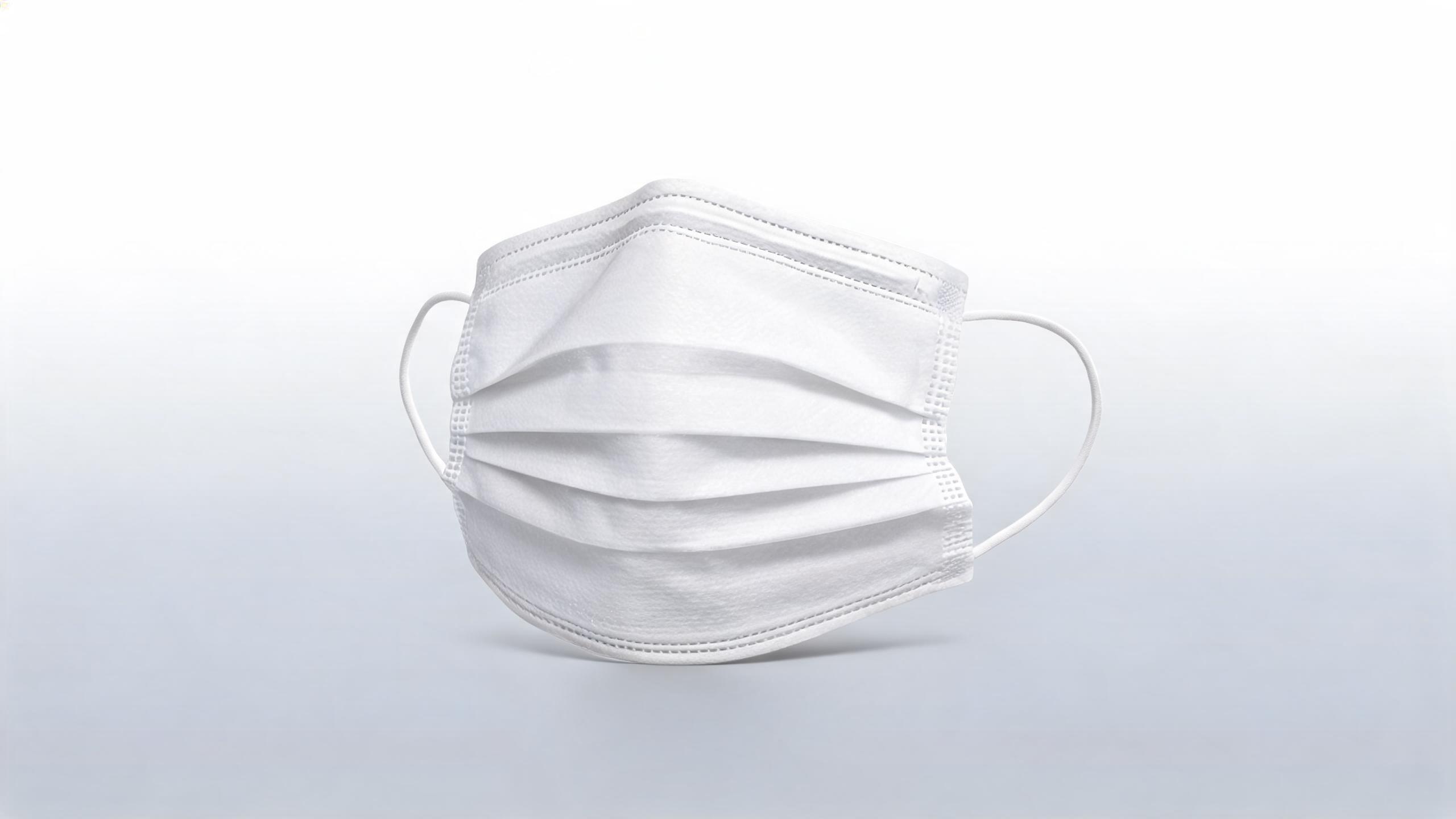
A plain answer for buyers: what spunbond fabric is, how it differs from meltblown, and why medical masks and gowns need both layers.
If you are sourcing medical masks or isolation gowns, you have likely seen the terms spunbond and meltblown on specifications. This article explains what spunbond fabric is, how it works with meltblown, and what to check before you place an order. It is written for buyers who need a clear technical answer, not a sales pitch.
Key takeaways:
- Spunbond is a nonwoven made directly from continuous filaments, not from woven yarn.
- Spunbond provides strength, shape, and fluid resistance; meltblown provides fine filtration.
- Most medical masks and gowns combine both layers—often as SMS (spunbond-meltblown-spunbond).
- Ask your supplier specific questions about layer order and test data before you commit.
What Is Spunbond Fabric? A Direct Answer
Spunbond fabric is a type of nonwoven material made by extruding and bonding continuous filaments into a web. The filaments are laid down randomly, then bonded together using heat, pressure, or chemicals. It is not woven and contains no yarn. The result is a strong, lightweight fabric that resists tearing and fluids. In medical PPE, spunbond is the structural outer layer of masks and gowns. For a broader comparison of nonwoven types used in PPE, see our guide to medical protective nonwoven fabrics.
How Spunbond Fabric Is Made
The production process can be summarized in four main steps:
- Extrusion: Polymer pellets (usually polypropylene) are melted and forced through a spinneret to form continuous filaments.
- Drawing: The filaments are stretched to align molecules and increase strength.
- Web formation: Filaments are laid onto a moving belt in a random pattern to form a loose web.
- Bonding: The web is bonded by heat, pressure, or chemical binders to create a stable, strong fabric.
This process produces fabric in a single continuous operation, which is why spunbond is cost-effective for high-volume disposable products.
Spunbond, Meltblown, and SMS Side by Side
The table below compares the three main nonwoven types used in medical protective products.
| Property | Spunbond | Meltblown | SMS (Spunbond-Meltblown-Spunbond) |
|---|---|---|---|
| Fibre type | Continuous filaments, thicker | Microfibres, very fine | Combination of both |
| What the layer does | Provides strength, shape, and fluid resistance | Provides fine filtration and barrier against particles | Combines strength and filtration in one fabric |
| Where it appears in PPE | Outer layers of masks and gowns; gown body | Middle filter layer in masks; barrier layer in gowns | Isolation gowns, surgical gowns, some masks |
Why Masks and Gowns Pair Spunbond with Meltblown
Spunbond alone is strong and fluid-resistant, but its relatively open structure does not capture fine particles efficiently. Meltblown alone filters well but is fragile and lacks structural integrity. By combining them, manufacturers get the best of both: a durable outer layer that resists splashes and a fine inner layer that traps particles.
Here is how the layers are typically arranged:
- 3-ply mask: Spunbond (outer) + Meltblown (middle filter) + Spunbond (inner, skin-friendly).
- 4-ply mask: Spunbond (outer) + Meltblown + Meltblown + Spunbond (inner). The additional meltblown layer can increase filtration performance.
- SMS gown: Spunbond (outer) + Meltblown (middle barrier) + Spunbond (inner). The spunbond layers provide strength and softness, while the meltblown layer blocks fluids and particles.
In our Surgical Mask Type IIR White, for example, the 3-ply construction uses spunbond-meltblown-spunbond and achieves a bacterial filtration efficiency (BFE) of at least 98% at 3.0 microns, with splash resistance of at least 120 mmHg and differential pressure below 49 Pa/cm², meeting EN 14683:2019 Type IIR.
Where Spunbond Appears in Real Products
Spunbond is the visible, touchable layer in many disposable medical products. In our SMS Isolation Gown Yellow Knit Cuff, the fabric is a three-layer spunbond-meltblown-spunbond composite. The outer and inner spunbond layers give the gown its strength and softness, while the middle meltblown layer provides a barrier against fluids. The gown features knitted cuffs, a V-neck, and tie strings at the neck and waist. It is CE marked and meets EN ISO 13795.
In masks, spunbond forms both the outer and inner layers. The outer layer resists splashes and droplets, while the inner layer is soft against the skin. The middle meltblown layer does the fine filtration. This is why you will see "spunbond + meltblown + spunbond" on mask specifications.
Five Mistakes Buyers Make
- Assuming all spunbond is the same. Spunbond quality varies by polymer, filament fineness, and bonding method. Ask for test data, not just a description.
- Ignoring layer order. The sequence of layers affects performance. A mask with meltblown on the outside may not resist splashes as well as one with spunbond outside.
- Confusing SMS with a single-layer fabric. SMS is a composite. Confirm that the supplier actually uses a meltblown layer in the middle, not just two spunbond layers.
- Overlooking certification scope. A CE mark on one product does not automatically cover another. Check that the specific product you are buying is CE marked and tested to the relevant standard.
- Not asking about test conditions. Filtration efficiency depends on the test aerosol and flow rate. Ask for the test report to see the conditions.
Five Questions to Ask a Nonwoven Supplier
You can copy these questions into an email to your supplier:
- What is the exact layer construction of this product (e.g., spunbond-meltblown-spunbond)?
- Can you provide the test report for bacterial filtration efficiency (BFE) and differential pressure?
- Is the product CE marked, and which standard does it meet (e.g., EN 14683, EN ISO 13795)?
- What is the splash resistance rating in mmHg for masks?
- Can you confirm the packaging quantity and carton dimensions for bulk orders?
For a deeper dive into mask specifications, see our 3-ply surgical mask sourcing guide.
FAQ
Is spunbond fabric the same as spun non woven fabric?
Yes, they refer to the same material. "Spunbond" is the common industry term, while "spun non woven fabric" is a descriptive phrase. Both describe a nonwoven made from continuous filaments that are spun and bonded together. There is no difference in the product itself.
Is spunbond breathable?
Spunbond is generally breathable because the filaments form a porous web. However, breathability varies with fabric weight and bonding. For medical masks, breathability is measured as differential pressure; lower values indicate easier breathing. Our Surgical Mask Type IIR White has a differential pressure below 49 Pa/cm², which is comfortable for extended wear.
Can spunbond be used alone for medical masks?
Spunbond alone is not typically used for the filter layer of medical masks because it does not capture fine particles efficiently. It is used for the outer and inner layers, while meltblown is used for the filter layer.
What is SMS fabric?
SMS stands for spunbond-meltblown-spunbond. It is a three-layer composite fabric that combines the strength of spunbond with the filtration of meltblown.
Does spunbond fabric contain latex?
Spunbond is typically made from polypropylene, which does not contain natural rubber latex. However, always confirm with your supplier if latex-free is a requirement.
Next Steps
Now that you understand what spunbond fabric is and how it works with meltblown, you can evaluate suppliers more effectively. For a detailed comparison of isolation gowns and surgical gowns, see our article on isolation gown vs surgical gown. If you are ready to discuss your requirements, contact us for a quote. We manufacture CE-marked disposable medical supplies and nonwoven protective products, and we can provide product-specific test data and samples.