
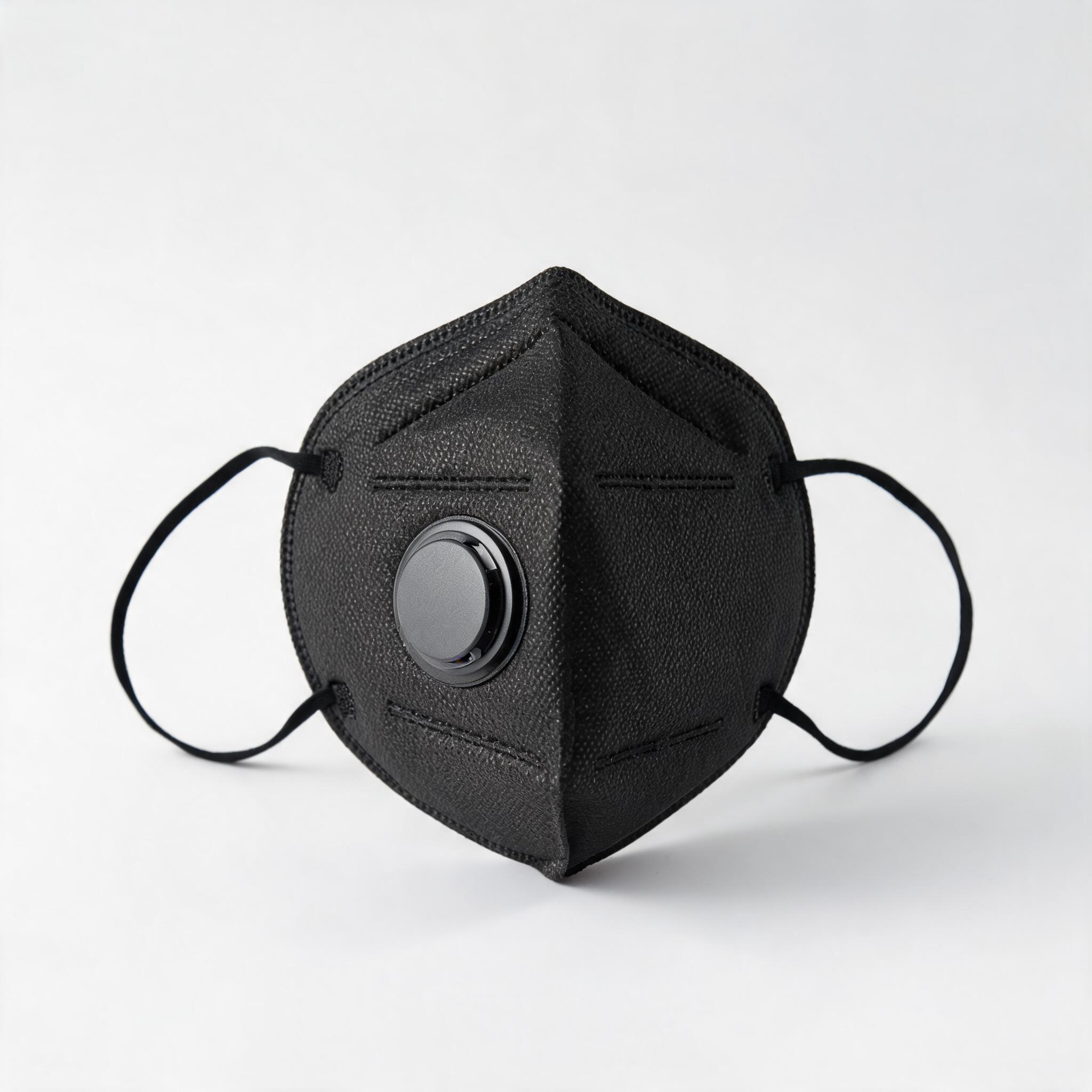
A technical guide to CO₂ accumulation inside KN95 respirators, covering dead space ventilation, exhalation valve benefits, testing standards, and industrial procurement guidance.
KN95 Mask Breathability Testing: CO₂ Buildup and Ventilation Performance for Industrial Use
Carbon dioxide (CO₂) buildup inside a respirator is one of the most underappreciated risks in industrial respiratory protection. While filtration efficiency and breathing resistance are routinely tested and documented, CO₂ accumulation within the dead space of a KN95 respirator can cause headaches, fatigue, and reduced cognitive performance - particularly during physically demanding work. For B2B buyers sourcing respirators for construction, manufacturing, and mining applications, understanding CO₂ ventilation performance is essential.
This article examines the dead space phenomenon, how CO₂ accumulates inside respirators, testing methods for ventilation performance, and practical guidance for selecting respirators that minimize CO₂ exposure during extended industrial use.
What Is Respirator Dead Space?
Dead space refers to the volume of air trapped between the filter material and the wearer's face. This air is not exchanged with fresh ambient air during normal breathing - it is rebreathed with each breath. The CO₂ concentration in this dead space increases with each exhalation, creating a micro-environment where the wearer inhales air with elevated CO₂ levels.els.
Factors affecting dead space volume:
- Respirator design: Cup-style respirators typically have larger dead space than flat-fold designs, but the rigid structure prevents the filter from collapsing against the face during inhalation.
- Facial geometry: A respirator that sits further from the face creates more dead space. Poor fit increases dead space while simultaneously reducing seal effectiveness.
- Nose and mouth position: The distance from the filter material to the mouth directly affects how much exhaled air is retained versus expelled through the filter.
CO₂ Accumulation: The Numbers
Ambient CO₂ concentration is approximately 0.04% (400 ppm). Exhaled air contains approximately 4% CO₂ (40,000 ppm). Inside a respirator's dead space, CO₂ concentration during inhalation typically ranges from 1.5% to 3.5% (15,000-35,000 ppm), depending on the respirator design and breathing pattern.ern.
Occupational exposure limits for CO₂:
- OSHA PEL (8-hour TWA): 5,000 ppm (0.5%)
- NIOSH REL (10-hour TWA): 5,000 ppm
- ACGIH TLV (8-hour TWA): 5,000 ppm
- Short-term exposure limit (15-min): 30,000 ppm (3%)
While the CO₂ inside a respirator rarely exceeds short-term limits, chronic exposure to 1-2% CO₂ over an 8-hour shift can cause symptoms including headache, dizziness, increased heart rate, and reduced concentration. This is particularly concerning for workers operating machinery or performing safety-critical tasks.
How Exhalation Valves Reduce CO₂ Buildup
The most effective design solution for CO₂ management is the exhalation valve. A valved KN95 respirator allows exhaled air to exit the mask through a one-way valve rather than passing back through the filter material. This significantly reduces the CO₂ concentration in the dead space.
Studies have shown that valved respirators can reduce inhaled CO₂ concentration by 40-60% compared to non-valved equivalents during moderate physical activity. The valve opens at low resistance (typically 15-50 Pa), allowing the majority of exhaled air to exit before the next inhalation cycle begins.
Breathing Resistance and CO₂: A Compounding Problem
Higher breathing resistance directly contributes to CO₂ buildup. When the filter material offers greater resistance to airflow, the wearer's exhalation is less complete - more CO₂-laden air remains in the dead space. This creates a feedback loop:oop:
- High-resistance filter → incomplete exhalation → elevated dead space CO₂
- Elevated CO₂ → increased breathing rate → more rapid CO₂ accumulation
- Rapid breathing → higher airflow demand → increased perception of resistance
- Discomfort → mask removal or seal breach → loss of protection
This is why balancing filtration efficiency with breathing resistance, as discussed in the breathability and comfort evaluation guide, is not just about comfort - it is about preventing a cascading failure that ends with the wearer removing their protection entirely.
Testing CO₂ and Ventilation Performance
While GB2626 does not explicitly require CO₂ dead space testing, several international standards do:
- EN 149 (FFP2/FFP3): Requires dead space CO₂ measurement. The average inhaled CO₂ must not exceed 1% (10,000 ppm).
- NIOSH 42 CFR 84: Does not explicitly test CO₂ but requires breathing resistance within limits that implicitly manage dead space ventilation.
- AS/NZS 1716: Includes specific dead space volume limits and CO₂ testing requirements.
For B2B buyers sourcing for industrial applications, requesting EN 149 test data on dead space CO₂ provides valuable insight even when the product is certified to GB2626. A manufacturer that voluntarily tests to EN 149 standards demonstrates commitment to wearer safety beyond the minimum certification requirements.
Practical Guidance for Industrial Respirator Procurement
When to Specify Valved Respirators
Valved respirators should be the default specification for industrial applications involving:
- Physical labor (construction, mining, manufacturing)
- High-temperature environments (foundries, smelting, outdoor summer work)
- Confined spaces with limited ventilation
- Shift durations exceeding 4 hours
The only exception is when source control is required - protecting others from the wearer's exhalation. In pure respiratory protection scenarios (protecting the wearer from ambient hazards), valved respirators are superior. For more on valve selection, see see valve vs non-valve respirator guidance.
Work Rate Considerations
The intensity of physical work directly affects breathing rate and CO₂ production. GB2626 tests at 85 L/min, representing a high work rate. But sustained work at very high rates (100+ L/min) can overwhelm the ventilation capacity of any respirator. Procurement specifications for high-work-rate environments should include:
- Maximum breathing resistance specification (target: <200 Pa inhalation)on)
- Preference for valved designs
- Work-rest cycle recommendations in the respirator user instructions
Environment-Specific Considerations
| Environment | CO₂ Risk Level | Recommendation |
|---|---|---|
| Office / low activity | Low | Non-valved KN95 acceptable |
| Light manufacturing | Moderate | Non-valved for short shifts; valved for 6+ hours |
| Construction / heavy labor | High | Valved KN95 required |
| Confined spaces | Very high | Valved; consider PAPR for extended work |
| High-temperature environments | Very high | Valved; implement work-rest cycles |
Key Takeaways for B2B Industrial Procurement
- CO₂ buildup is a real occupational health risk: Dead space CO₂ can reach 1-3% during physical work, causing symptoms that impair safety and productivity.
- Exhalation valves dramatically reduce CO₂ exposure: Valved respirators should be the default for physically demanding applications.
- Breathing resistance and CO₂ are linked: High-resistance filters cause incomplete exhalation, compounding CO₂ accumulation.
- Request EN 149 dead space data: Even when sourcing GB2626-certified products, EN 149 CO₂ test data provides valuable ventilation performance information.
- Match respirator design to work intensity: Non-valved respirators may suffice for low-activity environments, but high-work-rate applications require valved designs with low breathing resistance.
By incorporating CO₂ ventilation performance into respirator procurement specifications, B2B buyers can protect workers not only from the ambient hazards they face but also from the less visible but equally real risks of CO₂ accumulation inside the respirator itself. This holistic approach to respiratory protection procurement is what separates routine purchasing from professional safety management.