
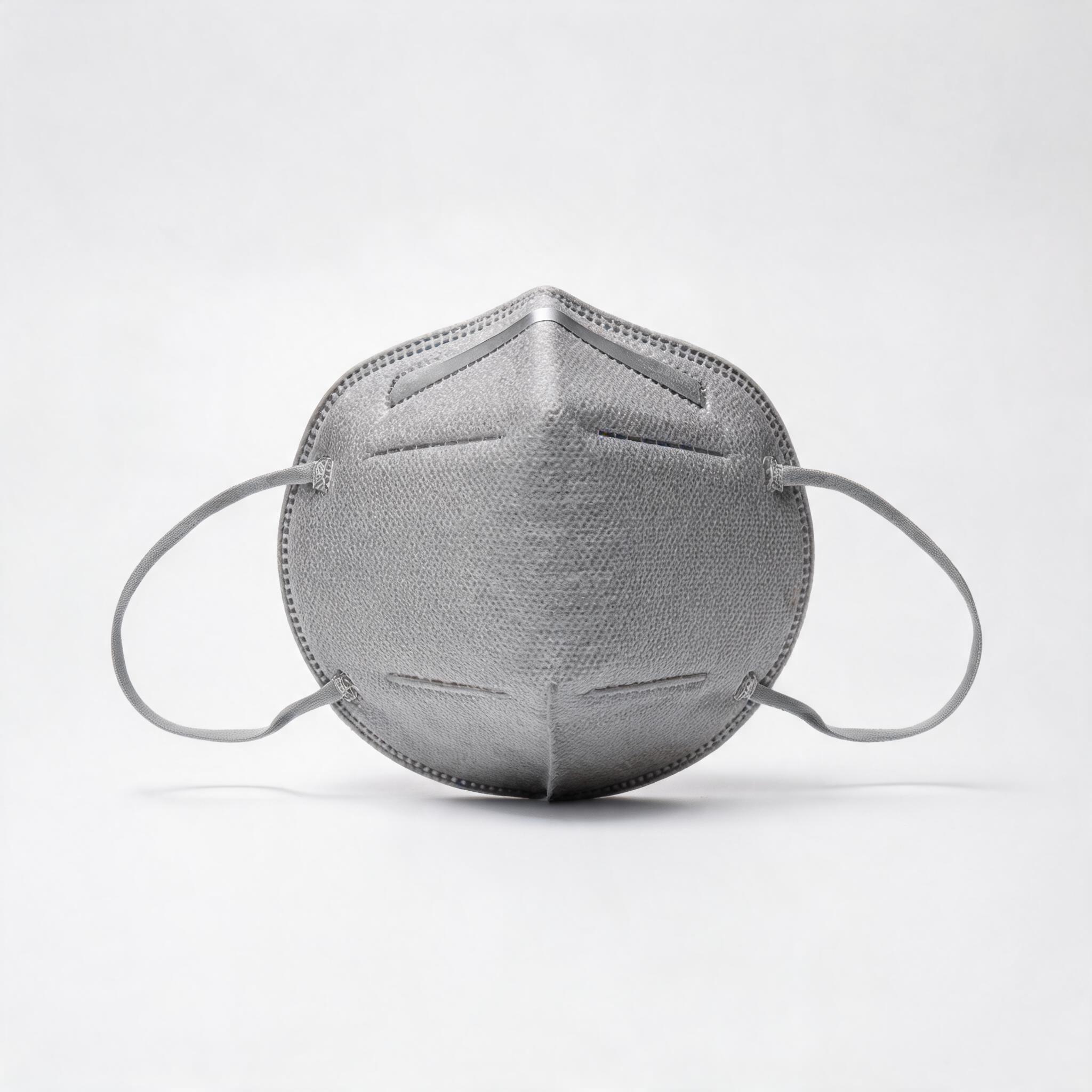
A detailed guide to KN95 respirator material composition for B2B procurement, covering multi-layer architecture, meltblown quality, electrostatic charge, spunbond layers, material safety, and supplier verification.
For procurement teams sourcing KN95 respirators, understanding the material composition is essential for evaluating product quality, performance, and suitability for specific applications. A KN95 respirator is not a single material-it is a carefully engineered multi-layer composite, where each layer serves a distinct function and the interaction between layers determines overall performance.
The Multi-Layer Architecture of a KN95 Respirator
A standard KN95 respirator consists of four to five layers, each with a specific purpose. Understanding this architecture helps buyers evaluate whether a respirator's construction is appropriate for their application and whether supplier claims about layer count are meaningful.ful.
| Layer | Material | Function | Typical GSM |
|---|---|---|---|
| Outer layer | Spunbond polypropylene (SS) | Moisture resistance, structural support, splash protection | 20-30 gsm |
| Filter layer 1 | Meltblown polypropylene (electrostatically charged) | Primary particle filtration | 20-30 gsm |
| Filter layer 2 (in 5-layer designs) | Meltblown or SMS composite | Additional filtration, increased efficiency margin | 15-25 gsm |
| Inner layer | Spunbond polypropylene (soft) | Skin comfort, moisture absorption, breathing comfort | 20-25 gsm |
| Nose clip | Aluminum or plastic-coated wire | Adjustable nasal bridge seal | N/A |
Meltblown Polypropylene: The Filtration Core
The meltblown layer is the single most important component of a KN95 respirator. It is responsible for the ≥95% filtration efficiency that defines the KN95 classification. The meltblown quality directly determines whether a respirator meets its stated performance.
Meltblown polypropylene is manufactured by extruding molten polymer through fine capillary dies while simultaneously applying high-velocity hot air. The resulting fibers are extremely fine (1-5 microns in diameter) and are collected on a moving belt to form a random web. This web is then electrostatically charged through corona discharge or hydrocharging, which dramatically enhances its ability to capture sub-micron particles.
Key properties that determine meltblown quality include:
- Fiber diameter distribution: Narrower distribution = more uniform filtration
- Basis weight (gsm): Higher gsm = better filtration but higher breathing resistance
- Electrostatic charge density: Higher charge = better filtration at lower breathing resistance
- Charge stability: How well the charge is retained over time and under different storage conditions
Spunbond Polypropylene: Structure and Comfort
Spunbond polypropylene forms the outer and inner layers of the respirator. Unlike meltblown, which produces microfibers, spunbond produces continuous filaments that are laid down and bonded thermally. The resulting fabric is stronger and more durable than meltblown, making it suitable for the outer protective layer and the skin-contact inner layer.
The outer spunbond layer is often treated with a hydrophobic (water-repellent) finish to resist liquid splashes and droplet penetration. This is particularly important in healthcare settings where exposure to blood and body fluids is a risk. The inner layer is designed for softness and moisture management, absorbing exhaled moisture to prevent the respirator interior from becoming uncomfortably wet during extended wear.
Four-Layer vs Five-Layer: Does Layer Count Matter?
Suppliers often promote respirators as "5-layer" as a quality differentiator. But does the number of layers actually correlate with better performance? The answer is nuanced.nuanced.
A standard four-layer construction (outer spunbond + meltblown + inner spunbond + nose clip) can achieve KN95 performance if the meltblown layer is of sufficient quality and charge density. Adding a second meltblown layer (five-layer construction) provides:
- Higher filtration efficiency margin: If one layer achieves 95%, two layers can achieve 99%+, providing a safety margin against charge degradation
- Lower breathing resistance per layer: Two thinner meltblown layers can achieve the same filtration as one thicker layer with lower total resistance
- Redundancy: If one meltblown layer has a manufacturing defect, the second provides backup filtration
However, five-layer construction is not inherently superior if the additional layer uses low-quality material. A four-layer respirator with high-quality, electrostatically charged meltblown will outperform a five-layer respirator with mediocre meltblown. The manufacturing process and material quality matter more than layer count.
Buyer's guidance:nce: Do not select respirators based on layer count alone. Request test reports showing actual filtration efficiency and breathing resistance. A four-layer respirator testing at 97% filtration with 150 Pa resistance is a better product than a five-layer respirator testing at 95.5% filtration with 280 Pa resistance.
Electrostatic Charge: The Hidden Performance Factor
The electrostatic charge on the meltblown layer is the single most important-and most fragile-performance factor in a KN95 respirator. Without electrostatic charge, meltblown polypropylene achieves only 40-60% filtration efficiency against 0.3 µm particles. With charge, the same material achieves ≥95%.
The charge is applied during manufacturing through either:
- Corona discharge: High-voltage electrodes ionize the air around the fabric, depositing charge on the fiber surfaces. This is the most common method.
- Hydrocharging: Water jets impinge on the fabric at high pressure, generating triboelectric charge. This method is believed to produce more stable charge.
The charge is not permanent. It degrades over time and under adverse conditions, which is why the shelf life and storage of KN95 respirators is directly tied to electrostatic charge retention. Key factors affecting charge stability include:
- Temperature: High temperatures accelerate charge dissipation
- Humidity: High humidity can neutralize surface charge over time
- Organic solvents: Alcohol and other solvents can destroy the charge instantly
- Time: Even under ideal conditions, charge gradually dissipates over 2-5 years
Material Safety and Biocompatibility
For respirators worn for extended periods, material safety is a procurement concern. The materials in contact with the wearer's skin must not cause irritation, allergic reactions, or off-gas harmful compounds. Key considerations include:ude:
Latex Content
Some ear loop and head strap materials contain natural rubber latex, which can cause Type I allergic reactions in sensitized individuals. For healthcare and public-facing applications, latex-free construction is strongly recommended. The specifications buyers must verify should include a latex-free declaration.
Formaldehyde and Chemical Residues
The dyeing and finishing processes for nonwoven fabrics can leave chemical residues. While polypropylene itself is inert and hypoallergenic, additives, colorants, or processing aids may cause skin reactions in sensitive individuals. Suppliers should be able to provide biocompatibility testing data per ISO 10993 or equivalent.
Color and Dye Safety
Black, colored, or patterned respirators use dyes or pigments in the outer layer. While these are generally safe, buyers should verify that colorants are skin-safe and do not rub off during wear. For medical applications, white or natural-colored respirators are preferred as they show contamination more clearly.
How Material Composition Affects Performance Testing
The material composition directly affects performance across all GB2626 test parameters. Understanding these relationships helps buyers interpret test reports and evaluate whether material specifications are appropriate:
- PFE: Primarily determined by meltblown quality and electrostatic charge density
- Breathing resistance: Determined by total fabric gsm, meltblown density, and respirator design (cup vs flat-fold)
- TIL: Affected by material stiffness (stiffer materials maintain better seal), strap tension, and overall respirator design
- Dead space: Determined by respirator volume and internal architecture; cup designs have larger dead space than flat-fold
- Flammability: Polypropylene is inherently flammable; some manufacturers add flame retardants for industrial applications
Supplier Questions for Material Verification
When evaluating KN95 suppliers, the following material-related questions will help verify product quality:
- What is the layer count and material composition of each layer?
- What is the basis weight (gsm) of each nonwoven layer?
- What electrostatic charging method is used (corona discharge, hydrocharging)?
- Can you provide charge stability data over the declared shelf life?
- Are all materials latex-free?
- Can you provide biocompatibility testing data per ISO 10993?
- What is the country of origin for the polypropylene resin?
- Do you produce meltblown fabric in-house or purchase it from external suppliers?
- What hydrophobic treatment is applied to the outer layer, and what is the water contact angle?
- Can you provide a material safety data sheet (MSDS) for all components?
Conclusion
The material composition of a KN95 respirator is not a marketing detail-it is the technical foundation that determines filtration efficiency, breathing resistance, comfort, shelf life, and safety. By understanding the role of each layer, the critical importance of electrostatic charge, and the relationship between material specifications and performance, B2B procurement teams can move beyond surface-level comparisons (like layer count) and evaluate respirators based on the material facts that actually determine real-world performance.