
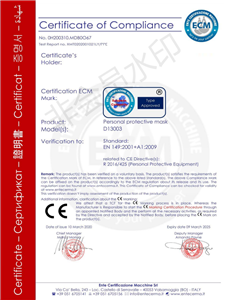
Die KN95-Masken-CE-Zertifizierung für den EU-Import erfordert die Navigation durch die PSA-Verordnung (EU) 2016/425, die Auswahl einer benannten Stelle, die Durchführung von Konformitätsbewertungsmodulen und EN 149-Prüfungen. Dieser Leitfaden behandelt den gesamten Prozess und häufige Fallstricke.
What KN95 Mask CE Certification Requires for EU Import?
Understanding the KN95 Mask CE Certification Landscape
For B2B buyers sourcing personal protective equipment, the path to importing KN95 masks into the European Union hinges on one critical compliance milestone: securing valid kn95 mask CE certification under the applicable regulatory framework. Unlike the common misconception that CE marking is a single universal approval, the reality involves navigating specific EU directives, selecting the correct conformity assessment route, and working with a Notified Body.
The Regulatory Foundation: EU Directives Governing KN95 Masks
KN95 masks fall under the Personal Protective Equipment Regulation (EU) 2016/425. Under this regulation, KN95 masks are generally considered Category III PPE because they protect the wearer from solid and liquid aerosols. This classification mandates that the manufacturer engage a Notified Body for conformity assessment. Without this third-party involvement, a CE mark on a KN95 mask is not legally valid for the EU market.
Notified Body Selection: A Critical Decision Point
A Notified Body is an organization designated by an EU member state to assess conformity. For kn95 mask CE certification, the Notified Body must be accredited under the PPE Regulation and hold the specific scope for respiratory protective devices. Verify the chosen body in the European Commission's NANDO database. Justsun's KN95 products carry CE certification to GB2626-2006, with five-layer meltblown construction achieving at least 95% filtration efficiency.
The Conformity Assessment Procedure: Step-by-Step
Module B - EU-Type Examination
The manufacturer submits a technical dossier including design drawings, material specifications, test reports from an accredited laboratory, and manufacturing process description. The Notified Body reviews documentation and may conduct tests on representative samples.
Module D - Production Quality Assurance
The manufacturer must implement a quality management system covering production, final product inspection, and testing. The Notified Body conducts initial factory audits and periodic surveillance visits, typically annually.
Alternatively, Module C2 (product verification) can be used, involving testing every production batch or statistically representative samples.
Technical Documentation and Testing Requirements
The primary standard is EN 149:2001+A1:2009, which classifies masks into FFP1, FFP2, and FFP3. Key tests include:
- Filtration efficiency: Using NaCl and paraffin oil aerosols at specified flow rates.
- Breathing resistance: Both inhalation and exhalation within defined limits.
- Total inward leakage: Assesses the seal between mask and wearer's face.
- Clogging capacity: Ability to maintain low breathing resistance as it loads with particles.
- Flammability: Material must not support combustion.
The kn95 mask CE test reports must come from ISO 17025 accredited laboratories recognized by the Notified Body.
Import Process: Customs Clearance and Market Surveillance
The manufacturer must issue an EU Declaration of Conformity (DoC), which must be kept available for 10 years. Customs authorities may request the DoC, EU-type examination certificate, and test reports during clearance. Market surveillance authorities may conduct random testing after the masks are placed on the market.
Common Pitfalls and How to Avoid Them
- Accepting self-declared CE marks: Always verify the Notified Body number in NANDO.
- Confusing KN95 with FFP2: Ensure the mask is tested and certified under EN 149, not just GB 2626. The kn95 mask CE products from Justsun carry CE certification to GB2626-2006.
- Overlooking production quality assurance: A valid type examination certificate alone does not guarantee ongoing compliance.
- Ignoring language and labeling requirements: Packaging must be in the official language of the destination country.
- Assuming one certificate covers all variants: Design or material changes may require a new certificate.
Frequently Asked Questions
Q: What is the difference between a CE mark and a CE certificate?
A: The CE mark is a symbol on the product; the CE certificate is the formal document issued by a Notified Body confirming conformity.
Q: Can I import KN95 masks with only a Chinese GB 2626 certification?
A: No. GB 2626 is not recognized as equivalent to EU requirements. You must obtain CE certification under the PPE Regulation based on EN 149 testing.
Q: How long does the certification process take?
A: Typically three to six months for new certifications, depending on the Notified Body's workload.
Q: Do I need to renew the CE certificate?
A: The EU-type examination certificate is valid for up to five years, subject to annual surveillance audits.
Call to Action
Navigating kn95 mask CE certification requires careful planning and verification at every step. If you are evaluating suppliers or need assistance with compliance documentation, contact our team for a detailed consultation.