
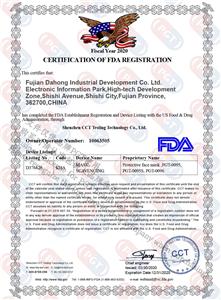
A comprehensive guide for B2B buyers on evaluating KN95 respirator suppliers. Covers factory audit protocols, GB2626 certification verification, filtration testing standards, and risk management strategies for bulk procurement. Includes a practical checklist, compliance table, and FAQ section to help procurement professionals make informed, low-risk sourcing decisions.
BUYER GUIDE · KN95 RESPIRATORS
KN95 Respirator Supplier Evaluation Checklist: Factory Audit, GB2626 Compliance, Filtration Testing, and Bulk Procurement Risk Management
• A proper KN95 factory audit covers production capacity, quality management system, and raw material traceability — not just a walkthrough.
• GB2626-2019 is the mandatory Chinese standard for KN95; verify the supplier holds a valid test report from a CNAS-accredited lab.
• Filtration efficiency testing (≥95% for NaCl and DOP at 85 L/min) must be conducted per GB2626 protocol; ask for batch-specific test data.
• Bulk procurement risks include inconsistent quality across lots, delayed certification documentation, and hidden MOQ clauses — mitigate with a pre-shipment inspection and a clear contract.
Introduction: Why a Systematic KN95 Supplier Evaluation Matters
For B2B buyers sourcing KN95 respirators from China, the market is vast but uneven. A supplier may claim "GB2626 compliant" or "CE certified," but without a structured evaluation, you risk receiving products that fail filtration tests, lack proper documentation, or arrive with inconsistent quality across shipments.
This article provides a practical, step-by-step checklist for KN95 respirator supplier evaluation. It covers the four pillars of due diligence: factory audit, GB2626 compliance verification, filtration testing, and bulk procurement risk management. Use it as a reference document when vetting new suppliers or auditing existing ones.
1. Factory Audit: What to Check On-Site

A KN95 factory audit is the first line of defense. It verifies that the supplier has the physical infrastructure, process control, and quality management system to produce consistent respirators. If you cannot visit in person, request a live video walkthrough or hire a third-party inspection agency.
1.1 Production Capacity & Equipment
- Meltblown fabric production line: Does the factory produce its own meltblown, or does it rely on external suppliers? Self-production often means better control over filtration quality.
- Mask-making machines: Count the number of automated lines and their daily output. A typical KN95 line produces 80,000–120,000 pieces per day. Ask for the model and year of the equipment.
- Ear-loop welding & nose clip attachment: Check if these processes are automated or manual. Automated welding ensures consistent tension and reduces defects.
1.2 Quality Management System (QMS)
- ISO 13485 certification: This is the medical device QMS standard. While not mandatory for KN95 (which is a respirator, not a medical device under Chinese regulation), it indicates a higher level of process control.
- In-process quality checks: Ask to see records of hourly filtration efficiency spot tests, pressure drop measurements, and visual inspections.
- Raw material traceability: Does the factory keep batch records for meltblown fabric, non-woven fabric, nose clips, and ear loops? A traceable system allows you to isolate quality issues to specific lots.
1.3 Cleanroom & Environmental Controls
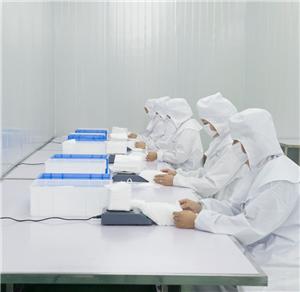
- Workshop cleanliness: KN95 production should occur in a cleanroom environment (Class 100,000 or better). Check for air showers, positive pressure, and HEPA filtration.
- Temperature & humidity monitoring: These affect meltblown electrostatic charge and filtration performance. Ask for daily log records.
| Audit Item | What to Verify | Risk if Missing |
|---|---|---|
| Meltblown source | Self-produced or certified external supplier | Inconsistent filtration efficiency |
| Mask machine count | ≥3 automated lines for bulk orders | Long lead time, low capacity |
| ISO 13485 | Valid certificate from accredited body | Weak QMS, higher defect rate |
| In-process testing | Hourly filtration & pressure drop records | No real-time quality control |
| Cleanroom class | Class 100,000 or better | Microbial contamination risk |
2. GB2626 Compliance Verification
GB2626-2019 is the Chinese national standard for respiratory protective equipment — non-powered air-purifying particle respirators. It is the equivalent of the US NIOSH N95 standard. A GB2626 KN95 supplier verification must confirm that the respirator meets the following key requirements:
2.1 Filtration Efficiency
- NaCl (sodium chloride) aerosol: ≥95% at 85 L/min flow rate.
- DOP (dioctyl phthalate) oil aerosol: ≥95% at 85 L/min (for oil-resistant types).
- Test report: Must be issued by a CNAS-accredited laboratory. Ask for the report number and verify it online at the CNAS website.
2.2 Leakage & Fit
- Total inward leakage (TIL): ≤8% for the KN95 class.
- Exhalation valve leakage: If the mask has a valve, it must meet ≤0.02% leakage.
2.3 Breathing Resistance
- Inhalation resistance: ≤350 Pa at 85 L/min.
- Exhalation resistance: ≤250 Pa at 85 L/min.
2.4 Marking & Documentation
- Product labeling: Must include "GB2626-2019 KN95," manufacturer name, model, production date, and expiration date.
- User instructions: In Chinese (for domestic sale) or English (for export).
- Certificate of conformity (CoC): Issued by the manufacturer, not a third party.
3. Filtration Testing: What to Ask For
Beyond the initial certification, you should request batch-specific filtration test data for each production lot you intend to purchase. This is especially important for KN95 bulk procurement, where quality can vary between batches.
3.1 Types of Tests
- Initial type test (ITT): Full GB2626 testing on a sample from the first production batch. This is the baseline.
- Batch release test: Simplified testing (filtration efficiency + pressure drop) on a random sample from each production lot. Ask for the test method and acceptance criteria.
- Third-party audit test: An independent lab (e.g., SGS, TÜV, Intertek) tests a sample from your shipment. This is optional but recommended for high-value orders.
3.2 How to Interpret Test Results
- Filtration efficiency (NaCl): Look for a minimum of 95%. Many quality KN95 masks achieve 97–99%.
- Pressure drop: Lower is better for breathability. Above 300 Pa at 85 L/min may cause discomfort during prolonged use.
- Sample size: A statistically valid sample (e.g., 20 pieces per 10,000 lot) gives more reliable data than a 3-piece test.
4. Bulk Procurement Risk Management
KN95 bulk procurement involves significant financial commitment. Without proper risk management, you may face delays, quality failures, or hidden costs. Here is a checklist to mitigate these risks:
4.1 Contract Essentials
- Specifications: Include the exact model, GB2626 compliance, filtration efficiency target, and packaging requirements.
- Inspection clause: Specify that a pre-shipment inspection (PSI) by a third party is mandatory. The buyer bears the cost, but the supplier must allow access.
- Acceptance criteria: Define the acceptable quality level (AQL). For KN95, a common AQL is 1.0 for critical defects (e.g., filtration failure) and 2.5 for major defects (e.g., cosmetic issues).
- Penalty clause: Include liquidated damages for late delivery or failure to meet specifications.
4.2 Payment Terms
- Deposit: 30% is standard. Avoid paying more than 50% upfront.
- Balance: Pay against the scanned copy of shipping documents (Bill of Lading, packing list, invoice) after the PSI passes.
- Letter of Credit (L/C): For large orders (>$100,000), consider an irrevocable L/C to reduce payment risk.
4.3 Logistics & Lead Time
- Production lead time: Typically 15–30 days for a 20-foot container (about 50,000–80,000 pieces). Confirm the lead time in writing.
- Shipping: Sea freight is the most economical for bulk. Air freight is faster but 5–10x more expensive.
- Customs clearance: Ensure the supplier provides a complete export customs clearance package, including the GB2626 test report, CoC, and commercial invoice.
5. Frequently Asked Questions (FAQ)
Q1: What is the difference between KN95 and N95?
KN95 refers to the Chinese standard GB2626-2019, while N95 refers to the US NIOSH 42 CFR Part 84 standard. Both require ≥95% filtration efficiency. The main difference is in testing protocols: N95 uses a 200 mg NaCl challenge at 85 L/min, while KN95 uses a similar method but with slightly different particle size distribution. In practice, many KN95 masks meet N95 requirements, but they are not interchangeable without additional testing.
Q2: Can a KN95 mask be CE certified?
Yes, but with a distinction. A KN95 mask can be CE marked under the Personal Protective Equipment Regulation (EU) 2016/425 as a Category III PPE. However, the CE certification must be based on the European standard EN 149 (FFP2 or FFP3), not GB2626. Some suppliers claim "CE certified" but only have a CE declaration of conformity without a Notified Body review. Always ask for the Notified Body number (e.g., 0123, 2797) and verify it on the EU NANDO database. For a KN95 mask CE certified manufacturer, the correct path is to test per EN 149 and obtain a valid EU Type Examination Certificate.
Q3: What is the minimum order quantity (MOQ) for KN95 bulk procurement?
MOQ varies by supplier. For a standard KN95 mask, typical MOQ is 10,000–50,000 pieces per model. Some factories accept 5,000 pieces for a trial order. Confirm MOQ, packaging cost, and tooling charges (if any) before placing an order.
Q4: How do I verify a GB2626 test report?
Check the report for the following: (1) The testing laboratory must be CNAS-accredited (look for the CNAS logo and accreditation number). (2) The report must include the test method (GB2626-2019), sample description, test results for filtration efficiency, leakage, and breathing resistance. (3) Verify the report number on the CNAS website or contact the lab directly.
Q5: What should I do if a shipment fails the pre-shipment inspection?
Your contract should specify the remedy: (a) The supplier reworks or replaces the defective lot at their cost, (b) you negotiate a price reduction proportional to the defect rate, or (c) you reject the entire shipment and cancel the order. Always have a clear dispute resolution clause (e.g., arbitration in Hong Kong or Singapore).
Conclusion: Build a Repeatable Evaluation Process
Evaluating a KN95 respirator supplier is not a one-time check. It is a repeatable process that should be applied to every new supplier and periodically to existing ones. The four pillars — factory audit, GB2626 compliance, filtration testing, and bulk procurement risk management — form a complete framework that reduces the likelihood of receiving non-compliant or low-quality products.
For buyers who want to streamline this process, consider working with a sourcing agent or third-party inspection company that specializes in PPE. They can conduct the factory audit, verify test reports, and perform pre-shipment inspections on your behalf.
Ready to start your KN95 sourcing project? Contact us for a detailed supplier evaluation checklist template and a list of recommended third-party testing labs. We can also arrange a virtual factory tour of our partner facilities.