
Les acheteurs du secteur de la santé sont confrontés à des défis complexes lors de l'approvisionnement en masques KN95. Ce guide couvre les normes de certification, les critères d'achat, l'évaluation des fournisseurs et la conformité réglementaire pour les environnements cliniques.
Procurement Guide · Healthcare PPE
How to Source KN95 Masks for Healthcare Buyers
Healthcare buyers face a complex landscape when sourcing personal protective equipment. The KN95 mask has become a critical component of infection control protocols, yet procurement decisions are often hampered by inconsistent quality standards, supply chain volatility, and regulatory ambiguity. Unlike consumer purchases, healthcare procurement demands verifiable filtration efficiency, proper fit testing, and documented compliance with international standards. This guide addresses the specific pain points that procurement officers, hospital administrators, and infection control teams encounter when selecting KN95 masks for clinical environments.
Understanding KN95 Mask Standards and Certification
The first step in any procurement process is understanding what constitutes a legitimate KN95 mask. Unlike N95 respirators certified by NIOSH in the United States, KN95 masks comply with Chinese standard GB2626-2006 (also referenced as GB2626-2019). Healthcare buyers must verify that suppliers can provide documentation proving their masks meet the following requirements:
- Particle Filtration Efficiency (PFE): Minimum 95% filtration of 0.3 micron particles
- Inhalation Resistance: ≤350 Pa at 85 L/min flow rate
- Exhalation Resistance: ≤250 Pa at 85 L/min flow rate
- Leakage Rate: Total inward leakage ≤8% for particulate filters
A critical distinction often overlooked by buyers: KN95 masks are tested under Chinese standards, which may not be directly equivalent to NIOSH N95 certification. While many KN95 masks perform comparably, procurement teams should request test reports from accredited laboratories (such as CNAS or ILAC MRA signatories) and verify that the manufacturer holds a valid GB2626 certification.
Key Insight: The Justsun KN95 Cup Respirator Grey is CE certified to GB2626-2006 with ≥95% filtration at 0.3µm. The rigid thermoplastic cup design maintains a breathing cavity during extended shifts, making it suitable for 8+ hour continuous use in healthcare settings.
Key Procurement Criteria for Healthcare Environments
When evaluating KN95 mask suppliers for healthcare use, prioritize these selection dimensions:
Filtration Performance Consistency
Healthcare buyers should request batch-level test reports rather than relying on a single certification document. Real-world performance can vary significantly between production runs. Ask suppliers about their quality control processes, including frequency of in-house testing, third-party audit intervals, and statistical sampling methods.
Fit and Seal Integrity
A mask's filtration efficiency is meaningless if it does not seal properly against the wearer's face. Healthcare procurement must consider nose wire adjustability, earloops vs. headbands, and sizing options. For extended wear applications, the KN95 Cup Respirator with its dual adjustable head straps and soft foam inner lining reduces facial fatigue.
Material Safety and Biocompatibility
Masks used in healthcare settings must not cause skin irritation or release harmful particles. Request material safety data sheets (MSDS) for all layers, skin sensitization test reports, and formaldehyde content testing.
Comparing KN95 Masks with N95 and FFP2 Alternatives
| Feature | KN95 (GB2626) | N95 (NIOSH 42 CFR 84) | FFP2 (EN 149) |
|---|---|---|---|
| Filtration Efficiency | ≥95% | ≥95% | ≥94% |
| Certification Body | Chinese standard | US NIOSH | EU Notified Body |
| Testing Protocol | NaCl & DOP oil | NaCl | NaCl & paraffin oil |
| Typical Lead Time | 3-6 months | 6-12 months | 4-8 months |
Common Pain Points in KN95 Mask Procurement
Counterfeit and Substandard Products
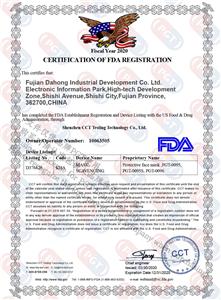
The market is flooded with masks claiming KN95 compliance that fail basic filtration tests. Red flags include missing manufacturer name and address on packaging, no certification number printed on the mask, and claims of "FDA approved" without actual clearance.
Supply Chain Disruptions
Healthcare buyers report delays of 4–8 weeks for custom orders. Mitigation strategies include maintaining 60–90 day safety stock, diversifying suppliers across multiple regions, and negotiating consignment agreements.
Regulatory Compliance Complexity
Different jurisdictions have varying acceptance of KN95 masks. The US CDC does not recommend KN95 masks for healthcare workers as a primary alternative to N95s, but they may be used in crisis capacity situations. In the EU, buyers must ensure the supplier has obtained EU-type examination certification.
Selecting a Reliable KN95 Mask Supplier
Healthcare buyers should evaluate suppliers using these criteria:
Documentation Requirements
Request and verify: GB2626 certification, third-party test report from an ISO 17025 accredited laboratory, batch-specific quality control records, export license, and certificate of origin.
Quality Assurance Protocols
Ask suppliers about incoming material inspection, in-process quality checks, final product testing percentages, and non-conformance handling procedures.
Use Cases: When KN95 Masks Are Appropriate in Healthcare
General Patient Care Areas
KN95 masks are suitable for healthcare workers in low-risk settings such as outpatient clinics, administrative areas, and patient rooms where no aerosol-generating procedures occur.
Crisis Capacity Situations
During pandemic surges when N95 supplies are critically low, KN95 masks can serve as a temporary alternative with proper fit testing protocols.
Extended-Shift Industrial Protection
For workers in pharmaceutical cleanrooms or industrial settings, the KN95 Valve Respirator Black offers a one-way exhalation valve that reduces breathing resistance and heat retention during prolonged wear.
Frequently Asked Questions
Can KN95 masks be used for surgical procedures?
No. KN95 masks are not cleared as surgical masks because they lack fluid resistance testing. For surgical settings, use FDA-cleared surgical N95 respirators.
How should KN95 masks be stored?
Store in a cool, dry place (15–30°C, <60% humidity) away from direct sunlight. Use within the manufacturer's stated shelf life, typically 3–5 years from production date.
Do KN95 masks require fit testing?
OSHA requires fit testing for all respirators used in occupational settings, including KN95 masks when used as respiratory protection.
Need certified KN95 masks for your healthcare facility?
Request a Quote & Samples