
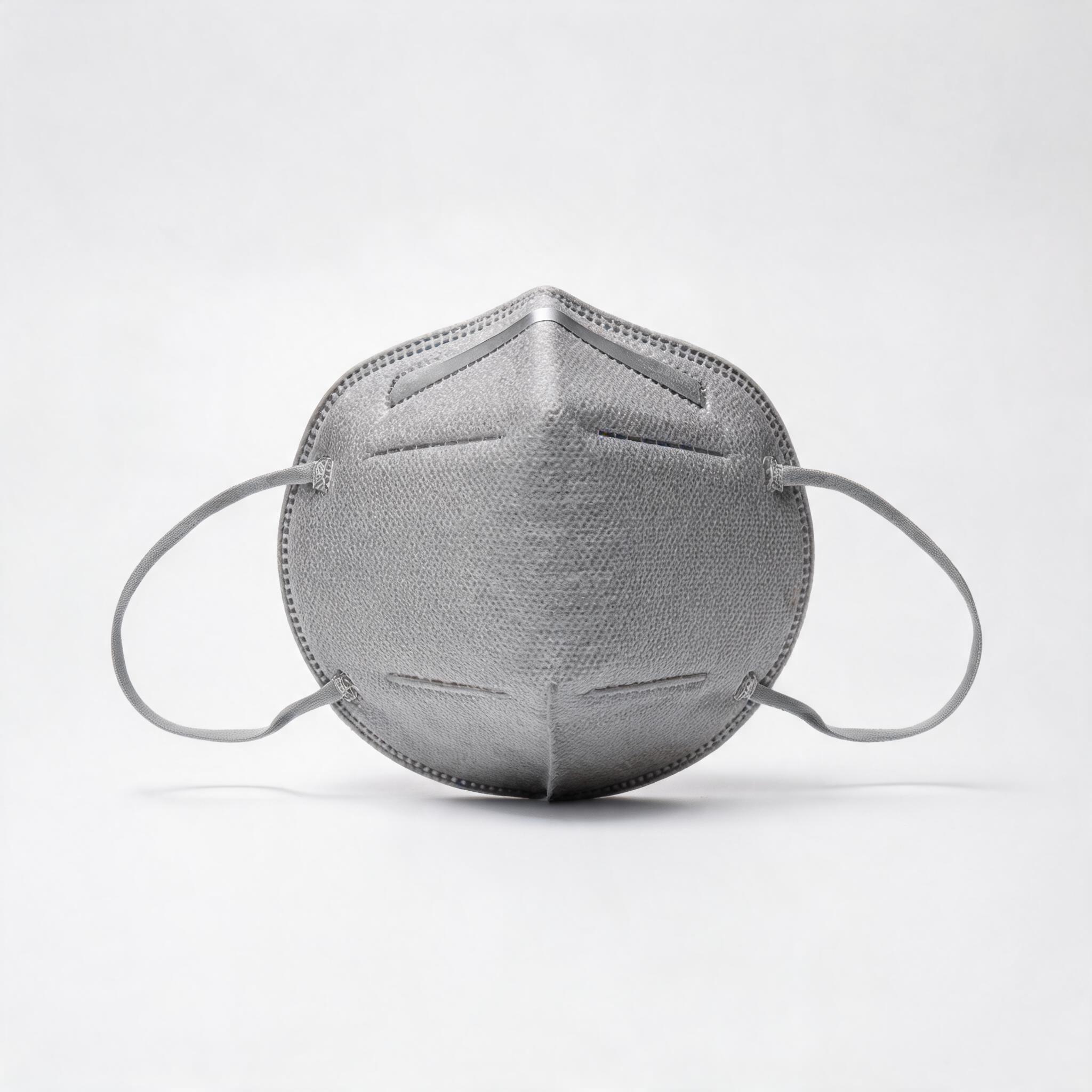
Un guide détaillé du processus de fabrication des respirateurs KN95 pour les équipes d'approvisionnement B2B, couvrant la production de meltblown, les points de contrôle qualité, l'automatisation, les contrôles environnementaux et les questions à poser aux fournisseurs.
For B2B procurement teams evaluating KN95 respirator suppliers, understanding the manufacturing process is not just a technical exercise-it is a critical risk management tool. The way a respirator is made determines whether its filtration efficiency, breathing resistance, and structural integrity will remain consistent across production batches. A supplier that cannot explain their manufacturing process in detail is a supplier that cannot guarantee batch-to-batch quality.
The KN95 Manufacturing Value Chain: From Resin to Finished Product
KN95 respirator manufacturing involves a sequence of specialized processes, each of which directly impacts product performance. Understanding this chain helps buyers identify where quality risks originate and what to verify during factory audits.
1. Meltblown Fabric Production
The meltblown layer is the heart of a KN95 respirator's filtration capability. It is produced by extruding molten polypropylene resin through fine die nozzles at high velocity, creating a web of microfibers with diameters between 1 and 5 microns. These fibers create a tortuous path that captures particles through a combination of inertial impaction, interception, diffusion, and electrostatic attraction.
The key quality variables in meltblown production include:
- Polymer throughput rate: Affects fiber diameter distribution and web uniformity
- Air temperature and velocity: Determines fiber fineness and web density
- Die-to-collector distance (DCD): Influences web porosity and basis weight
- Electrostatic charging: Corona discharge or hydrocharging adds an electrostatic charge that dramatically improves filtration efficiency for particles in the most penetrating size range (0.1-0.3 µm)
A factory that produces its own meltblown fabric in-house has greater control over these variables than one that purchases finished fabric from third-party suppliers. The meltblown quality control process should be a primary focus of any factory audit.
2. Spunbond and Nonwoven Layer Production
KN95 respirators typically use a multi-layer structure: an outer spunbond layer for moisture resistance and structural support, one or two meltblown layers for filtration, and an inner spunbond layer for skin comfort. Spunbond fabric is produced by spinning continuous polypropylene filaments and bonding them thermally. The gsm (grams per square meter) of each layer affects both filtration and breathability.
3. Fabric Lamination and Cutting
The individual nonwoven layers are laminated together using ultrasonic bonding or thermal calendaring. The laminated fabric is then cut into the respirator shape-flat-fold or cup-depending on the product design. Cutting precision affects the consistency of the final product dimensions, which in turn affects fit and seal quality.
4. Edge Bonding and Nose Clip Insertion
The cut respirator blank is folded and its edges are sealed using ultrasonic welding, which creates a strong bond without adhesives that could off-gas or irritate skin. The nose clip-usually a malleable aluminum or plastic-coated wire-is inserted at this stage. The positioning and fixation of the nose clip directly affects the respirator's ability to seal across the nasal bridge.
5. Ear Loop or Head Strap Attachment
Elastic ear loops or head straps are attached by ultrasonic welding or mechanical stapling. The attachment point strength is a critical quality parameter-loose straps are a primary cause of product rejection in field use. Strap tension must be sufficient to maintain a seal without causing ear discomfort or headache during extended wear.
6. Packaging and Sterilization
Finished respirators are counted and sealed into inner boxes (typically 50 pieces per box for KN95). Inner boxes are then packed into master cartons for shipping. While KN95 respirators are not sterile products, packaging must protect against moisture, contamination, and mechanical damage during transit. Proper packaging also preserves the shelf life of the electrostatic charge on the meltblown layer.
Critical Process Parameters Buyers Should Verify
Audit checklist: When visiting a KN95 manufacturing facility, request process documentation for each of the following parameters. A capable supplier should have recorded data, not verbal assurances.
| Process Step | Key Parameter | Why It Matters |
|---|---|---|
| Meltblown extrusion | Fiber diameter (1-5 µm target) | Determines filtration efficiency and breathing resistance |
| Electrostatic charging | Charge density (voltage applied) | Enhances filtration of sub-micron particles by 30-100% |
| Basis weight (gsm) | 20-30 gsm for meltblown | Lower gsm = better breathability but potentially lower filtration |
| Ultrasonic edge bonding | Welding pressure and frequency | Weak bonds cause edge leakage; excessive pressure damages fabric |
| Strap attachment | Pull strength (≥10N typical) | Strap detachment renders the respirator unusable |
| Nose clip placement | Position tolerance (±2mm) | Mispositioned clips cause uneven sealing pressure across nose bridge |
In-House vs Outsourced Meltblown: A Key Supplier Differentiator
One of the most significant differentiators among KN95 manufacturers is whether they produce their own meltblown fabric or purchase it from third-party suppliers. This distinction has direct implications for quality consistency and procurement risk.
In-house meltblown production allows the manufacturer to control fiber diameter, basis weight, electrostatic charge, and all other parameters that determine filtration performance. Quality can be monitored and adjusted in real time, and batch-specific test data can be traced back to specific production runs of meltblown fabric.
Outsourced meltblown fabric introduces a supply chain variable that the respirator manufacturer cannot fully control. If the meltblown supplier changes their process parameters-or substitutes a different grade of polypropylene resin-the respirator manufacturer may not detect the change until downstream quality testing reveals a problem, by which point a full production batch may be affected.
For B2B buyers, this means that suppliers with in-house meltblown capability generally offer more consistent quality and faster traceability in the event of quality issues. Justsun operates meltblown production in-house at its 26,100 m² facility, which is a significant advantage for buyers requiring batch-level quality documentation.
Quality Control Checkpoints in the Manufacturing Process
A robust KN95 manufacturing process includes quality control checks at multiple stages. The factory audit checklist for KN95 quality should verify the following checkpoints:
- Incoming material inspection: Verification of polypropylene resin grade, melt flow index, and meltblown fabric specifications before production begins.
- In-process meltblown testing: Regular sampling of meltblown fabric for basis weight, fiber diameter, and filtration efficiency during extrusion.
- Laminated fabric testing: Verification of total gsm, layer adhesion strength, and air permeability after lamination.
- Finished product testing: Filtration efficiency (PFE), breathing resistance (inhalation and exhalation), CO2 dead space, strap attachment strength, nose clip retention force, and visual inspection for defects.
- Batch release testing: Final sampling per AQL plan before batch release. Test reports should accompany each shipment.
How Manufacturing Process Affects KN95 vs N95 vs FFP2 Equivalence
The manufacturing process for KN95, N95, and FFP2 respirators is fundamentally similar-all use meltblown polypropylene as the filtration medium and similar multi-layer constructions. The differences lie primarily in the testing and certification requirements imposed by each standard, not in the manufacturing technology itself.
However, the KN95 vs FFP2 vs N95 procurement guide differences do have manufacturing implications. N95 respirators certified under NIOSH 42 CFR 84 must meet specific requirements for inhalation and exhalation resistance that are tested under standardized conditions. KN95 respirators under GB2626-2006 have similar but not identical test parameters. Manufacturers producing respirators for multiple markets must ensure that their process accommodates the most stringent requirements of all target standards.
Automation Level and Its Impact on Quality Consistency
The degree of automation in a respirator manufacturing facility directly affects quality consistency. Highly automated lines reduce human handling errors and produce more uniform products. Key automation stages include:
- Automated meltblown line with real-time basis weight monitoring
- Automatic fabric lamination and cutting
- Robotic nose clip insertion and positioning
- Automated ultrasonic edge sealing with pressure monitoring
- Automatic counting and boxing
Facilities with significant manual labor in the assembly process are more susceptible to batch-to-batch variation, particularly in edge bonding quality and strap attachment consistency. When evaluating suppliers, ask about the automation level of each production stage and the ratio of automated to manual operations.
Environmental Controls in Manufacturing
The manufacturing environment itself affects product quality. Temperature and humidity control in the production area are critical because:
- High humidity can dissipate the electrostatic charge on meltblown fabric, reducing filtration efficiency
- Temperature fluctuations affect polymer flow during extrusion, altering fiber characteristics
- Dust and particulate contamination in the production area can compromise the cleanliness of the finished product
A controlled production environment with temperature (20-25°C) and humidity (40-60% RH) management is a sign of a manufacturer that understands the sensitivity of the meltblown process to environmental conditions.
Supplier Evaluation: Manufacturing Process Questions
For B2B buyers conducting supplier due diligence, the following questions will help assess manufacturing capability:
- Do you produce meltblown fabric in-house, or do you purchase it from external suppliers?
- What is the rated production capacity of your meltblown line (tons/month)?
- What electrostatic charging method do you use (corona discharge, hydrocharging)?
- What is the basis weight of your meltblown layer, and what is the acceptable tolerance range?
- What quality control checkpoints exist between meltblown production and finished product packaging?
- What is your AQL sampling plan for finished product release?
- Can you provide batch-specific test reports showing filtration efficiency, breathing resistance, and strap strength for each shipment?
- What environmental controls (temperature, humidity) are maintained in your production facility?
- What is the automation level of your respirator assembly line?
- How do you handle nonconforming product identified during in-process or final inspection?
Conclusion
The manufacturing process is the foundation of KN95 respirator quality. A supplier's ability to explain their process in detail, provide documented quality control data, and demonstrate environmental and process controls is a strong indicator of consistent product quality. For B2B procurement teams, investing time in understanding the manufacturing process-before placing a bulk order-is one of the most effective risk mitigation strategies available. A respirator sourced from a manufacturer with in-house meltblown production, automated assembly, and rigorous in-process quality control will consistently outperform one sourced on price alone.