
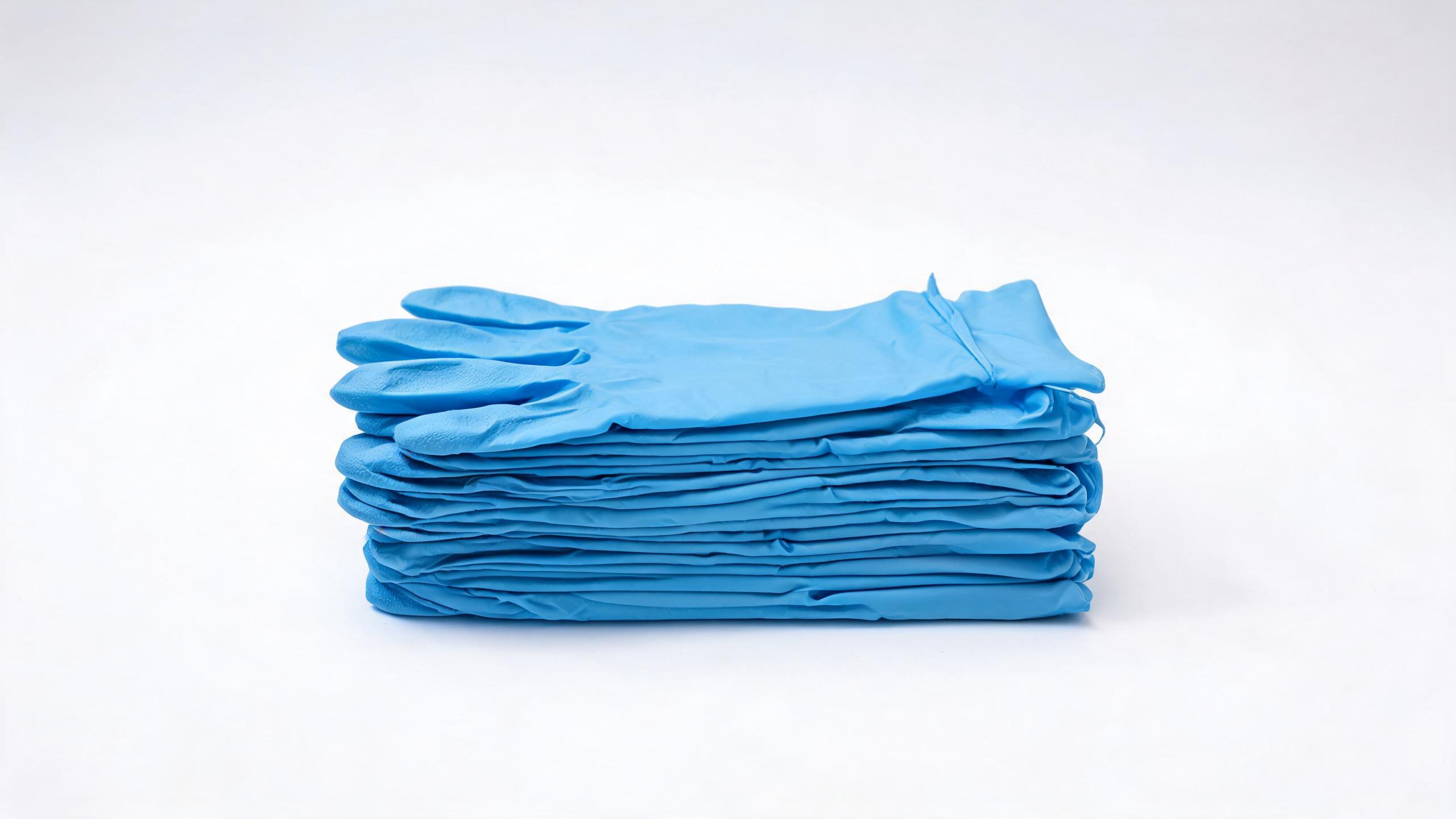
A practical, fact-driven guide for B2B buyers sourcing nitrile gloves wholesale. Covers bulk pricing tiers, realistic MOQ expectations, global quality standards (ASTM, EN, AQL), and a step-by-step supplier evaluation checklist. Includes a comparison table, common pitfalls, and actionable tips to help you make informed procurement decisions.
BUYER GUIDE
- Bulk nitrile glove pricing is driven by material grade (industrial vs. medical), thickness, and order volume — not just brand.
- MOQ for wholesale typically ranges from 10,000 to 100,000 pieces; smaller MOQs are available from some suppliers but often at a premium.
- Global quality standards (ASTM D6319, EN 455, AQL 1.5/4.0) are non-negotiable for medical and food-grade applications.
- Supplier evaluation should go beyond price: factory audits, certification validity, and lead time reliability are equally critical.
- Always request a pre-shipment sample and test it against your target market's regulatory requirements.
Introduction: Why Nitrile Gloves Wholesale Sourcing Demands a Strategic Approach
Nitrile gloves have become the default choice across healthcare, food processing, industrial cleaning, and laboratory sectors. Their puncture resistance, chemical barrier properties, and latex-free formulation make them a versatile commodity. But for B2B buyers — whether you are a distributor, hospital procurement manager, or industrial safety officer — sourcing nitrile gloves wholesale is not simply about finding the lowest price per box.
The real challenge lies in balancing three variables: bulk pricing, quality consistency, and supplier reliability. A single batch failure (e.g., high AQL, wrong thickness, or missing certification) can disrupt your supply chain, damage your reputation, or even trigger regulatory penalties. This guide breaks down each factor with specific numbers, standards, and evaluation criteria, so you can make procurement decisions with confidence.
1. Understanding Bulk Pricing for Nitrile Gloves
Pricing for nitrile gloves bulk orders varies significantly based on several concrete factors. Below is a typical pricing structure for common grades and volumes. Note: prices are indicative and should be verified with current suppliers.
| Glove Grade / Type | Thickness (mm) | Typical Bulk Price (per 100 pieces) | Common MOQ (cases) |
|---|---|---|---|
| Industrial / General Purpose | 0.05 – 0.08 | $3.00 – $5.00 | 50 – 100 |
| Medical Examination (Powder-Free) | 0.06 – 0.10 | $5.00 – $8.00 | 20 – 50 |
| Heavy-Duty / Chemical Resistant | 0.12 – 0.20 | $8.00 – $15.00 | 10 – 30 |
| Extended Cuff / Surgical Grade | 0.10 – 0.15 | $10.00 – $18.00 | 10 – 20 |
Key pricing drivers:
- Material grade: Medical-grade nitrile (meeting ASTM D6319 or EN 455) costs more than industrial-grade due to stricter testing and certification.
- Thickness: Heavier gloves (e.g., 0.12 mm) use more raw material, raising cost per unit.
- Volume: Orders above 100,000 pieces often unlock tiered discounts. Some suppliers offer 5–10% off for 500,000+ piece orders.
- Packaging: Bulk in poly bags (vs. individual boxes) reduces packaging cost, but some markets require boxed retail-ready packaging.
- Certification cost: Suppliers with valid FDA, CE, or ISO 13485 certifications may charge a premium — but this is often a sign of quality control.
"A $0.02 per glove difference on a 1,000,000-piece order equals $20,000. Always ask for a volume-based quote before committing."
2. MOQ: What to Expect from Nitrile Glove Suppliers
Minimum Order Quantity (MOQ) is a critical negotiation point. For nitrile glove suppliers, MOQ is typically expressed in cases (one case = 10 boxes of 100 gloves = 1,000 pieces). Common MOQ ranges:
- Small-scale buyers (clinics, small labs): 10–20 cases (10,000–20,000 pieces). Some suppliers accept 5 cases at a higher per-unit price.
- Mid-volume distributors: 50–100 cases (50,000–100,000 pieces). This is the sweet spot for competitive pricing.
- Large-scale procurement (hospitals, government tenders): 200+ cases (200,000+ pieces). Many suppliers offer custom pricing and dedicated logistics.
Tips for negotiating MOQ:
- If your initial order is small, ask if the supplier offers a "trial order" at a slightly higher price — this lets you evaluate quality before committing to a large volume.
- Combine multiple glove types (e.g., industrial + medical) into one order to meet the supplier's MOQ threshold.
- Be prepared to share your estimated annual volume. Suppliers are more flexible with buyers who show long-term potential.
3. Quality Standards: What Every B2B Buyer Must Verify
Quality is the most overlooked aspect in price-driven sourcing. When evaluating disposable nitrile gloves supplier options, you must confirm compliance with at least one of these global standards:
| Standard | Region | Key Requirements | Typical AQL |
|---|---|---|---|
| ASTM D6319 | USA | Medical-grade nitrile; tensile strength ≥ 14 MPa; elongation ≥ 500% | 1.5 (medical) or 4.0 (industrial) |
| EN 455 | EU | Medical gloves; freedom from holes, physical properties, biocompatibility | 1.5 |
| ISO 13485 | Global | Quality management system for medical device manufacturing | N/A (system-level) |
| FDA 510(k) | USA | Premarket notification for medical devices; required for US market | 1.5 |
Critical quality parameters to check:
- AQL (Acceptable Quality Limit): For medical exam gloves, AQL 1.5 means no more than 1.5% of gloves in a batch may have pinholes. For industrial use, AQL 4.0 is common. Lower AQL = higher quality.
- Powder-free vs. powdered: Most medical markets now require powder-free gloves to reduce allergic reactions. Verify the supplier's manufacturing process (e.g., chlorinated or polymer-coated).
- Physical properties: Tensile strength (≥14 MPa for medical) and elongation (≥500%) ensure gloves don't tear during use.
- Chemical resistance: If your application involves solvents or acids, request a permeation test report (e.g., ASTM F739).
"Always request a Certificate of Analysis (CoA) for each batch. A reliable supplier will provide it without hesitation."
4. Supplier Evaluation: A Practical Checklist
Evaluating nitrile glove suppliers requires more than a website review. Use this checklist to assess each candidate:
4.1 Factory Audit (or Third-Party Report)
- Is the factory ISO 9001 or ISO 13485 certified? (Ask for the certificate number and verify it on the certification body's website.)
- Does the supplier own the production line, or are they a trader? (Traders can be reliable, but you need to verify their factory's credentials.)
- What is the monthly production capacity? (e.g., 10 million pieces per month vs. 50 million — this affects lead time.)
4.2 Certification Validity
- Check the expiration date of FDA, CE, or other relevant certifications.
- Confirm that the certification covers the specific glove model you are buying — not just the company.
- For EU markets, verify that the CE certificate is issued by a notified body (e.g., BSI, TÜV, SGS).
4.3 Lead Time and Logistics
- What is the typical lead time for a bulk order? (e.g., 30 days after confirmation for 100,000 pieces.)
- Does the supplier have a warehouse near your target port? (This can reduce shipping time.)
- What shipping terms do they offer? (FOB, CIF, EXW — each affects your total cost and risk.)
4.4 Communication and Responsiveness
- How quickly do they respond to technical questions (e.g., about AQL, thickness, or certification)?
- Do they provide a clear, itemized quotation with product code, specs, MOQ, and price per unit?
- Are they willing to send a pre-shipment sample? (A reliable supplier will — and will cover the sample cost for serious buyers.)
4.5 Payment Terms
- Common terms: 30% deposit + 70% against copy of shipping documents (L/C, T/T).
- Be cautious of suppliers demanding 100% upfront payment — this is a red flag.
- For large orders, consider a letter of credit (L/C) to protect both parties.
5. Common Pitfalls in Nitrile Gloves Wholesale Sourcing
Even experienced buyers can fall into these traps. Avoid them:
- Chasing the lowest price: A $0.02 saving per glove may disappear when you receive a batch with AQL 4.0 instead of 1.5, leading to returns or customer complaints.
- Skipping the sample test: Always test the sample against your target market's standards. A glove that passes ASTM D6319 may fail EN 455 — or vice versa.
- Ignoring packaging quality: Poorly sealed boxes or flimsy poly bags can lead to contamination during transit. Ask for packaging photos or a sample box.
- Overlooking shelf life: Nitrile gloves typically have a 3–5 year shelf life. Ensure your order's manufacturing date is recent, especially if you are buying in bulk for long-term storage.
- Not verifying the supplier's export experience: Ask for a list of countries they have exported to. A supplier familiar with your target market's customs and documentation will save you headaches.
6. Frequently Asked Questions (FAQ)
Q: What is the difference between medical-grade and industrial-grade nitrile gloves?
Medical-grade gloves must meet stricter standards (e.g., ASTM D6319, AQL 1.5) and are tested for biocompatibility. Industrial-grade gloves have a higher AQL (4.0) and are not certified for medical use, but they are suitable for cleaning, food handling, and general protection.
Q: How do I calculate the cost per glove for a bulk order?
Divide the total order cost (including shipping, duties, and any certification fees) by the total number of gloves. For example, a $10,000 order of 200,000 gloves = $0.05 per glove. Always include logistics costs in your calculation.
Q: Can I mix different glove types in one container to meet MOQ?
Yes, many suppliers allow mixed orders (e.g., 50% medical, 50% industrial) as long as the total volume meets their MOQ. Confirm this during negotiation.
Q: What documents should I request from the supplier before shipment?
- Packing list
- Commercial invoice
- Certificate of Analysis (CoA)
- Certificate of Origin (for tariff purposes)
- Bill of Lading (or Airway Bill)
- Relevant certification copies (FDA, CE, ISO)
Conclusion: Your Next Step in Sourcing Nitrile Gloves Wholesale
Sourcing nitrile gloves wholesale is a data-driven process. By understanding bulk pricing tiers, MOQ structures, global quality standards, and supplier evaluation criteria, you can avoid costly mistakes and build a reliable supply chain.
Before signing any purchase order, take these actions:
- Request a detailed quotation with product code, thickness, AQL, and certification numbers.
- Ask for at least one pre-shipment sample and test it independently.
- Verify the supplier's factory certification through the issuing body.
- Clarify lead time, payment terms, and shipping terms in writing.
If you are currently evaluating suppliers and need a tailored examination gloves bulk or disposable nitrile gloves supplier recommendation, we welcome you to Request a product catalog & quotation. Include your target market, estimated annual volume, and preferred certification requirements — we will match you with the right product line.