
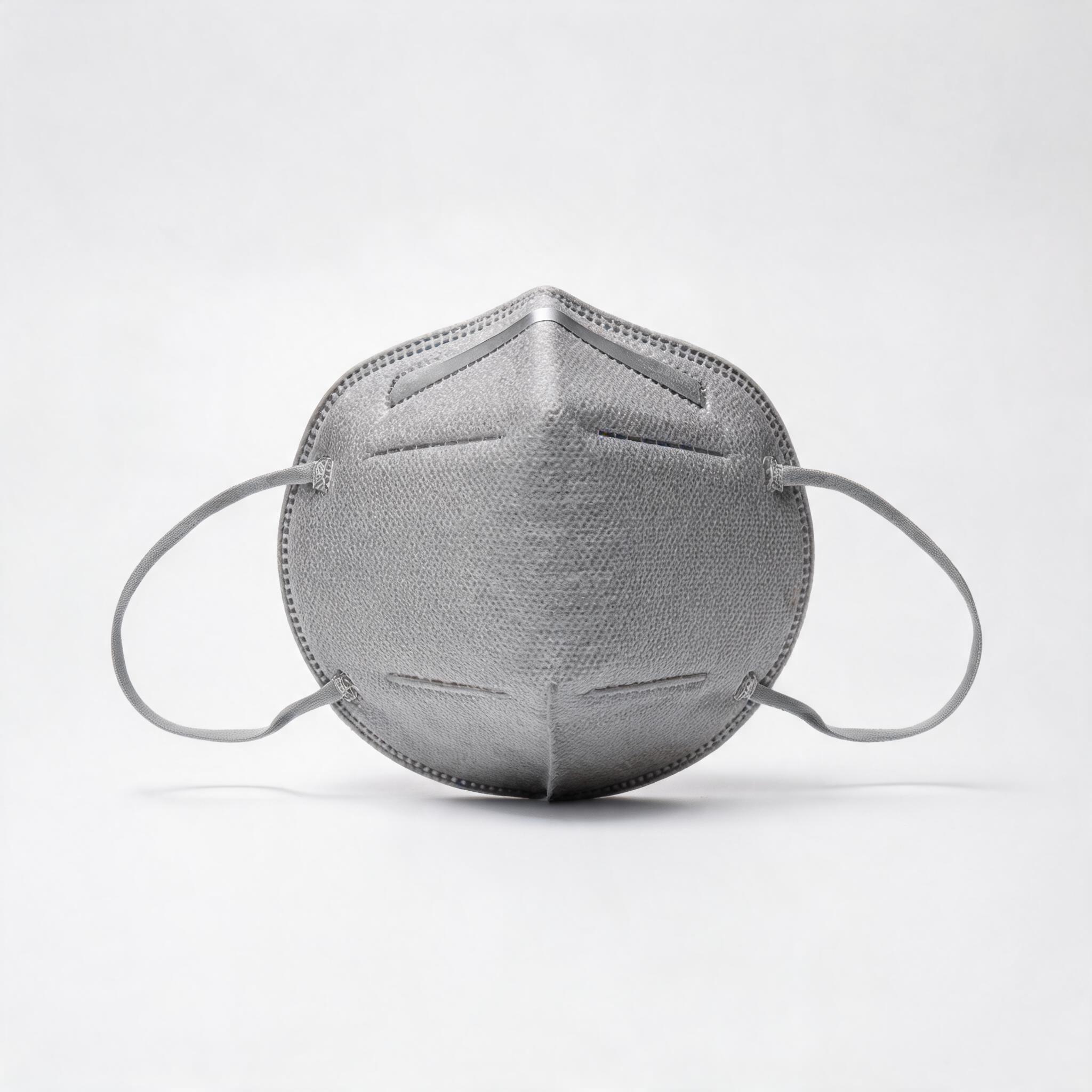
B2B 구매자를 위한 KN95 호흡기 착용 및 밀봉 점검 요구 사항에 대한 종합 가이드로, 정성적 vs 정량적 적합성 테스트, 밀봉 무결성을 손상시키는 요인 및 공급업체 평가 질문을 다룹니다.
For procurement teams sourcing KN95 respirators, filtration efficiency ratings receive the lion's share of attention during supplier evaluation. Yet a respirator that achieves ≥95% PFE in laboratory testing can deliver dramatically lower real-world protection if the seal between mask and face is compromised. Fit and seal integrity are the bridge between declared performance and actual wearer protection—and they should be a central consideration in any B2B respirator procurement program.
Why Fit Testing Matters for KN95 Procurement
The GB2626-2006 standard, under which KN95 respirators are certified, specifies filtration efficiency requirements tested on the filter medium itself. However, the standard's protection factor assumes a proper seal between the respirator and the wearer's face. When gaps exist—whether from incorrect sizing, inadequate strap tension, or facial hair interference—unfiltered air bypasses the filter medium entirely. This is known as bypass leakage, and even a small gap can reduce effective protection from 95% to below 50%.
For B2B buyers, this means that a respirator's certified filtration rating is a necessary but insufficient condition for actual workplace protection. A KN95 respirator specification may list ≥95% filtration, but without fit verification, there is no way to confirm that end users are receiving that level of protection in practice.
Key takeaway for buyers: A respirator without verified fit is a compliance document, not a protection device. Fit testing transforms a specification on paper into confirmed workplace protection.
Types of Fit Testing: Qualitative vs Quantitative
Fit testing for respirators falls into two categories, each with different cost, complexity, and applicability profiles for B2B procurement programs.
Qualitative Fit Testing (QLFT)
Qualitative fit testing relies on the wearer's sensory detection of a test agent (typically saccharin or bitrex aerosol, or isoamyl acetate) introduced around the respirator seal. If the wearer tastes or smells the agent while performing a series of exercises (normal breathing, deep breathing, head movements, talking, bending), the fit fails.
QLFT is pass/fail, relatively inexpensive, and does not require specialized equipment beyond a test hood and agent solution. It is suitable for organizations conducting initial fit checks or screening large numbers of employees. However, it is subjective and cannot quantify the degree of leakage.
Quantitative Fit Testing (QNFT)
Quantitative fit testing uses instrumentation to measure the concentration of particles inside and outside the respirator, calculating a fit factor numerically. A fit factor of 100 or greater is typically required for half-face respirators under most national standards.
QNFT provides objective, reproducible results and is the preferred method for healthcare settings, high-risk industrial environments, and any program subject to regulatory audit. However, it requires more expensive equipment and trained operators.
| Aspect | Qualitative (QLFT) | Quantitative (QNFT) |
|---|---|---|
| Method | Sensory detection of test agent | Instrument-measured particle counting |
| Result type | Pass/fail | Numeric fit factor |
| Cost per test | Low (test hood + agent) | Higher (portable particle counter) |
| Objectivity | Subjective (depends on wearer) | Objective (instrument-measured) |
| Best for | Large-scale screening, initial checks | Healthcare, high-risk, regulated environments |
User Seal Check: The Daily Verification
Beyond formal fit testing (conducted annually or upon initial assignment), every respirator wearer should perform a user seal check each time they don a respirator. This is a quick, self-administered test that verifies the seal is intact before entering a hazardous environment.
The two standard methods are:
- Positive pressure check: The wearer covers the exhalation valve (if present) or blocks the front of the respirator with both hands and exhales gently. If air escapes from the edges, the seal is inadequate.
- Negative pressure check: The wearer covers the inhalation area and inhales gently. If the respirator collapses slightly inward and no air leaks in from the edges, the seal is adequate.
For valved respirators, the positive pressure check requires covering both the valve and the filter surface. The negative pressure check remains the same. Buyers should ensure that end-user training includes the correct seal check procedure for the specific respirator model procured.
Factors That Compromise KN95 Seal Integrity
Several factors can break the seal of a KN95 respirator, even when the correct size has been fit-tested. Procurement teams should be aware of these when specifying respirator requirements and developing user training programs.
Facial Hair
Beards, stubble, and other facial hair that interferes with the sealing surface will prevent a proper seal. This is a well-documented issue across all tight-fitting respirator standards. If a workforce includes personnel who cannot or will not shave, alternatives such as loose-fitting powered air-purifying respirators (PAPRs) may be necessary.
Strap Degradation
Elastic ear loops and head straps lose tension over time and with repeated donning and doffing. A respirator that sealed perfectly when new may develop gaps after hours of use if the straps have stretched. This is particularly relevant for extended-shift applications, where the shelf life and storage conditions of the respirator directly affect strap elasticity.
Nose Bridge Adjustment
The malleable nose clip must be pressed firmly against the bridge of the nose to seal the top edge. Improper adjustment is one of the most common causes of seal failure, particularly for wearers who have not received adequate donning training. Cup-style respirators with pre-formed nose pieces may offer more consistent sealing in this area.
Incorrect Sizing
KN95 respirators are generally produced in a single size. However, facial dimensions vary significantly across populations. A respirator that fits a Southeast Asian face profile may not achieve an adequate seal on a Northern European or African face profile. For organizations deploying respirators across diverse workforces, fit testing with the actual end-user population is essential—not just a sample test.
Procurement tip: Request sample respirators from your supplier before committing to a bulk order. Conduct fit testing with a representative sample of your end-user population. If fit factors are consistently low across multiple face profiles, consider sourcing multiple respirator styles or sizes to accommodate your workforce.
How Seal Quality Affects Total Cost of Ownership
Seal failure has direct cost implications beyond the safety risk. When respirators do not seal properly, organizations may face:
- Increased consumption: Workers who sense leakage may remove and replace respirators more frequently, increasing per-shift consumption and driving up procurement costs.
- Compliance penalties: In regulated environments (healthcare, industrial safety), failure to maintain fit-tested respirator programs can result in regulatory citations, fines, or loss of certification.
- Healthcare costs: Respiratory illness among workers using improperly fitted respirators leads to absenteeism, workers' compensation claims, and potential liability.
- Reputational damage: For distributors and government procurement agencies, supplying respirators that fail in the field undermines credibility with end-user organizations.
Investing in proper fit testing infrastructure—whether in-house or through a third-party occupational health provider—represents a small fraction of total respirator procurement spend but yields significant returns in protection effectiveness and compliance assurance.
Fit Testing Requirements Across Key Markets
Different jurisdictions impose different fit testing requirements. B2B buyers should understand the requirements applicable to their destination market before finalizing procurement specifications.
United States (OSHA)
OSHA 29 CFR 1910.134 requires employers to implement a respiratory protection program that includes initial fit testing, annual retesting, and user seal checks. Qualitative or quantitative methods are acceptable depending on the respirator type and assigned protection factor.
European Union
Under the EU PPE Regulation (EU) 2016/425, fit testing is not explicitly mandated for FFP2/FFP3 respirators at the regulatory level, but industry best practice and many national health and safety frameworks recommend or require it. The KN95 vs FFP2 certification differences mean that buyers importing KN95 into EU markets should be prepared to demonstrate that fit testing has been conducted to the same standard expected of FFP2 devices.
China (GB2626-2019)
The updated GB2626-2019 standard includes more stringent requirements for total inward leakage (TIL) testing, which evaluates the combined effect of filter penetration and seal leakage. This is a more demanding test than filter efficiency alone and provides a more realistic assessment of real-world protection. Buyers sourcing to this standard should request TIL test data from their supplier.
Supplier Questions for Fit and Seal Verification
When evaluating KN95 respirator suppliers, incorporate fit and seal questions into your supplier qualification checklist:
- Does the respirator come in multiple sizes, or is it a universal fit? If universal, what facial dimensions was it designed to accommodate?
- Has the respirator been tested for total inward leakage (TIL) per GB2626-2019 or equivalent?
- Can the supplier provide fit testing data or recommendations for fit testing protocols specific to their respirator model?
- What is the strap material, and what is its rated tension retention after repeated donning cycles?
- Does the respirator include user seal check instructions on the packaging or in the user insert?
- Has the respirator been fit-tested in healthcare or industrial settings? If so, what fit factors were achieved?
Conclusion
Filtration efficiency tells you what the filter material can do. Fit testing tells you what the wearer actually receives. For B2B procurement teams responsible for respiratory protection programs, both data points are essential. By incorporating fit testing requirements into procurement specifications, supplier evaluation, and end-user training programs, buyers can ensure that the respirators they source deliver the protection their certificates promise—not just on paper, but on every face, every shift.