
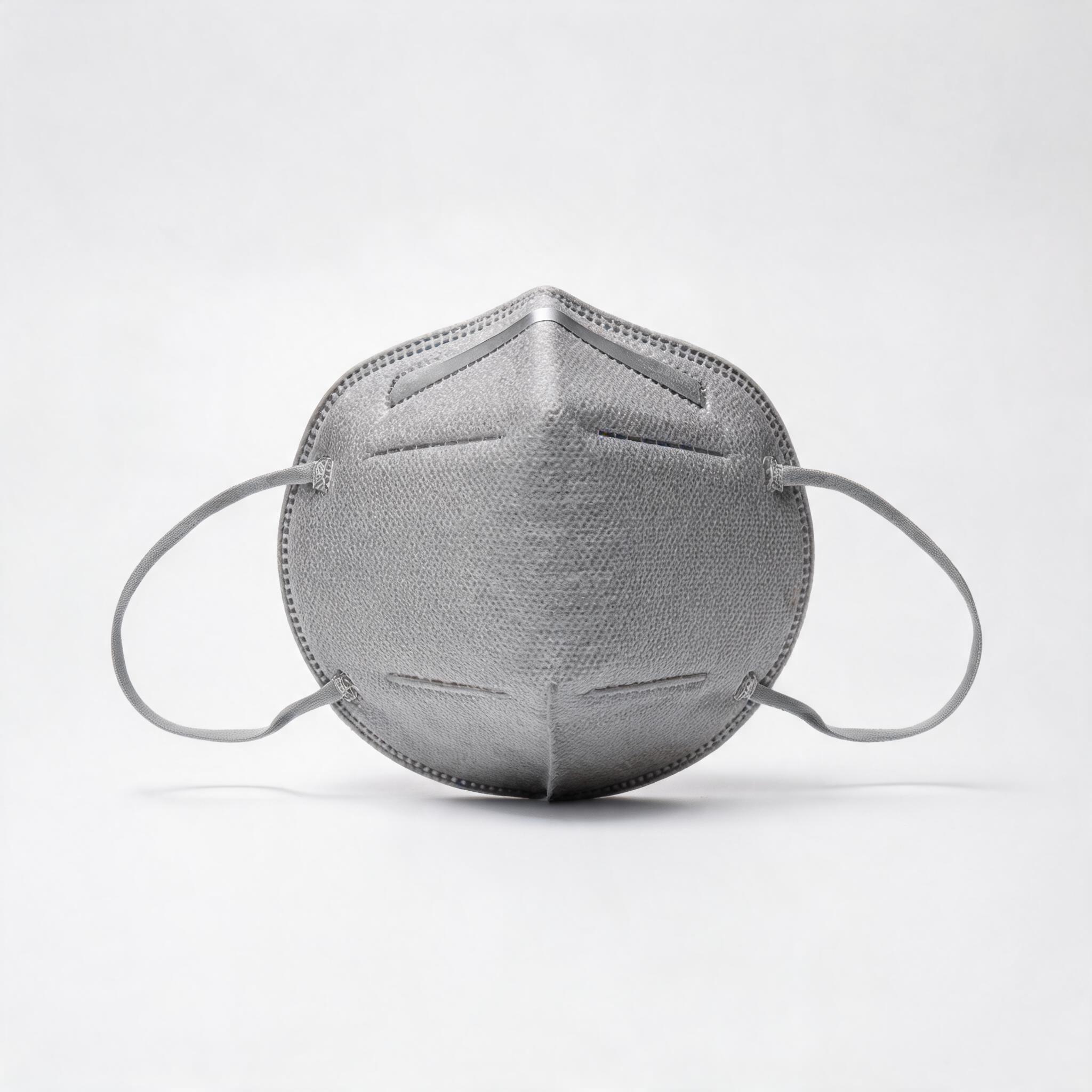
KN95와 N95의 여과 성능은 ≥95%로 동일합니다. 실제 차이는 규제, 상업 및 물류 측면에 있습니다. 이 가이드는 수입업자가 목적 시장 규정 준수 및 비용에 따라 선택하는 데 도움을 줍니다.
Supplier Comparison · Respiratory Standards
What's the Real KN95 vs N95 Performance Gap for Importers?
When importers evaluate KN95 and N95 respirators for procurement, the headline question is always the same: is there a measurable performance gap? The short answer is no — both standards require ≥95% filtration at 0.3µm. The real gap is in certification infrastructure, supply chain, and per-unit cost. Understanding these differences helps you choose the right standard for your destination market without overpaying or under-complying.
Bottom line for importers: The filtration performance is equivalent. The differences are regulatory (NIOSH vs GB2626), commercial (US-branded vs China-manufactured), and logistical (supply availability during demand surges).
Filtration Efficiency: The Technical Reality
Both KN95 and N95 respirators use meltblown polypropylene as the primary filtration medium. The electrostatic charge on the meltblown fibers traps particles as small as 0.3µm. Testing protocols under GB2626-2006 (KN95) and 42 CFR 84 (N95) use essentially the same sodium chloride (NaCl) aerosol test at 85 L/min flow rate.
A key difference: GB2626-2006 includes a total inward leakage (TIL) requirement of ≤8%, which involves human subject testing. NIOSH's 42 CFR 84 does not explicitly require TIL testing — it relies on the fit factor requirement in the respirator certification. This means KN95 has an additional real-world leakage test that N95 does not mandate.
For buyers concerned about meltblown quality, our article on KN95 meltblown quality control covers how to verify filter media integrity at the supplier level.
Supply Chain and Cost Comparison
| Factor | KN95 | N95 |
|---|---|---|
| Primary manufacturing base | China | USA |
| Per-unit cost (bulk) | Lower | Higher (30-60% premium) |
| Production scalability | High (large factory capacity) | Limited during surges |
| Lead time (typical) | 15-35 days | Varies; often longer for export |
| OEM/private label | Widely available | Restricted; primarily brand-specific |
| CE marking availability | Yes (with CE-certified models) | Not typically (N95 is US-specific) |
For B2B buyers who need OEM branding, KN95 cup respirators from Justsun support custom logo and packaging options. N95 respirators from US brands generally do not offer third-party OEM branding.
Import Compliance: What Changes by Standard
Importing KN95
KN95 respirators with CE marking can enter EU and many non-US markets. For US import, the regulatory landscape has shifted since the end of the EUA framework. Importers must verify current FDA/NIOSH guidance. Our guide on KN95 mask export customs requirements covers documentation needed for clearance.
Importing N95
N95 respirators require NIOSH certification. Only manufacturers with NIOSH-approved facilities can produce N95 respirators. This limits the supplier pool significantly and prevents OEM sourcing from non-US factories.
When to Choose Each Standard
- Choose KN95 when: Your destination market accepts GB2626-2006 or CE-marked respirators; you need OEM branding; cost optimization matters; you need large-volume supply with predictable lead times.
- Choose N95 when: Your end-users are in US healthcare settings requiring NIOSH-certified respirators; your procurement contract explicitly requires NIOSH approval; you are supplying US government stockpile programs.
Buyers who need valved respirators for industrial use should compare KN95 valve respirators against N95 valved options — the performance is equivalent, but the KN95 valve model is typically available at lower cost and with OEM branding support.
FAQ
Is KN95 counterfeit risk higher than N95?
Counterfeit risk exists for both standards. NIOSH maintains a public list of counterfeit N95 respirators. For KN95, verify the supplier's GB2626-2006 test report and CE certificate against the notified body database. Our article on KN95 mask supplier selection criteria provides a verification checklist.
Can I import KN95 to the US?
Regulatory acceptance changes over time. During the COVID-19 EUA period, KN95 was accepted. Post-EUA, importers should verify current FDA and NIOSH guidance before placing orders. Always confirm regulatory status with your customs broker.
Conclusion
The KN95 vs N95 performance gap is effectively zero in filtration terms. The real decision factors are regulatory acceptance, supply chain reliability, OEM capability, and cost. For most international buyers, KN95 with CE certification offers the best combination of performance, cost, and supply flexibility. For US-specific healthcare procurement, N95 remains the regulatory standard.