
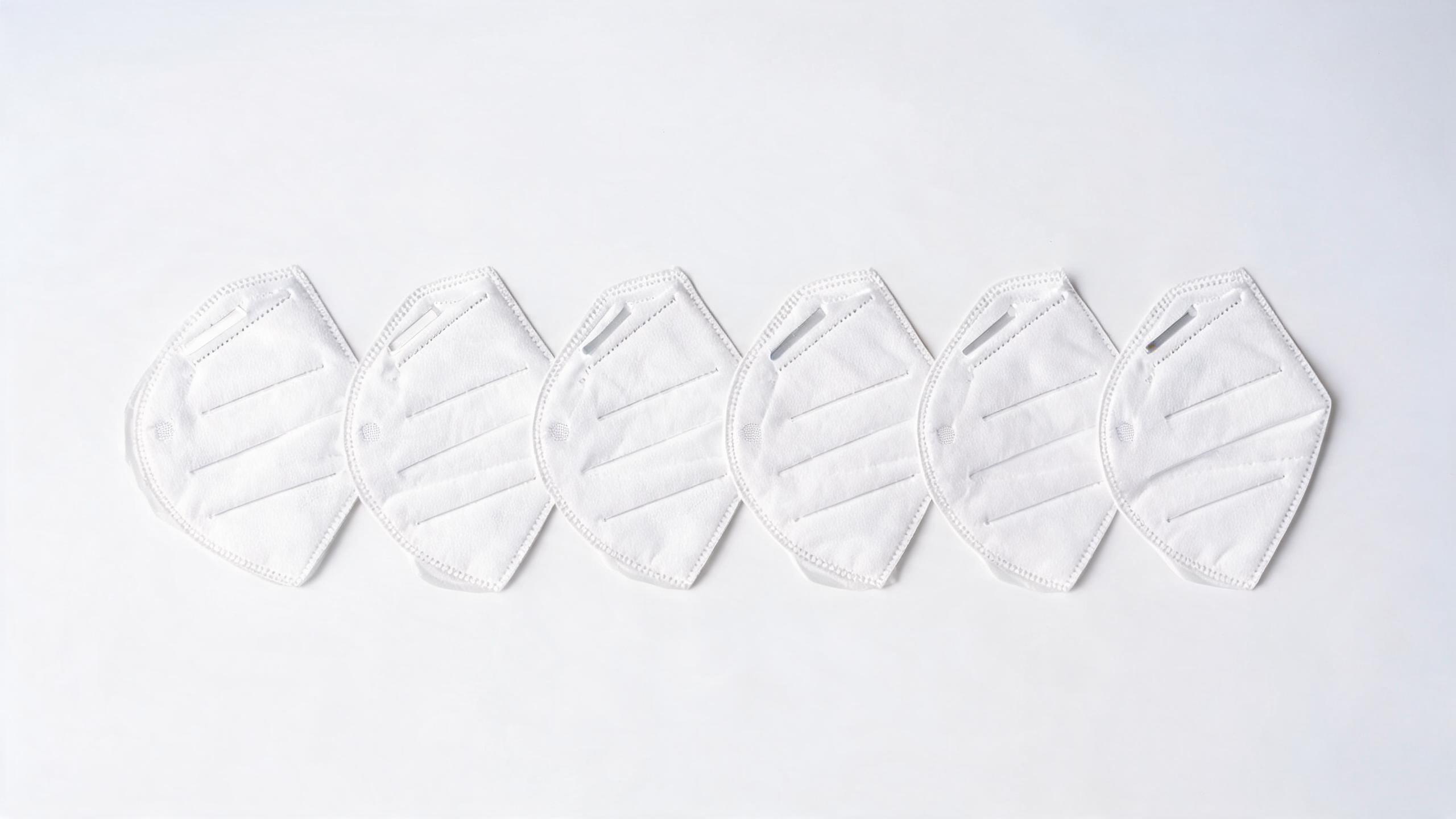
A practical guide for B2B buyers on how to evaluate KN95 respirator suppliers. Covers essential certifications like GB2626-2019, quality testing methods, factory audit criteria, and common sourcing pitfalls—with actionable checklists to help you make informed procurement decisions.
B2B BUYER GUIDE
- Which KN95 respirator certifications actually matter for import compliance
- How to verify a supplier's GB2626 standard compliance without visiting the factory
- Key quality indicators to request in a product specification sheet
- Red flags in supplier communication and documentation
- A checklist for evaluating KN95 cup respirator suppliers before placing an order
The global demand for KN95 respirators remains steady across healthcare, industrial safety, and institutional procurement channels. But for B2B buyers—distributors, government tenders, hospital procurement teams, and safety equipment wholesalers—finding a KN95 respirator supplier that delivers consistent quality, valid certifications, and reliable supply terms is not straightforward.
This article walks through the concrete criteria you should use to evaluate potential suppliers. It focuses on verifiable facts, not marketing claims. If you are sourcing KN95 cup respirator models or flat-fold designs, the same principles apply.
Why Certification Matters More Than Price
In the KN95 respirator market, price differences between suppliers often reflect differences in filtration material quality, seal integrity, and testing rigor—not just margin. A respirator that fails to filter at least 95% of airborne particles is not a KN95, regardless of what the label says.
For B2B buyers, the risk of receiving non-compliant products includes:
- Rejected shipments at customs (especially in regulated markets like the EU, US, or Australia)
- Liability if end-users rely on the respirator for protection against airborne hazards
- Reputational damage with your own customers
- Cost of returns, re-testing, or legal disputes
Certifications are the first line of defense. But not all certificates carry the same weight. You need to know which ones to ask for and how to read them.
The Core Standard: GB2626-2019

The KN95 GB2626 standard is the Chinese national standard for respiratory protective equipment. The current version is GB 2626-2019, which replaced the older GB 2626-2006. Any supplier claiming to manufacture genuine KN95 respirators should be able to provide a test report or certificate issued by an accredited laboratory showing compliance with GB 2626-2019.
Key requirements under GB 2626-2019 include:
| Parameter | Requirement |
|---|---|
| Filtration efficiency (sodium chloride aerosol) | ≥ 95% |
| Filtration efficiency (paraffin oil aerosol) | ≥ 95% |
| Total inward leakage (TIL) | ≤ 8% for all exercises |
| Exhalation valve leakage | ≤ 30 mL/min (if valve present) |
| Dead space (CO₂ content in inhaled air) | ≤ 1% |
| Breathing resistance (inhalation) | ≤ 350 Pa at 85 L/min flow |
| Breathing resistance (exhalation) | ≤ 250 Pa at 85 L/min flow |
When you request a test report from a KN95 respirator supplier, check that the report covers all these parameters. Some suppliers only test filtration efficiency and skip inward leakage or breathing resistance tests. That is a red flag.
Types of KN95 Respirator Certifications to Look For
Not all certificates are issued by the same authority. Here is a breakdown of the documents you should request and what they actually mean.
1. GB 2626-2019 Type-Approval Certificate (LA Certification)
This is the official certification mark for respiratory protective equipment sold in China. It is issued by the National Institute of Occupational Safety and Health (NIOSH-equivalent) in China, specifically the China National Institute of Standardization (CNIS) or authorized testing bodies. The certificate number should be verifiable on the issuing body's official website.
If a supplier claims to have LA certification, ask for the certificate number and the issuing body name. You can then cross-check it online.
2. Test Report from an Accredited Laboratory
Many suppliers without LA certification will provide a test report from a third-party lab. Acceptable labs include:
- Beijing Institute of Labor Protection (BILP)
- Shanghai Institute of Occupational Safety and Health
- SGS, TÜV Rheinland, Bureau Veritas (if they have a Chinese branch with GB 2626 testing capability)
The report must show the test method as GB 2626-2019 and include the laboratory's accreditation number (e.g., CNAS or CMA mark).
3. EU CE Certification (if exporting to Europe)
If you plan to resell the respirators in the European Union, the supplier must provide CE marking under the Personal Protective Equipment Regulation (EU) 2016/425. This requires a Notified Body (NB) certificate for Category III PPE. The NB number (e.g., 0598, 0123) must appear on the product and packaging.
Be cautious: many Chinese suppliers offer "CE" certificates that are self-declaration only (Annex VII) without NB involvement. For KN95 respirators, which are Category III, self-declaration is not sufficient for legal sale in the EU.
4. FDA 510(k) or NIOSH Approval (if exporting to the US)
For the US market, KN95 respirators are not directly approved by NIOSH (NIOSH uses N95, N99, etc.). However, during the COVID-19 pandemic, the FDA issued Emergency Use Authorizations (EUA) for certain KN95 models. For ongoing commercial use, you should verify whether the supplier's product has NIOSH approval (as an N95) or FDA 510(k) clearance for a specific intended use.
Most Chinese KN95 suppliers do not hold NIOSH approval. If your market requires it, you should source from suppliers that specifically manufacture for the US regulatory pathway.
How to Verify a Supplier's Quality Standards
Certifications are necessary but not sufficient. You also need to evaluate the supplier's manufacturing process, quality control, and consistency. Here are the steps to take before committing to a large order.
Request a Detailed Product Specification Sheet
A professional KN95 respirator supplier should be able to provide a product specification sheet that includes:
- Model name and number
- Filtration material type (e.g., melt-blown polypropylene, electret treatment)
- Number of layers
- Filtration efficiency (tested at 85 L/min flow)
- Breathing resistance values
- Total inward leakage percentage
- Dead space (CO₂ concentration)
- Weight per unit
- Packaging details (individual vs. bulk, box quantity)
- Valve or non-valve option
If the supplier cannot provide this information or gives vague answers like "meets all standards," move on. A credible supplier treats specifications as factual data, not marketing copy.
Ask for a Sample Batch
Request at least 20–50 pieces from the current production batch. Test them yourself or send them to a third-party lab. Check for:
- Consistent fit across different face shapes
- No visible defects (tears, loose straps, deformed nose clips)
- Strap tension (should not break under normal use)
- Packaging integrity (sealed, clean, with proper labeling)
If the supplier hesitates to send samples or charges an unusually high sample fee, that is a warning sign. Most reliable suppliers offer sample orders at cost plus shipping.
Check Production Capacity and Lead Times
Ask for the supplier's monthly production capacity for the specific model you are interested in. Also ask about current lead time from order to shipment. If the supplier claims capacity far above what seems reasonable for their factory size, they may be over-promising or sourcing from multiple subcontractors.
For a KN95 cup respirator (the rigid cup-shaped design), production speed is typically slower than flat-fold masks because the cup requires thermoforming and more manual assembly. Expect lead times of 15–30 days for standard orders, depending on quantity.
Red Flags When Evaluating KN95 Respirator Suppliers
Based on common industry experience, here are warning signs that should make you cautious:
- No physical address or factory visit possible. A legitimate supplier will have a verifiable factory address. If they only offer a virtual office or refuse a video call tour, be suspicious.
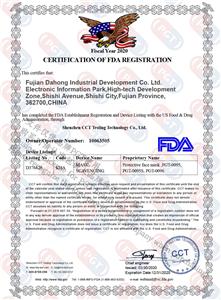
- Certificates that look photoshopped or have mismatched details. Check that the certificate number, product model, and date match the product you are buying. Some suppliers reuse certificates from other products.
- Unrealistically low prices. If the price is 30–40% below the market average, the filtration material is likely substandard. Quality melt-blown fabric costs money.
- No English documentation. While not a deal-breaker, a supplier that cannot provide basic product specs in English may struggle with export documentation and customs clearance.
- Pressure to pay in full before shipment. Standard payment terms for first orders are 30% deposit, 70% against copy of shipping documents. Full prepayment is a high-risk request.
Sourcing Criteria Checklist for B2B Buyers
Use this checklist when evaluating any KN95 respirator supplier. It covers the minimum information you should gather before making a sourcing decision.
| Criteria | What to Ask | Acceptable Answer |
|---|---|---|
| Certification | Do you have GB 2626-2019 test report or LA certificate? | Yes, with certificate number and issuing body |
| Filtration efficiency | What is the tested PFE at 85 L/min? | ≥ 95% (with test report) |
| Material | What type of melt-blown fabric do you use? | Specify grade (e.g., BF99, BF95) |
| Sample policy | Can you send samples before bulk order? | Yes, at cost + shipping |
| MOQ | What is your minimum order quantity? | Typically 10,000–50,000 pieces |
| Lead time | What is current lead time for 50,000 pcs? | 15–30 days |
| Payment terms | What payment terms do you offer? | 30% deposit, 70% against BL copy |
| Factory audit | Can we arrange a factory visit or video call? | Yes, by appointment |
| Export experience | Which countries have you exported to? | List specific countries (not "worldwide") |
Common Mistakes B2B Buyers Make
Even experienced buyers can fall into these traps. Here are three frequent errors and how to avoid them.
Mistake 1: Relying Only on Price Comparison
Low price often means lower-quality filtration material. A respirator that filters at 92% instead of 95% may still pass some tests but fails the KN95 standard. If your end customer requires certified protection, you cannot afford to gamble on price alone.
Mistake 2: Ignoring the Valve vs. Non-Valve Decision
Some buyers assume all KN95 cup respirator models come with a valve. In fact, valved respirators are intended for industrial use (where the wearer is not a source of infection), while non-valved models are preferred for healthcare settings. Clarify your end-use case before ordering.
Mistake 3: Not Checking the Packaging and Labeling
Customs authorities in many countries require specific labeling: lot number, expiration date, manufacturer name, certification mark, and storage instructions. If the supplier's packaging does not meet your destination country's requirements, the shipment may be held or rejected. Always request a sample of the final packaging before mass production.
How to Conduct a Basic Factory Audit Remotely
If you cannot visit the factory in person, a remote audit can still reveal a lot. Request a live video call that covers:
- Production line: See the actual assembly area, not just the showroom.
- Quality control station: Ask to see the testing equipment (e.g., particle filtration tester, breathing resistance tester).
- Warehouse: Check if raw materials (melt-blown fabric, nose clips, straps) are stored in clean, dry conditions.
- Packaging area: Verify that final products are sealed and labeled properly.
During the call, ask specific questions about their quality control process. For example:
- "How often do you test filtration efficiency during production?" (Acceptable answer: every batch or every hour)
- "What is your rejection rate?" (A well-run factory will have a number, not a vague answer)
- "Do you have a retained sample for each batch?" (Yes, for traceability)
Final Thoughts: What a Reliable Supplier Looks Like
A reliable KN95 respirator supplier does not need to be the largest factory in China. But they should be transparent, responsive, and able to provide verifiable documentation for every claim they make. They should understand that B2B buyers need consistency, not just a one-time good price.
When you find a supplier that answers your questions with specific data, sends samples promptly, and provides clear certification documents, you have a strong candidate. From there, start with a small trial order, test the product, and build the relationship gradually.
If you are currently sourcing KN95 cup respirator models or other respiratory protection products, we recommend starting with the checklist above. A few hours of due diligence upfront can save months of problems later.
Frequently Asked Questions
What is the difference between KN95 and N95?
KN95 refers to the Chinese standard GB 2626-2019, while N95 refers to the US standard 42 CFR Part 84. Both require ≥ 95% filtration efficiency. The main differences are in the test flow rate (85 L/min for KN95 vs. 85 L/min for N95, but with different test protocols) and the certification authority. They are not interchangeable for regulatory compliance in all markets.
How can I verify a KN95 certificate online?
Ask the supplier for the certificate number and the issuing body. For LA certification, you can check the Chinese government's official certification database (www.la.gov.cn). For test reports, verify the lab's accreditation (CNAS or CMA) on their website.
Can I use KN95 respirators in a hospital setting?
It depends on the country's regulations. In the US, NIOSH-approved N95 respirators are the standard for healthcare. In many other countries, KN95 respirators that meet GB 2626-2019 are accepted for general medical use, but you should confirm with your local health authority.
What is the shelf life of a KN95 respirator?
Typically 2–5 years from the date of manufacture, depending on storage conditions. The supplier should provide an expiration date on the packaging. Store in a cool, dry place away from direct sunlight.
How do I choose between a KN95 cup respirator and a flat-fold model?
Cup respirators offer a rigid shape that maintains its form, making them easier to put on and take off. Flat-fold models are more compact for storage and shipping. Both can meet the same filtration standard. Choose based on your end-user's preference and logistics requirements.
This guide is based on industry best practices and regulatory requirements as of the publication date. Always verify current regulations with your local authorities and consult with a qualified compliance professional for your specific market.