
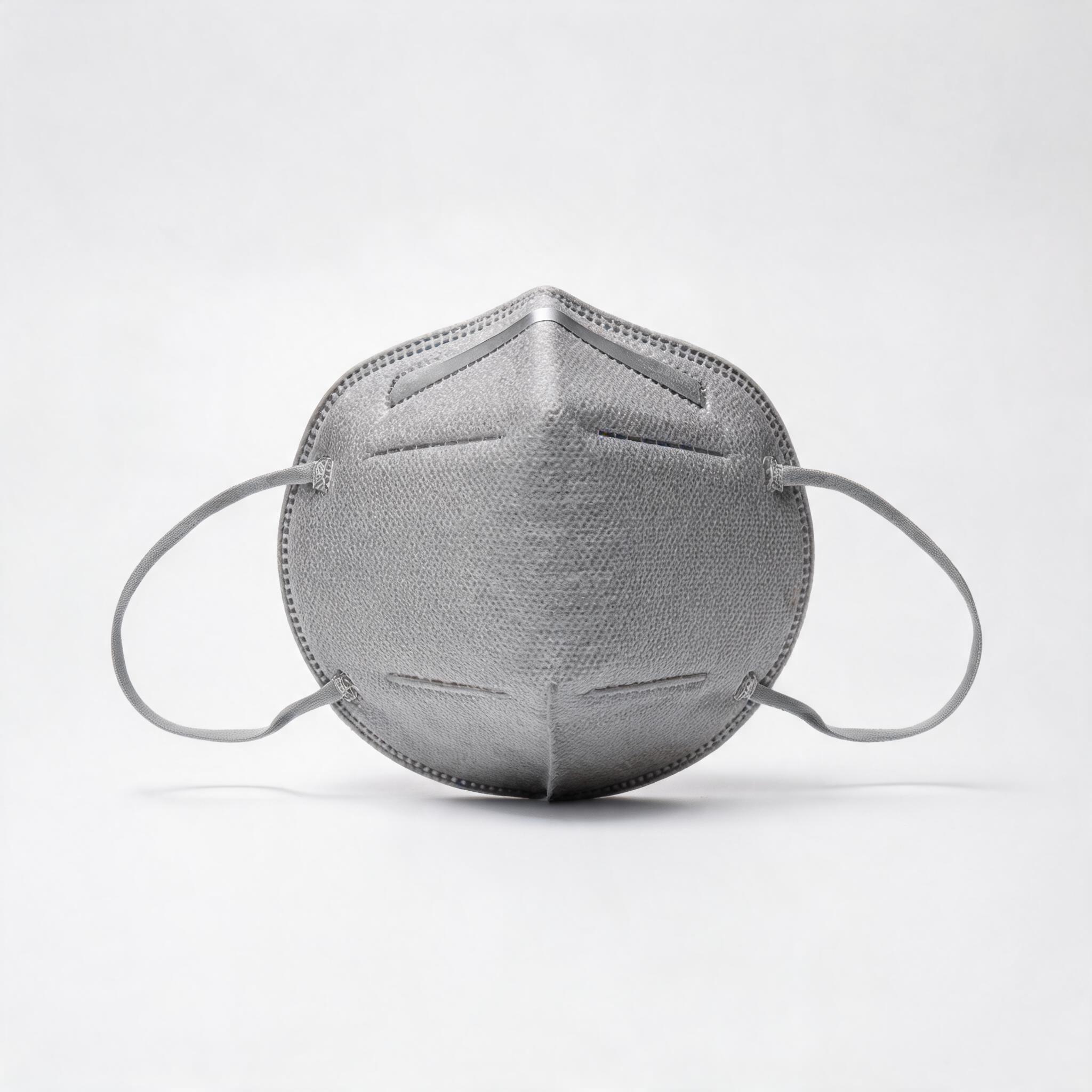
A comprehensive technical guide to the GB2626 standard for KN95 respirators, covering the full test suite, version differences, international comparisons, compliance verification, and common issues.
For B2B procurement teams sourcing KN95 respirators, the GB2626 standard is the foundational technical reference that defines what a KN95 respirator is, how it must perform, and how it is tested. Understanding this standard is not optional for buyers-it is the difference between sourcing a certified protective device and sourcing a piece of fabric with a label.
What Is GB2626 and Why Does It Matter for B2B Buyers?
GB2626 is the Chinese national standard for respiratory protective equipment-non-powered air-purifying particle respirators. It defines the performance requirements, test methods, and classification system for respirators that filter particulate matter from the air. The KN95 classification within GB2626 indicates a minimum filtration efficiency of 95% against sodium chloride aerosol particles with a count median diameter of 0.075 µm (effectively testing at the 0.3 µm most penetrating particle size).
For B2B buyers, GB2626 matters because it is the legal basis under which a respirator can be called "KN95" in the Chinese market and accepted in many international markets that recognize the standard. A respirator that does not actually meet GB2626 requirements-but is labeled as KN95-is a counterfeit product that poses significant safety and liability risks.
GB2626-2006 vs GB2626-2019: Key Differences
The standard has been updated from the 2006 version to the 2019 version. Understanding the differences is important for procurement teams, as the two versions have different requirements that affect product performance and compliance.
| Parameter | GB2626-2006 | GB2626-2019 |
|---|---|---|
| Filtration efficiency test | NaCl aerosol, 0.3 µm | NaCl aerosol, 0.3 µm (unchanged) |
| Total inward leakage (TIL) | Required (≤8% for KN95) | |
| Inhalation resistance | ≤350 Pa at 85 L/min | ≤350 Pa (unchanged) |
| Exhalation resistance | ≤250 Pa at 85 L/min | ≤250 Pa (unchanged) |
| Labeling requirements | Standard marking | |
| Fit test panel | Limited panel | Expanded facial dimension coverage |
The 2019 update places greater emphasis on real-world leak performance through enhanced TIL testing, which evaluates the combined effect of filter penetration and seal leakage. This makes the 2019 version more demanding and more reflective of actual wearer protection.
KN95 Classification: What the "95" Actually Means
The "95" in KN95 refers to the minimum filtration efficiency: ≥95% of NaCl aerosol particles at the most penetrating particle size (MPPS) of approximately 0.3 µm, tested at a flow rate of 85 L/min. This is the same filtration threshold as N95 (NIOSH 42 CFR 84) and FFP2 (EN 149:2001+A1:2009).
Critical clarification: The 95% filtration efficiency refers to the filter medium under standardized test conditions. It does NOT mean that 95% of all particles in all real-world conditions will be filtered. Actual protection depends on fit, seal integrity, particle characteristics, breathing rate, and environmental conditions. For a deeper understanding, refer to our guide on BFE vs PFE filtration metrics.
The Complete GB2626 Test Suite for KN95
GB2626 requires a comprehensive set of tests beyond just filtration efficiency. A compliant KN95 respirator must pass all of the following:
1. Particle Filtration Efficiency (PFE)
The core filtration test. NaCl aerosol with a count median diameter of 0.075 µm (±0.020 µm) is passed through the respirator filter at 85 L/min. The filtrate is measured photometrically. For KN95, the requirement is ≥95% efficiency.
2. Total Inward Leakage (TIL)
TIL measures the total amount of contamination that enters the respirator-both through the filter and through leaks in the seal. Test subjects perform a series of exercises (normal breathing, deep breathing, head movements, walking, talking) while in a test chamber with controlled aerosol concentration. For KN95, the requirement is that TIL does not exceed 8% for at least 46 out of 50 exercises across the test panel.
This test is critical because it evaluates the respirator as worn, not just the filter material. A respirator with excellent filter efficiency but poor fit will fail TIL.
3. Breathing Resistance (Inhalation and Exhalation)
Pressure drop is measured during inhalation and exhalation at 85 L/min. For KN95: inhalation resistance ≤350 Pa, exhalation resistance ≤250 Pa. This is a critical breathing resistance metric that directly affects wearer comfort and compliance.
4. Dead Space CO2
The CO2 concentration in the inhaled air within the respirator dead space must not exceed 1%. This test addresses the risk of CO2 rebreathing, which can cause headache, dizziness, and cognitive impairment during extended wear.
5. Field of Vision
The respirator must not obstruct the wearer's field of vision below a specified minimum. This is a safety requirement, particularly for industrial and healthcare applications where visual awareness is critical.
6. Valve Leakage (if applicable)
For respirators with exhalation valves, the valve must not leak inward during inhalation. Valve leakage testing ensures that the one-way valve mechanism does not compromise inhalation protection.
7. Flammability
The respirator material must not propagate flame beyond a specified distance when exposed to a standard flame source for a defined period. This is a safety requirement for environments where fire hazards may exist.
8. Practical Performance
A wear test where subjects perform typical work activities while wearing the respirator. This evaluates comfort, fit stability, and practical usability under real-world conditions.
How GB2626 Compares to International Standards
GB2626 is one of three major respirator standards globally. The KN95 vs N95 comparison is one of the most common procurement questions. Understanding the equivalencies and differences is essential for cross-market sourcing:
| Standard | Origin | Filtration Requirement | Test Flow Rate |
|---|---|---|---|
| KN95 (GB2626) | China | ≥95% NaCl @ 0.3 µm | 85 L/min |
| N95 (NIOSH 42 CFR 84) | USA | ≥95% NaCl @ 0.3 µm | 85 L/min |
| FFP2 (EN 149) | EU | ≥94% NaCl/paraffin oil @ 0.3 µm | 95 L/min |
While the filtration thresholds are nearly equivalent (95% vs 94%), the test methodologies and additional requirements differ. For example, EN 149 includes both NaCl and paraffin oil aerosol tests (FFP2 must pass both), while GB2626 tests only NaCl. NIOSH certification requires a more rigorous approval process including a manufacturer quality system audit. The KN95 vs FFP2 equivalence issue is particularly relevant for EU importers.
How to Verify GB2626 Compliance
A KN95 respirator's compliance with GB2626 is only as valid as the evidence supporting it. B2B buyers should verify compliance through the following documentation:
- Test report from an accredited laboratory: The test report should be from a lab accredited under CNAS (China National Accreditation Service) or an equivalent international accreditation body. It should list all test parameters, measured values, and pass/fail results.
- Certificate of conformity: A declaration from the manufacturer that the product meets GB2626 requirements, referencing the specific test report and batch.
- Product labeling: The respirator packaging should clearly state the standard number (GB2626-2006 or GB2626-2019), the protection class (KN95), and the manufacturer's name and model number. The specifications buyers must verify include these labeling elements.
- Batch traceability: Each box should carry a lot/batch number that can be traced back to the production run and associated test report.
Red flag: If a supplier cannot provide a test report from an accredited laboratory, or if the test report only shows filtration efficiency without TIL, breathing resistance, and other required parameters, the product's GB2626 compliance is unverified. Do not accept self-declarations without third-party test data.
Common GB2626 Compliance Issues
Based on regulatory enforcement actions and quality audits, the most common compliance issues with KN95 respirators include:
- Filtration efficiency below 95%: Some products achieve the target in initial testing but degrade rapidly as the electrostatic charge dissipates. Accelerated aging testing per GB2626 should confirm that efficiency is maintained over the declared shelf life.
- Excessive breathing resistance: Products that use high-basis-weight meltblown or dense filter media may meet filtration targets but exceed breathing resistance limits, making them non-compliant despite good filtration.
- TIL failures: Products that pass filter testing but fail TIL due to poor design, inadequate strap tension, or incorrect sizing. TIL failures indicate that the respirator cannot achieve adequate seal on the test panel.
- Counterfeit documentation: Test reports that have been fabricated or copied from other manufacturers' products. Always cross-reference the test report number with the testing laboratory's database where possible.
Conclusion
GB2626 is the technical backbone of the KN95 respirator classification. For B2B procurement teams, understanding its requirements-not just the 95% filtration number, but the complete test suite including TIL, breathing resistance, dead space, and practical performance-is essential for making informed sourcing decisions. By verifying that suppliers provide complete, accredited test reports covering all GB2626 parameters, buyers can ensure that the respirators they procure are not just labeled as compliant, but genuinely meet the standard's protection requirements across all critical performance dimensions.