
The post-pandemic KN95 mask market has shifted from emergency procurement to strategic sourcing. This article examines regulatory evolution, supply chain resilience, product differentiation, and market segmentation for business buyers.
What Is the KN95 Mask Market Outlook Post-Pandemic?
Introduction: Beyond the Emergency Phase
The respiratory protection market has undergone a fundamental transformation since the peak of the COVID-19 pandemic. For business buyers evaluating the kn95 mask category today, the landscape is no longer defined by emergency procurement or panic buying. Instead, the post-pandemic era presents a mature, segmented market where procurement decisions hinge on regulatory compliance, supply chain resilience, and application-specific performance requirements. This article examines the key trends shaping the KN95 mask industry, offering actionable insights for procurement managers, healthcare administrators, and industrial buyers navigating this evolving sector.
The Shift from Acute Demand to Sustained Utilization
During the pandemic, demand for KN95 masks was driven by acute public health emergencies and government mandates. Today, the market has transitioned to a steady-state demand model characterized by:
- Healthcare sector baseline consumption: Hospitals, clinics, and long-term care facilities maintain ongoing inventories for infection control protocols, particularly in high-risk units such as oncology, transplant, and emergency departments.
- Industrial and occupational applications: Industries including construction, manufacturing, mining, and agriculture have integrated respiratory protection into routine safety programs, driven by regulatory requirements from OSHA and similar bodies globally.
- Consumer discretionary use: While retail demand has declined from pandemic peaks, a segment of consumers continues to purchase kn95 mask products for seasonal allergy protection, travel, and personal health management.
This shift means that business buyers must now evaluate suppliers based on long-term reliability rather than short-term surge capacity.
Regulatory Evolution and Compliance Challenges
One of the most significant post-pandemic trends is the tightening of regulatory frameworks governing KN95 masks. In the United States, the FDA's Emergency Use Authorization (EUA) for KN95 masks has largely expired, shifting the compliance burden to NIOSH approval for workplace use and ASTM standards for healthcare applications. Similarly, the European Union has reinforced the PPE Regulation (EU) 2016/425 requirements, with stricter oversight of Notified Body certifications.
For buyers, this means that a mask labeled KN95 may not automatically meet your organization's legal or insurance requirements. Key compliance considerations include:
- NIOSH approval: Essential for industrial applications where respirators are required under OSHA respiratory protection standards.
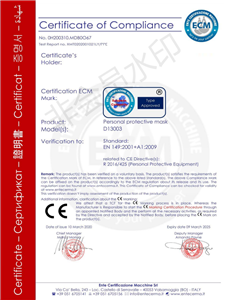
- CE marking under PPE Regulation: Valid for EU market access, but buyers must verify that the Notified Body is properly accredited. Justsun's kn95 mask products carry CE certification to GB2626-2006.
- Test report verification: Request the supplier's technical file, including test reports from ISO 17025 accredited laboratories.
Supply Chain Resilience and Sourcing Strategies
The pandemic exposed vulnerabilities in global supply chains, particularly for personal protective equipment. Post-pandemic, business buyers are prioritizing supply chain resilience over pure cost optimization:
- Geographic diversification: Buyers are increasingly sourcing from multiple regions to mitigate single-country risk.
- Inventory buffer strategies: Many organizations now maintain strategic reserves of 3-6 months of consumption.
- Supplier auditing and transparency: Procurement teams conduct more rigorous factory audits, focusing on production capacity, raw material sourcing, and quality control processes. Manufacturers like Justsun, with a 26,100 m² facility and 400+ employees since 1997, demonstrate the operational maturity buyers seek.
Product Differentiation and Performance Criteria
The KN95 mask market has matured beyond a commodity product, with significant differentiation in design, materials, and performance. Business buyers should evaluate masks based on:
- Filtration efficiency: While the KN95 standard requires at least 95% filtration of particles at 0.3 microns, real-world performance varies. The kn95 mask with valve design from Justsun maintains at least 95% filtration on inhalation through five-layer meltblown construction.
- Breathing resistance: Lower pressure drop improves wearer comfort and compliance, especially during extended use.
- Fit and seal: Models with adjustable nose clips and elastic straps offer better fit for diverse face shapes.
- Material quality: Multi-layer construction with high-quality meltblown fabric (typically 25-50 gsm) and electrostatic charging enhances particle capture.
Market Segmentation and Buyer Profiles
Understanding the distinct needs of different buyer segments is critical for effective procurement:
- Healthcare institutions: Require masks meeting ASTM F2100 or EN 14683 standards, with emphasis on fluid resistance and bacterial filtration efficiency.
- Industrial and manufacturing: Focus on NIOSH-approved respirators or equivalent, with priority on fit, durability, and compatibility with other PPE.
- Government and public sector: Often require masks for emergency preparedness stockpiles, with specifications tied to national standards.
- Wholesale distributors and retailers: Need consistent supply, competitive pricing, and reliable quality for resale.
Technology and Innovation Trends
The post-pandemic market is witnessing incremental innovation aimed at improving user experience and performance:
- Smart masks with sensors: Some manufacturers are integrating sensors to monitor fit, breathing rate, or filter saturation.
- Sustainable materials: Biodegradable or recyclable mask components are gaining attention in regions with strict environmental regulations.
- Customization and branding: OEM customization of colors, logos, and packaging is widely available for corporate branding.
- Valve technology: The kn95 mask with one-way exhalation valve reduces breathing resistance and heat retention for extended wear in demanding environments.
FAQ: Common Buyer Questions
Q: Are KN95 masks still accepted in healthcare settings post-pandemic?
A: In the U.S., most healthcare facilities now require NIOSH-approved N95 respirators for high-risk procedures. KN95 masks may be used for low-risk settings. Check your facility's infection control policy.
Q: How do I verify a KN95 mask's authenticity?
A: Request test reports from an ISO 17025 accredited lab, check the manufacturer's registration with relevant authorities, and inspect packaging for proper labeling including standard references (e.g., GB2626-2006).
Q: What is the typical shelf life of a KN95 mask?
A: Most manufacturers specify 2-5 years from date of manufacture, depending on storage conditions. The Justsun KN95 Cup Respirator specifies a 3-year shelf life in dry storage.
Conclusion: Strategic Procurement for a Stable Market
The post-pandemic KN95 mask market offers business buyers a more predictable environment for strategic procurement. By focusing on regulatory compliance, supply chain resilience, and application-specific performance, organizations can secure reliable respiratory protection without the urgency of crisis buying. The key is to move beyond price-driven decisions and evaluate suppliers holistically-considering certifications, quality systems, and long-term partnership potential.
Call to action: If your organization is reassessing its respiratory protection strategy, contact us to discuss your specific requirements. We can provide detailed product specifications, compliance documentation, and sample evaluation kits tailored to your industry and application.