
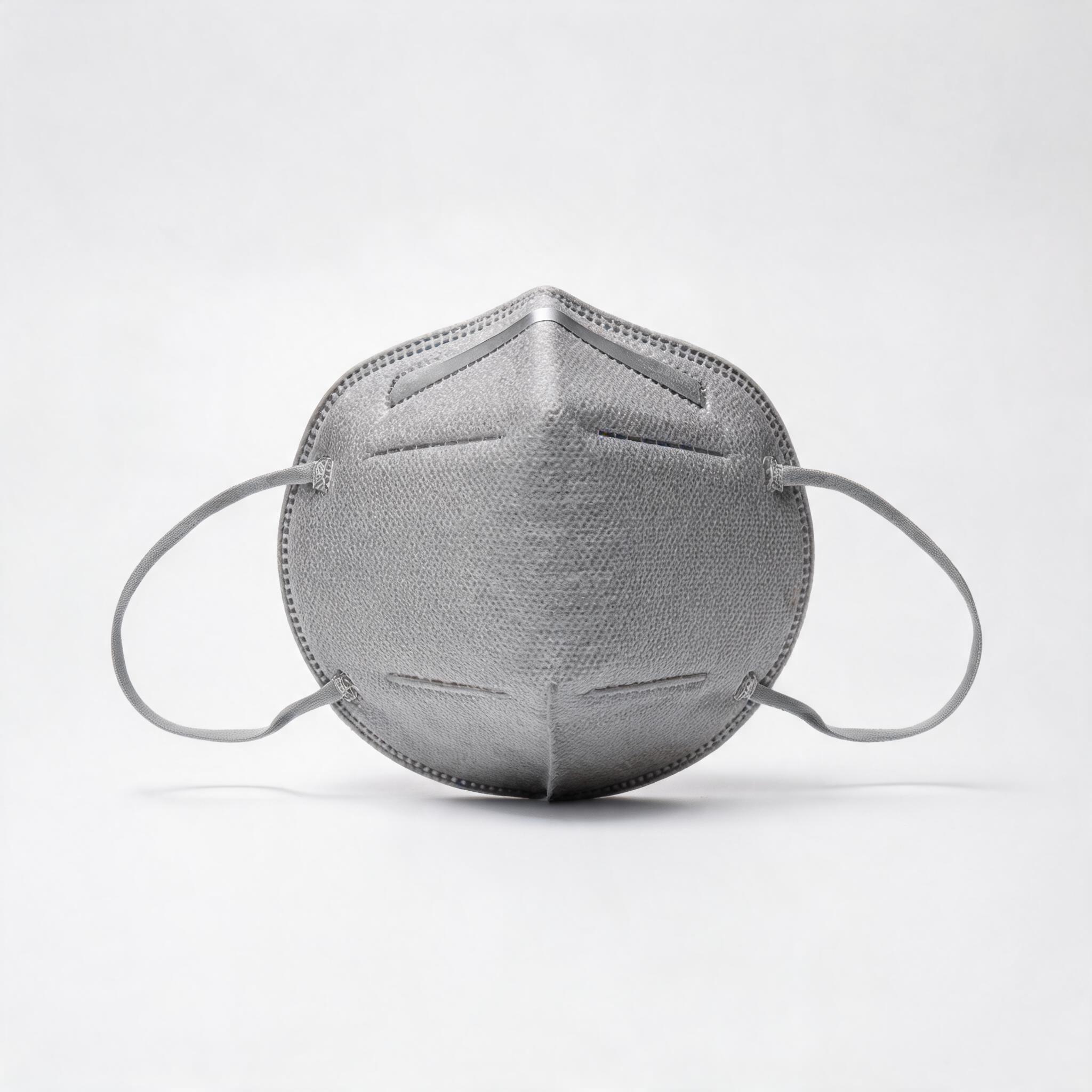
O conforto é um multiplicador de proteção, não um recurso de luxo. Este guia aborda os quatro pilares do conforto do respirador, análise comparativa de conforto entre designs de concha, dobra plana e com válvula, impactos da seleção de materiais e um protocolo estruturado de avaliação de conforto para equipes de compras B2B.
KN95 Mask Breathability and Comfort: Design Factors That Determine Extended-Wear Acceptance
For B2B procurement teams, KN95 respirator breathability and comfort are not subjective qualities - they are quantifiable design parameters that directly determine whether end users will wear the respirator for the full shift. A respirator that is uncomfortable is removed, and a removed respirator provides zero protection. This guide examines the design factors that influence breathability and comfort, providing procurement teams with a framework for evaluating and specifying respirators that achieve both protection and wearability.
Core principle: Comfort and protection are not opposing forces that must be traded against each other. Well-engineered respirators achieve both by optimizing material selection, structural design, and airflow dynamics. The most comfortable respirator is often also the most protective in real-world conditions, because it stays on the face for the full shift.
The Four Pillars of Respirator Comfort
Respirator comfort is determined by four interacting factors. Procurement teams should evaluate each independently and in combination.
1. Breathing Resistance (Airflow Comfort)
Breathing resistance - covered in detail in our inhalation resistance guide - is the primary determinant of airflow comfort. Lower resistance means less effort per breath, less fatigue, and lower CO2 accumulation. The target for extended-wear applications should be inhalation resistance below 200 Pa, well within the GB2626 limit of 350 Pa.
2. Thermal Comfort (Heat and Moisture Management)
The space between the respirator and the face traps exhaled heat and moisture, creating a microclimate that can reach 35 degrees C and 95% RH during extended wear. This warm, humid environment causes sweating, skin irritation, and the sensation of claustrophobia that drives mask removal.
Design factors that improve thermal comfort include:
- Breathing chamber volume: Cup-style respirators maintain a larger air gap between the mask and face, allowing heat to dissipate. Flat-fold designs that contact the face have poorer thermal comfort.
- Exhalation valve: The KN95 Valve Respirator vents exhaled air directly to the environment, dramatically reducing heat and moisture buildup inside the mask.
- Inner layer moisture absorption: The inner spunbond layer should wick moisture away from the skin. Hydrophilic treatments on the inner layer improve moisture management.
- Material breathability: The overall pressure drop across all layers determines how easily moisture-laden air can exit the mask.
3. Contact Pressure (Skin Comfort)
The force exerted by the respirator edges and straps on the skin determines contact comfort. As covered in our ear loop comfort testing guide, skin pressure below 4.0 kPa is the target for extended wear. Contact comfort also depends on:
- Nose clip design: A padded nose clip with foam gasket distributes pressure across the nasal bridge, preventing the sharp pressure points that rigid metal clips create.
- Edge softness: The mask edge should be soft enough to conform to facial contours without creating pressure ridges. Ultrasonic edge sealing creates a softer edge than cut-and-sewn construction.
- Strap material: Flat, wide straps distribute pressure better than narrow round cords. The headband tension should be sufficient for seal but not excessive for comfort.
4. Sensory Comfort (Smell, Taste, Texture)
Sensory discomfort is often overlooked but can be a significant compliance factor. Issues include:
- Polymer off-gassing: New respirators may emit volatile organic compounds from the polypropylene material, causing a chemical smell that some wearers find intolerable. Off-gassing decreases over time but can be significant in freshly manufactured product.
- Skin texture: The inner layer should feel soft against the skin. Rough or scratchy nonwoven material causes facial irritation during extended wear.
- Moisture sensation: When the inner layer becomes saturated with moisture from exhalation, it feels wet against the skin, creating a strong discomfort signal that drives removal.
Comparative Comfort: Cup vs Flat-Fold vs Valved
| Comfort Factor | Cup Style | Flat-Fold | Valved |
|---|---|---|---|
| Airflow comfort | Good (breathing chamber) | Moderate | Excellent (valve bypass) |
| Thermal comfort | Good (air gap) | Poor (face contact) | Excellent |
| Contact comfort | Good (rigid edge) | Good (flexible) | Good |
| Extended wear rating | 6-8 hours | 4-6 hours | 8+ hours |
| Best application | General healthcare | Short-duration use | Hot/exertion environments |
How Material Choices Affect Comfort
The materials used in each layer directly influence comfort performance. For material layer selection, procurement teams should consider:
- Inner layer GSM: A heavier inner layer (25 gsm) provides better moisture absorption and a softer feel than a lighter layer (15 gsm), but slightly increases breathing resistance.
- Spunbond fiber softness: The fiber diameter and bonding method of the inner spunbond layer affect skin feel. Thermal-bonded spunbond is softer than chemical-bonded material.
- Meltblown gram weight: Higher meltblown gram weight increases breathing resistance. The optimal balance for comfort is 30-40 gsm with high electrostatic charge, as discussed in our 5-layer vs 4-layer comparison.
Comfort Evaluation Protocol for Procurement
Procurement teams can implement a structured comfort evaluation using the following protocol during supplier qualification:
Phase 1: Laboratory Testing
- Measure inhalation and exhalation resistance (target: below 200 Pa and 180 Pa respectively)
- Measure CO2 dead space (target: below 0.8%)
- Measure ear loop or strap tension (target: 1.0-2.0 N for ear loops, 3.0-6.0 N for headbands)
- Measure inner layer surface roughness (if equipment available)
Phase 2: Wear Trial
- 10-20 participants wear the respirator for the target shift duration
- Comfort rated at 2-hour intervals on a 1-10 scale
- Specific complaints logged (heat, moisture, pressure, smell)
- Skin inspection after removal (redness, indentation)
- Fit factor measured before and after wear period
Acceptance Criteria
- Comfort rating above 6/10 at 4 hours and above 5/10 at 8 hours
- No severe skin irritation or pressure marks
- Fit factor remains above 100 after full wear period
- CO2 levels inside mask remain below 2% during normal breathing
Conclusion: Comfort as a Protection Multiplier
Comfort is not a luxury feature - it is a protection multiplier. A respirator that is 5% less efficient in laboratory filtration but 50% more comfortable will provide better real-world protection because it stays on the face longer. Procurement teams that treat comfort as an engineering specification - with measurable parameters, testing protocols, and acceptance criteria - consistently achieve higher real-world protection outcomes than those who focus solely on filtration efficiency. The most successful respirator programs specify comfort targets alongside protection targets, recognizing that a respirator on the face is always more protective than a respirator on the desk.