
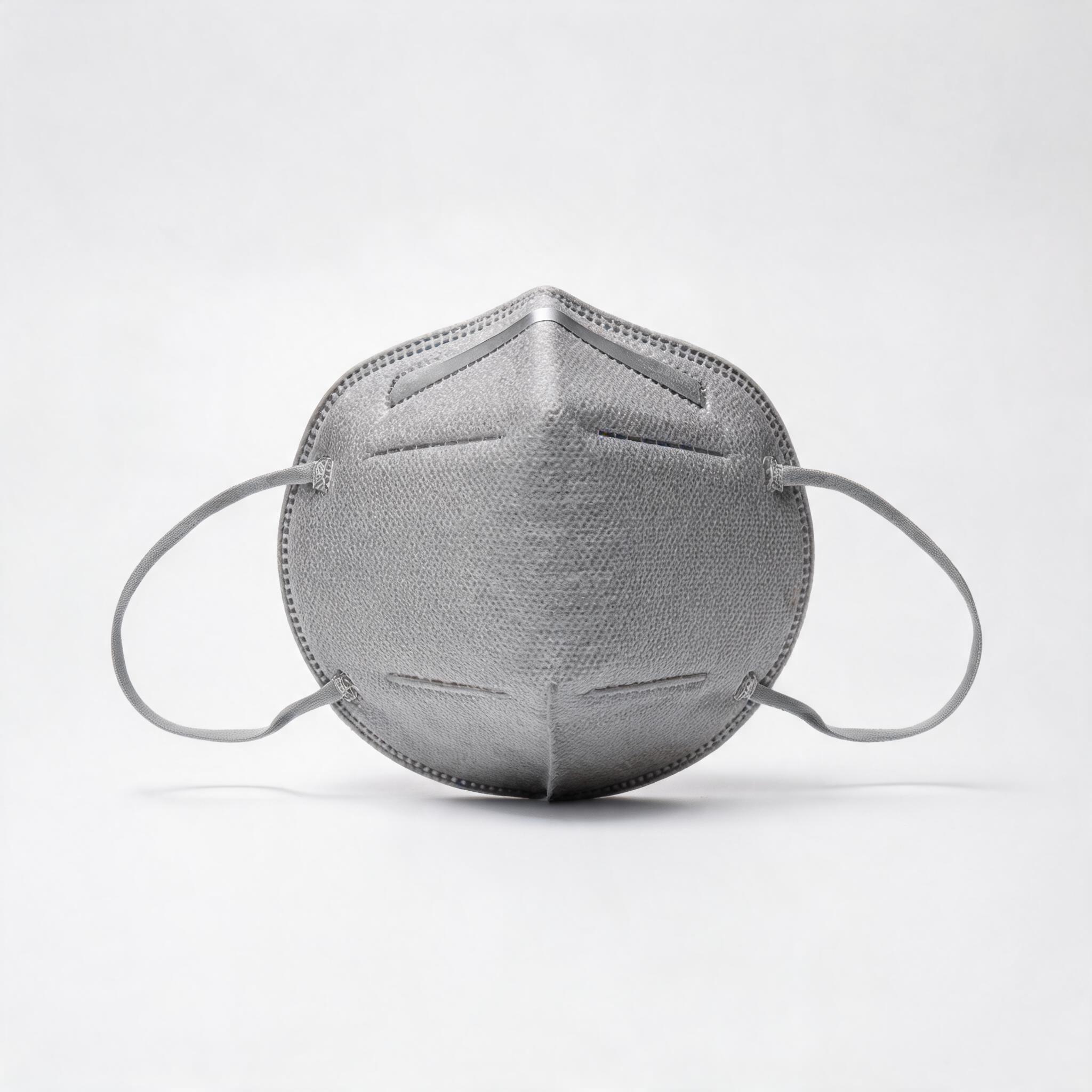
Understanding the complete cost structure behind KN95 respirator wholesale pricing is essential for value-based procurement. This guide breaks down each cost component, explains price drivers, volume pricing tiers, hidden costs, and negotiation strategies for B2B buyers.
KN95 Mask Wholesale Pricing: Complete Bulk Cost Breakdown and Price Drivers for B2B Buyers
Understanding the complete cost structure behind KN95 respirator wholesale pricing is essential for B2B procurement teams negotiating bulk orders. The per-unit price quoted by a supplier is the tip of an iceberg - beneath it lies a complex structure of raw material costs, manufacturing conversion costs, certification costs, packaging, logistics, and margin layers. This guide breaks down each cost component, explains the variables that drive price differences between suppliers, and provides a framework for evaluating whether a quoted price represents genuine value or hidden compromises.
Key insight: A KN95 respirator price that is 20% below the market average almost always reflects a compromise somewhere in the cost structure - lower meltblown gram weight, skipped quality control steps, or uncertified materials. The question for procurement teams is not whether the low price is real (it is), but what trade-off the supplier made to achieve it.
Cost Structure Breakdown: What Goes Into a KN95 Respirator Price
The total cost of a KN95 respirator can be decomposed into seven major components. Understanding each component helps procurement teams identify where price differences originate and where cost reduction is possible without compromising quality.
| Cost Component | Typical % of Total | Key Variables |
|---|---|---|
| Meltblown filter media | 25-35% | GSM, charge quality, in-house vs sourced |
| Spunbond layers | 10-15% | GSM, number of layers |
| Ear loops/headbands | 5-8% | Material type, width, length |
| Nose clip + valve (if valved) | 3-7% | Material (metal vs plastic), valve assembly |
| Manufacturing conversion | 15-20% | Labor, machine depreciation, energy, waste rate |
| Packaging + labeling | 5-10% | Box type, OEM printing, inner bag |
| Certification + QC | 3-5% | Test frequency, accredited lab fees |
| Margin + overhead | 15-25% | Supplier margin, admin, sales commission |
Price Drivers: What Makes One KN95 Cost More Than Another
Meltblown Quality and Gram Weight
As detailed in our meltblown gram weight guide, the meltblown layer is the single most expensive component and the primary cost differentiator. A respirator using 40 gsm meltblown costs approximately $0.02-0.04 more per unit than one using 25 gsm meltblown. Suppliers offering significantly lower prices may be reducing meltblown gram weight, which compromises shelf-life filtration performance even if initial PFE meets 95%.
Cup vs Flat-Fold Construction
Cup-style respirators like the KN95 Cup Respirator typically cost 15-25% more than flat-fold designs due to the thermoplastic cup forming process and additional material. However, the cup structure provides better breathability and comfort and may deliver better real-world protection value despite the higher unit cost.
Valve vs Non-Valved
The KN95 Valve Respirator carries a price premium of $0.03-0.08 per unit for the valve component and assembly. For applications where extended wear in warm environments is required, the valve premium is justified by improved compliance and reduced heat stress.
Layer Count (4-Layer vs 5-Layer)
As discussed in our 5-layer vs 4-layer comparison, the additional meltblown layer in 5-layer construction adds 8-15% to total cost. Whether this premium is justified depends on whether the application requires 99%+ PFE or charge redundancy for extended shelf life.
Certification Level
GB2626 certification with full factory audit and accredited laboratory testing costs $5,000-15,000 per product model - a fixed cost that suppliers amortize across production volume. Low-volume suppliers must charge higher per-unit prices to recover certification costs. Suppliers without proper GB2626 authentication can offer lower prices because they have not incurred certification costs.
Volume Pricing Tiers
KN95 respirator pricing follows a volume discount structure. Typical tiers for production capacity orders:
| Order Volume | Typical Price Range (USD/unit) | Key Considerations |
|---|---|---|
| 1,000-10,000 | $0.25-0.45 | Small order premium; limited customization |
| 10,000-100,000 | $0.18-0.35 | Standard bulk pricing; OEM available |
| 100,000-500,000 | $0.14-0.28 | Volume discount; custom packaging |
| 500,000-1,000,000 | $0.11-0.22 | Large contract pricing; framework agreements |
| 1,000,000+ | $0.09-0.18 | Container-load pricing; dedicated production line |
Note: These ranges are indicative and vary with raw material market conditions, geographic origin, and specification details. Cup-style and valved respirators are at the higher end of each range.
Hidden Costs Beyond Unit Price
The quoted per-unit price is only one component of total procurement cost. B2B buyers must account for:
- Freight and logistics: Sea freight from China to major destinations adds $0.01-0.03 per unit for full container loads, or $0.05-0.10 for LCL. Air freight can add $0.10-0.25 per unit.
- Import duties and taxes: Vary by destination country and HS code. Medical PPE may qualify for reduced or zero duty under certain trade agreements.
- Quality inspection: Third-party pre-shipment inspection costs $300-800 per shipment, amortized across the order volume.
- Insurance: Cargo insurance typically costs 0.1-0.3% of shipment value.
- Warehousing: Storage conditions for climate-controlled warehousing add $0.001-0.003 per unit per month.
- Quality failures: The cost of defective units (estimated at 1-3% of order value without incoming inspection) should be factored into total cost comparison.
Price Negotiation Strategy
Effective price negotiation requires understanding the supplier cost structure and identifying areas where genuine cost reduction is possible without quality compromise:
- Request material cost breakdown: Ask suppliers to itemize meltblown gram weight, spunbond GSM, and elastic specifications. Compare across suppliers to identify outliers.
- Negotiate on packaging: OEM packaging and custom printing are high-margin items. Standard packaging can reduce cost by 5-8%.
- Offer volume commitment: Framework agreements with committed annual volume unlock better pricing than spot orders.
- Compare total landed cost: A supplier with a 10% higher unit price but closer geographic proximity (lower freight) or lower defect rate may have lower total cost.
- Specify quality parameters: By specifying meltblown gram weight, strap testing acceptance criteria, and breathing resistance targets, you eliminate the supplier ability to reduce cost through hidden quality compromises.
Conclusion: Value Over Price
The cheapest KN95 respirator is rarely the best value. A respirator that costs 20% less but uses 25 gsm meltblown, skips quality control, or fails during use ultimately costs more in replacements, compliance failures, and operational risk. B2B procurement teams that understand the cost structure, specify quality parameters that prevent hidden compromises, and evaluate total landed cost rather than unit price alone consistently achieve better value outcomes. The framework provided in this guide enables procurement teams to move from price-based to value-based respirator sourcing, ensuring that every dollar spent delivers measurable protection performance.