
Entender o preço da máscara KN95 exige comparar custos de matéria-prima, despesas de certificação e descontos por volume com alternativas N95 e FFP2. Este guia aborda fatores de custo, preços comparativos, riscos de falsificação e critérios de avaliação de fornecedores para compras B2B.
Navigating the KN95 Mask Price Landscape
For procurement professionals and business buyers, understanding the kn95 mask price is not merely about finding the lowest number on a spreadsheet. It is a strategic exercise in balancing cost, compliance, supply chain reliability, and end-user safety. This article provides a comparative analysis of KN95, N95, and FFP2 mask pricing, equipping you with criteria to evaluate suppliers and make informed purchasing decisions.
The Core Cost Drivers of KN95 Masks
Raw Material Quality and Sourcing
The most significant variable in KN95 mask price is the quality of the filtration media-specifically, the meltblown polypropylene fabric. Medical-grade meltblown with higher filtration efficiency (≥95% for 0.3 micron particles) commands a premium. The KN95 Cup Respirator Grey from Justsun uses five-layer meltblown construction with electrostatic filtration, achieving ≥95% filtration efficiency at 0.3µm.
Certification and Regulatory Compliance
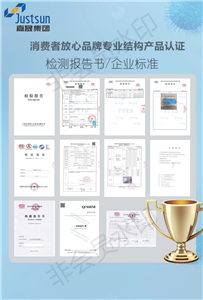
Certification is a non-negotiable cost driver. A genuine KN95 mask must comply with Chinese standard GB2626-2006. Third-party testing by accredited labs (e.g., SGS, TÜV, Intertek) adds to production costs. Certified masks typically cost 15-40% more than uncertified alternatives. Buyers should request test reports for PFE, breathing resistance, and pressure drop.
Order Volume and Wholesale Pricing
Volume discounts are standard. Typical breakpoints:
- 1,000-10,000 units: Higher per-unit cost
- 10,000-100,000 units: Moderate discount
- 100,000+ units: Best per-unit pricing
Extremely low prices (below $0.10 per mask) often indicate non-compliance, counterfeit products, or use of substandard materials.
Comparative Analysis: KN95 vs. N95 vs. FFP2
| Factor | KN95 (GB2626-2006) | N95 (NIOSH) | FFP2 (EN 149) |
|---|---|---|---|
| Filtration | ≥95% at 0.3µm | ≥95% at 0.3µm | ≥94% at 0.3µm |
| Testing Protocol | Chinese standard | US NIOSH (more stringent) | EU CE (includes TIL) |
| Relative Price | Baseline | +20-50% premium | +10-20% over KN95 |
| Best For | General industry, construction | Healthcare, high-risk | EU-based workplaces |
NIOSH-approved N95 masks typically carry a 20-50% premium over equivalent KN95 masks due to the cost of US-based testing and factory audits. FFP2 masks are generally 10-20% more expensive than KN95 due to additional EU testing requirements including total inward leakage (TIL).
Use Case and Industry Application
- Healthcare: N95 or KN95 with medical certification (e.g., FDA EUA) is required. Expect higher prices due to biocompatibility and fluid resistance testing.
- Construction and Industrial: FFP2 or KN95 without medical claims is sufficient. Prices are lower, but ensure compliance with local regulations.
- Consumer/Retail: Price-sensitive buyers may opt for KN95, but beware of counterfeit products.
Common Pain Points in Mask Procurement
Counterfeit and Non-Compliant Products
A major risk is receiving masks that fail to meet claimed standards. To mitigate this, always request a copy of the GB2626 test report from a CNAS-accredited lab, photos of product packaging with standard markings, and a sample batch for independent testing before full payment.
Hidden Costs: Storage, Shelf Life, and Disposal
Masks have a shelf life of up to 3 years depending on storage conditions. Bulk buyers must factor in warehousing costs and rotation schedules. The KN95 Cup Respirator Grey has a 3-year shelf life in dry storage.
How to Evaluate a KN95 Mask Supplier
- Certification Transparency: Ask for specific test reports, not marketing claims. Verify lab accreditation (e.g., CNAS, ISO 17025).
- Manufacturing Capacity: Request details on monthly production volume and lead times.
- Quality Control: Inquire about incoming raw material testing, in-process inspection, and final product sampling.
- After-Sales Support: Does the supplier offer replacement for defective units? What is the warranty period?
- Export Experience: Confirm experience with customs clearance and documentation for your country.
Red Flags to Avoid
- Prices significantly below market average
- Reluctance to provide test reports or samples
- Vague answers about raw material origin or manufacturing location
- No physical factory address or verifiable business registration
FAQ: Common Buyer Questions
Q: How often do KN95 mask prices change?
A: Prices can fluctuate monthly based on meltblown costs, shipping rates, and demand. For stable pricing, consider quarterly contracts with price adjustment clauses.
Q: Is it cheaper to buy KN95 or FFP2 masks in bulk?
A: Typically, KN95 masks are 10-20% cheaper than equivalent FFP2 masks due to lower testing costs.
Q: Can I mix KN95 and N95 masks in one order for volume discounts?
A: Yes, many suppliers allow mixed orders. Ensure each product has its own certification and packaging.
Q: What is the minimum order quantity (MOQ) for wholesale?
A: MOQ varies by supplier, but common thresholds are 1,000-10,000 units for standard masks and 50,000+ for custom packaging.
Conclusion: Making an Informed Purchase
The kn95 mask price reflects a complex interplay of material quality, certification, volume, and supply chain factors. By conducting a thorough cost comparison, you can identify suppliers that offer genuine value. Always prioritize certified products, request verifiable documentation, and build relationships with manufacturers who demonstrate transparency and reliability.