
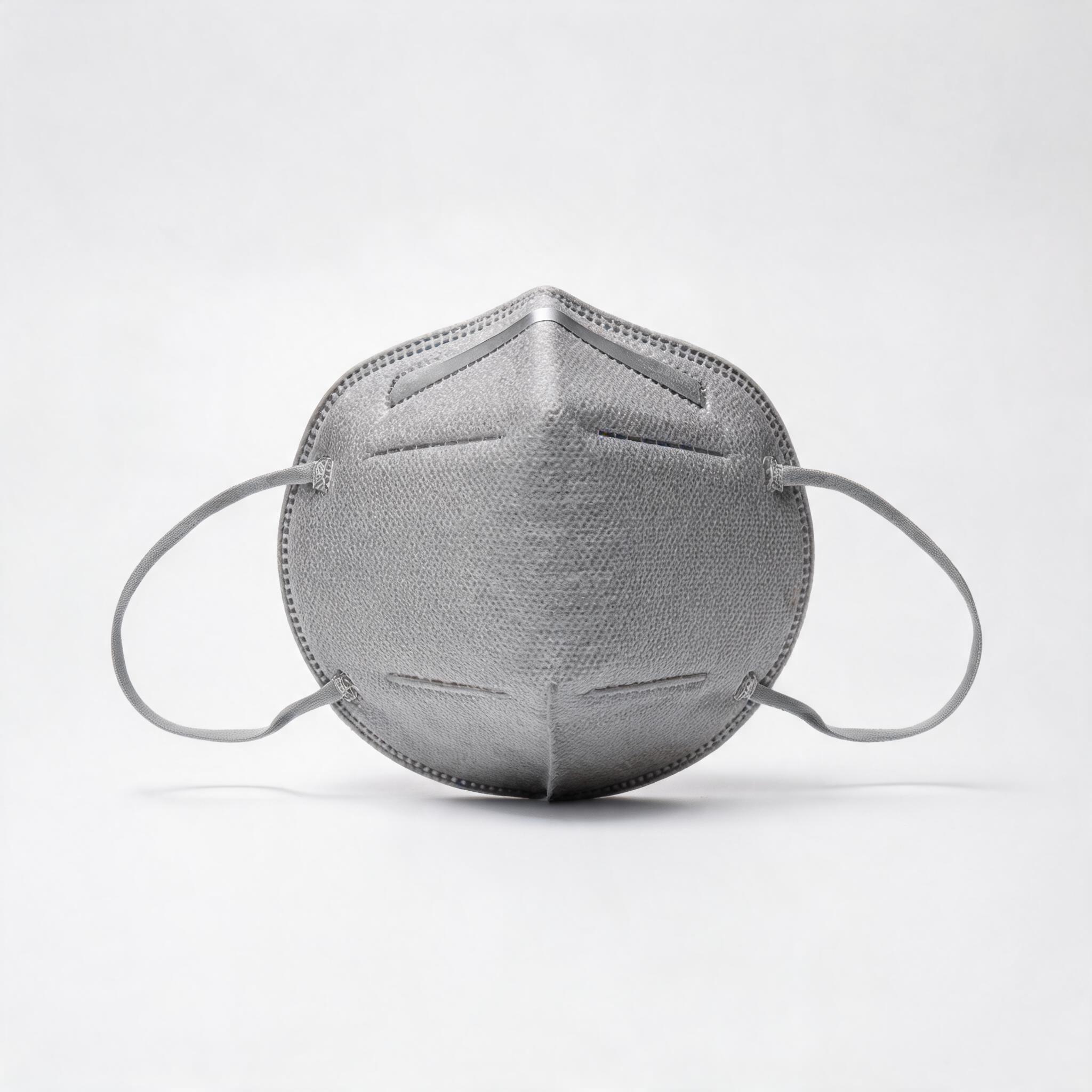
Um guia de compras sobre como ler, interpretar e verificar relatórios de teste BFE e PFE de máscaras KN95, incluindo etapas de verificação de laboratório, lista de verificação de documentos e gestão de risco.
Procurement Verification Guide
KN95 Mask BFE vs PFE Test Reports: How to Read and Verify Filtration Data
When sourcing KN95 respirators from overseas manufacturers, procurement teams receive test reports claiming BFE ≥99% and PFE ≥95%. But a PDF with impressive numbers is only as trustworthy as the laboratory that produced it, the test method used, and the buyer's ability to verify its authenticity. This guide walks B2B buyers through the process of reading, interpreting, and verifying KN95 filtration test reports-steps that separate legitimate compliance documentation from marketing materials dressed up as technical data.
Why this matters: During the 2020-2022 PPE procurement surge, customs authorities and regulatory bodies worldwide encountered a significant volume of falsified or misrepresented test reports. Some used expired certificate numbers, others tested different products than those shipped, and many cited standards the product had never been tested against. Knowing how to verify these documents is now a core procurement competency, not an optional due diligence step.
What a Legitimate KN95 Filtration Test Report Contains
A test report for KN95 respirators should contain specific identifying and technical elements that allow independent verification. Procurement teams should check for each of the following before accepting the document as evidence of compliance:
Essential Document Elements
| Element | What to Check | Red Flag |
|---|---|---|
| Testing laboratory name and address | Must be a real, verifiable facility. Cross-reference with the lab's official website or accreditation database. | Lab name not found in any public registry, or address is a residential building |
| Laboratory accreditation number | For Chinese labs: CNAS accreditation number. For international labs: ISO/IEC 17025 accreditation. Verify on the accreditation body's website. | No accreditation number provided, or number does not exist in the registry |
| Test standard cited | GB2626-2006 for KN95. The report should explicitly reference the standard and the specific test method clause. | Vague references like "tested to international standards" without specifying the exact standard |
| Product identification | Model number, batch/lot number, and product description matching the actual product being sourced. | Report covers a different model or batch than what you are ordering |
| Test date and report issue date | Should be recent (ideally within 12-18 months). Test reports older than 2 years may not reflect current production. | Report is undated, or the date is more than 3 years old |
| Authorized signature and stamp | Should bear the testing laboratory's official seal and a signature from an authorized signatory. | Scanned document with no visible seal, or seal appears digitally added |
| Test results with specific values | Actual measured values, not just "pass." Example: "PFE: 97.3% at 0.3µm" is meaningful; "PFE: pass" is not. | Results stated only as "qualified" or "pass" without numerical data |
Understanding the Test Parameters
For KN95 respirators certified under GB2626-2006, the key test parameters on a legitimate report should include:
- Particle Filtration Efficiency (PFE): Tested using sodium chloride (NaCl) aerosol with a count median diameter of 0.075µm (geometric standard deviation ≤1.86) at a flow rate of 85 L/min. The pass threshold is ≥95%. This is the primary filtration metric for KN95.
- Inhalation Resistance: Measured at 85 L/min flow rate. Maximum allowable resistance is ≤350 Pa for KN95. High resistance indicates dense material that may compromise breathability and wearer compliance.
- Exhalation Resistance: Also measured at 85 L/min. Maximum allowable: ≤250 Pa.
- Leakage Rate (Total Inward Leakage): GB2626-2006 requires the total inward leakage to be ≤8% for KN95. This tests real-world seal effectiveness, not just material filtration.
- Dead Space: CO₂ content in the inhalation air must not exceed 1%. This ensures the mask design does not create dangerous CO₂ rebreathing.
Some reports may also include BFE data as supplementary information. While BFE is not a GB2626-2006 requirement, it can provide additional assurance of the mask's bacterial filtration performance. As explained in our filtration standards guide, BFE tests larger particles (3.0µm) and is inherently easier to pass than PFE.
How to Verify Test Report Authenticity
Obtaining a test report is only the first step. Verifying its authenticity requires active cross-referencing with independent sources. Here is a step-by-step verification process that procurement teams should follow:
Step 1: Verify the Testing Laboratory
For Chinese laboratories, verify CNAS accreditation through the official CNAS website (cnas.org.cn). Search by the accreditation number listed on the report. The result should show:
- The laboratory's registered name matching the report
- The accreditation is currently valid (not expired or suspended)
- The scope of accreditation includes the relevant test standard (GB2626-2006)
For international laboratories, verify ISO/IEC 17025 accreditation through the national accreditation body in the lab's country. Common accreditation bodies include A2LA and ANAB (USA), UKAS (UK), DAkkS (Germany), and AENOR (Spain).
Common pitfall: Some suppliers present reports from laboratories that are not accredited for the specific test standard cited. A lab may hold ISO 17025 accreditation for textile testing but not for respirator filtration testing. Always check whether GB2626-2006 falls within the lab's accredited scope, not just whether the lab holds accreditation in general.
Step 2: Cross-Check the Report Number
Many reputable testing laboratories offer online report verification portals where you can enter the report number to confirm it exists and matches the product described. If the laboratory does not offer online verification, contact them directly via the contact information on their official website (not the contact details on the report itself) and request confirmation.
Red flags during this step include:
- The report number returns no results in the lab's verification system
- The verification system shows a different product or different test results for that report number
- The laboratory denies issuing the report or states it has been withdrawn
- The contact information on the report does not match the lab's official website
Step 3: Request Batch-Specific Testing
A test report from a previous production run may not reflect the quality of the batch you are actually purchasing. For critical procurement-especially healthcare and government contracts-request batch-specific testing. This means:
- The supplier produces your batch first
- Random samples from that batch are sent to a testing laboratory
- You receive the test report with the batch number matching your order
This adds 5-10 business days to the lead time but eliminates the risk of receiving a batch that does not match the certified specification. For ongoing supplier relationships, batch-specific testing can be performed periodically (e.g., every 3rd or 5th shipment) rather than on every single order.
Reading Between the Lines: What Test Reports Don't Tell You
Even a legitimate, verified test report has limitations that procurement teams must understand:
Lab Performance vs. Real-World Performance
GB2626-2006 testing is conducted under controlled conditions: specific flow rates, aerosol concentrations, and environmental parameters. Real-world filtration performance depends on factors that the test report does not capture:
- Fit factor: A mask with 97% PFE delivers far less protection if the seal leaks. The total inward leakage test in GB2626-2006 addresses this, but only on a panel of standard head forms-not on your specific workforce.
- Storage conditions: Meltblown electrostatic charge degrades over time, especially in high-humidity or high-temperature environments. A mask tested at manufacture may perform differently after 12 months in a tropical warehouse.
- User behavior: Improper donning, frequent adjustment, or extended wear beyond the rated duration all reduce effective protection. Training and compliance protocols matter as much as the mask specification.
Single-Batch vs. Production Consistency
A test report covers one batch. It does not guarantee that every subsequent batch will perform identically. Meltblown fabric quality varies with raw material lots, machine calibration, and environmental conditions in the production facility. Procurement teams should understand that consistent quality requires both initial testing and ongoing quality assurance processes at the manufacturer level-as discussed in our guide to KN95 meltblown quality control.
BFE vs PFE: Which Report Matters More?
Some suppliers prominently display BFE ≥99% on their marketing materials while burying PFE data-or omitting it entirely. This is a deliberate tactic. BFE is easier to achieve because it tests larger particles. For KN95 respirators, PFE at 0.3µm is the standard-defining metric. If a supplier's documentation leads with BFE and treats PFE as secondary information, procurement teams should question whether the PFE performance actually meets the ≥95% threshold.
When evaluating KN95 respirator specifications, always prioritize the PFE test result over BFE. A mask with PFE 96% and BFE 99% is a compliant KN95. A mask with BFE 99% and PFE 88% is not-even though its marketing materials may look impressive at first glance.
Building a Filtration Test Report Checklist for Your Team
To systematize the verification process, procurement teams should develop a standardized checklist that every KN95 test report must pass before the order is approved. The following checklist covers the essential verification steps:
Document Verification Checklist
| Verification Item | Action Required | Pass Criteria |
|---|---|---|
| Laboratory identity | Search lab name in CNAS or ISO 17025 registry | Lab exists, accreditation is current |
| Accredited scope | Check if GB2626-2006 is within the lab's accredited test scope | Standard is listed in the accreditation scope |
| Report number verification | Enter report number in lab's online verification portal or contact lab directly | Report exists and matches the product and results described |
| Product match | Compare model, batch number, and description on the report with your actual purchase order | All identifiers match exactly |
| Test date freshness | Check the test date is within 18 months | Report is dated within the acceptable window |
| PFE result | Confirm PFE ≥95% at 0.3µm with specific numerical value | Measured value (not just "pass") is ≥95% |
| Breathing resistance | Confirm inhalation resistance ≤350 Pa and exhalation resistance ≤250 Pa | Values are within GB2626-2006 limits |
| Seal and signature | Visually inspect for laboratory seal and authorized signature | Both are present and appear genuine |
| Consistency with product spec sheet | Cross-reference test report data with the supplier's product specification sheet | No discrepancies between documents |
What to Do When Verification Fails
If any verification step fails, procurement teams should not proceed with the order based on that report. Options include:
- Request a new test report: Ask the supplier to provide a report from a different accredited laboratory, or request batch-specific testing for your actual order.
- Independent testing: For high-value orders, commission independent testing through a laboratory in your destination market. This costs $500-$2,000 per test but provides complete confidence.
- Supplier audit: Visit the manufacturing facility or commission a third-party audit to assess the quality management system. Learn what a proper factory audit checks for KN95 mask quality before committing.
- Walk away: If the supplier cannot provide verifiable test documentation, the risk of receiving non-compliant product is too high. There are manufacturers who can provide legitimate, verifiable test reports-find them.
Cost Considerations: Verification vs. Risk
Procurement teams sometimes skip verification steps to save time and cost. This is a false economy. The cost of verifying test reports-minimal compared to the order value-is insignificant next to the cost of receiving non-compliant product:
- Customs seizure: Non-compliant KN95 shipments can be seized at the border, resulting in total loss of product and shipping costs, plus potential fines.
- End-user liability: If non-compliant masks fail in use and cause harm, liability can extend to the importer-not just the manufacturer.
- Reputational damage: Distributors and healthcare networks that supply non-compliant PPE face reputational damage that can cost future contracts.
- Product recall costs: Recalling distributed product is far more expensive than the verification steps that could have prevented the issue.
The verification process described in this guide typically takes 2-5 business days for an experienced procurement team. For orders worth tens or hundreds of thousands of dollars, this is a justifiable investment in risk management.
Conclusion: Verification Is Procurement, Not Bureaucracy
Reading and verifying KN95 filtration test reports is not administrative busywork-it is a core procurement function that directly determines whether the product you receive will perform as specified. By understanding what the reports contain, how to verify their authenticity, and what their limitations are, procurement teams can make informed sourcing decisions that protect both their organizations and the end users who depend on the product.
The difference between a legitimate KN95 respirator and a non-compliant one often comes down to a few percentage points of filtration efficiency that are invisible without proper testing. By implementing a systematic verification process, procurement teams ensure that the products they source deliver the protection their specifications promise. For more guidance on evaluating suppliers, see our complete guide on KN95 mask supplier selection criteria.