
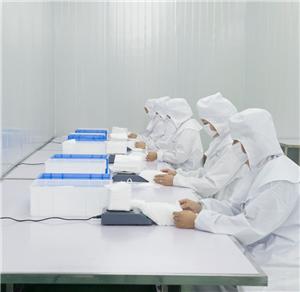
Количество слоев само по себе не определяет эффективность фильтрации KN95. Это руководство объясняет роль каждого слоя — мелтблауна, спанбонда, термоскрепленного холста — и что B2B-покупатели должны проверять в отношении плотности, электростатического заряда и качества материала.
Material Science Guide
KN95 Mask Layer Structure: How 4-Layer and 5-Layer Construction Affects Filtration Performance
The number of layers in a KN95 respirator is one of the first specifications buyers compare-yet layer count alone tells an incomplete story. A 4-layer mask with high-quality meltblown can outperform a 5-layer mask using inferior filter media. This guide examines the structural composition of KN95 respirators, explaining how each layer contributes to filtration, breathability, and structural integrity, and what B2B buyers should verify beyond the headline layer count.
Core principle: The meltblown layer is the filtration engine of a KN95 mask. Additional layers without adequate meltblown quality add bulk and breathing resistance without improving filtration. Procurement decisions should focus on meltblown weight, electrostatic charge retention, and GSM-not just total layer count.
Standard KN95 Layer Architecture
A compliant KN95 respirator certified to GB2626-2006 must achieve ≥95% filtration of 0.3-micron NaCl aerosol particles. The layer structure that achieves this performance typically follows one of two configurations:
4-Layer Configuration
| Layer | Material | Function | Typical GSM |
|---|---|---|---|
| 1 (Outer) | Spunbond polypropylene (SBPP) | Structural support, moisture barrier, splash resistance | 20-30 gsm |
| 2 (Filter) | Meltblown polypropylene (MBPP) | Primary filtration via mechanical + electrostatic capture | 25-40 gsm |
| 3 (Filter) | Meltblown polypropylene (MBPP) | Secondary filtration, increases total filtration surface | 15-25 gsm |
| 4 (Inner) | Spunbond polypropylene (SBPP) | Wearer comfort, moisture absorption, skin contact layer | 20-30 gsm |
5-Layer Configuration
| Layer | Material | Function | Typical GSM |
|---|---|---|---|
| 1 (Outer) | Spunbond polypropylene | Structural support, splash resistance | 20-30 gsm |
| 2 (Filter) | Meltblown polypropylene | Primary filtration | 20-30 gsm |
| 3 (Filter) | Hot-air cotton (ES fiber) | Particulate pre-filter, shape retention, breathing comfort | 30-50 gsm |
| 4 (Filter) | Meltblown polypropylene | Secondary filtration, electrostatic capture | 15-25 gsm |
| 5 (Inner) | Spunbond polypropylene | Comfort layer, skin contact | 20-30 gsm |
The 5-layer design adds a hot-air cotton layer between the two meltblown layers. This cotton layer serves as a pre-filter that captures larger particles before they reach the meltblown, effectively extending the meltblown's service life and maintaining airflow. The 5-layer KN95 valve respirator exemplifies this construction with an electrostatic layer integrated into the meltblown stack.
The Meltblown Layer: Where Filtration Happens
Meltblown polypropylene is the critical filtration medium in every KN95 mask. It is manufactured through a specialized extrusion process where molten polypropylene is blown through high-velocity hot air onto a collector, creating a web of ultrafine fibers with diameters ranging from 1 to 5 microns. These fine fibers create a tortuous path that captures particles through three mechanisms:
- Inertial impaction: Larger particles (above 1 micron) cannot follow the airstream around fibers and collide directly. This mechanism dominates for particles above 0.5 microns.
- Interception: Medium-sized particles (0.1-1 micron) follow the airstream but contact fibers as they pass. This is the primary capture mechanism for particles in the 0.3-0.5 micron range.
- Diffusion (Brownian motion): Very small particles (below 0.1 micron) move randomly due to molecular collisions and eventually contact a fiber. This mechanism captures the smallest particles, including individual virus particles.
The combination of these three mechanisms means that filtration efficiency is actually lowest at the most penetrating particle size (MPPS) of approximately 0.1-0.3 microns. This is why KN95 testing uses 0.3-micron NaCl aerosol-it represents the worst-case scenario for mechanical filtration.
Electrostatic Charge: The Hidden Performance Booster
Beyond mechanical filtration, meltblown polypropylene in KN95 masks carries an electrostatic charge that dramatically improves capture efficiency. The corona charging process deposits electrons on the fiber surfaces, creating an electric field that attracts oppositely charged particles and polarizes neutral particles.
Electrostatic enhancement can increase filtration efficiency by 10-30 percentage points compared to the same meltblown without charge. This is why a relatively thin meltblown layer (25-40 gsm) can achieve ≥95% filtration where a much thicker mechanical filter would be needed.
The critical concern for B2B buyers is that electrostatic charge degrades over time. Factors affecting charge retention include:
- Humidity exposure: High humidity accelerates charge dissipation. Masks stored in tropical conditions may lose filtration efficiency faster than their stated shelf life suggests.
- Temperature: Elevated temperatures accelerate charge decay. Storage above 40°C significantly reduces charge retention.
- Organic solvent exposure: Alcohol and other solvents can neutralize the electrostatic charge, which is why KN95 masks cannot be effectively disinfected with alcohol sprays.
Understanding meltblown quality control processes is essential for verifying that the supplier's meltblown maintains its electrostatic charge throughout the declared shelf life.
GSM and Filtration: More Is Not Always Better
Meltblown GSM (grams per square meter) is a key specification, but the relationship between GSM and filtration performance is not linear:
| Meltblown GSM | Typical Filtration (with charge) | Breathing Resistance | Cost Implication |
|---|---|---|---|
| 15-20 gsm | 90-94% | Low | Economical |
| 25-30 gsm | 95-97% | Moderate | Standard KN95 |
| 35-40 gsm | 97-99% | Higher | Premium |
| 45+ gsm | 99%+ (diminishing returns) | High (potential discomfort) | Over-specified |
Increasing meltblown GSM beyond 40 gsm yields diminishing filtration returns while significantly increasing breathing resistance. This is why most quality KN95 masks use 25-35 gsm meltblown with electrostatic charge rather than relying on thickness alone. The breathability and comfort implications of excessive GSM should be evaluated alongside filtration data.
Spunbond Layers: Structural Role
The outer and inner spunbond layers do not contribute significantly to filtration-their role is structural. The outer spunbond provides shape retention, splash resistance, and a surface for printing or branding. The inner spunbond provides wearer comfort by wicking moisture away from the face.
Spunbond GSM typically ranges from 20-30 gsm. Lower GSM spunbond feels flimsy and may tear during donning. Higher GSM adds bulk and cost without proportional benefit. The key quality indicators for spunbond are uniformity (no thin spots) and fiber bonding strength (resistance to delamination).
Hot-Air Cotton in 5-Layer Designs
The hot-air cotton (ES fiber) layer in 5-layer KN95 masks is often misunderstood. It is not a filtration layer in the traditional sense-its primary functions are:
- Shape retention: Adds bulk and rigidity to the mask body, helping it maintain its shape during wear.
- Pre-filtration: Captures larger particles (>2 microns) before they load the meltblown, extending meltblown efficiency over time.
- Breathing comfort: Creates an air gap between the inner meltblown and the wearer's face, reducing the sensation of restricted airflow.
Hot-air cotton typically weighs 30-50 gsm. Excessive cotton GSM increases breathing resistance without meaningful filtration benefit. Some manufacturers use hot-air cotton as a cost-saving substitute for additional meltblown-adding cotton instead of a second meltblown layer to claim '5-layer construction' while reducing actual filtration media.
Buyer beware: A 5-layer mask with only one meltblown layer plus hot-air cotton may provide lower filtration than a 4-layer mask with two quality meltblown layers. Always verify the number and GSM of meltblown layers, not just the total layer count.
Material Verification for B2B Procurement
To verify layer composition in bulk orders, B2B buyers should:
- Request cross-section microscopy: A cross-section image of the mask material shows each layer's thickness and structure. This is the most definitive way to verify layer count and composition.
- Verify meltblown GSM: Request the supplier's incoming material QC records for meltblown GSM. Independent verification can be done by weighing a known area of each separated layer.
- Test filtration efficiency independently: Send random samples from production batches to an accredited lab for NaCl aerosol filtration testing per GB2626-2006 or equivalent.
- Check electrostatic charge: While direct charge measurement requires specialized equipment, comparing filtration efficiency before and after isopropyl alcohol exposure (which neutralizes charge) provides an indication of electrostatic contribution.
- Review the manufacturing process: Understanding the KN95 manufacturing process helps buyers identify whether the supplier has the capability to produce consistent quality meltblown in-house or relies on third-party sourcing with variable quality.
Conclusion
Layer structure in KN95 respirators is a technical specification that goes far beyond counting layers. The quality, GSM, and electrostatic charge of the meltblown layer are the primary determinants of filtration performance, while the spunbond and hot-air cotton layers serve structural and comfort functions. B2B buyers who specify meltblown parameters, verify composition through testing, and understand the trade-offs between layer count, GSM, and breathability will make more informed procurement decisions that deliver both protection and value at scale.