
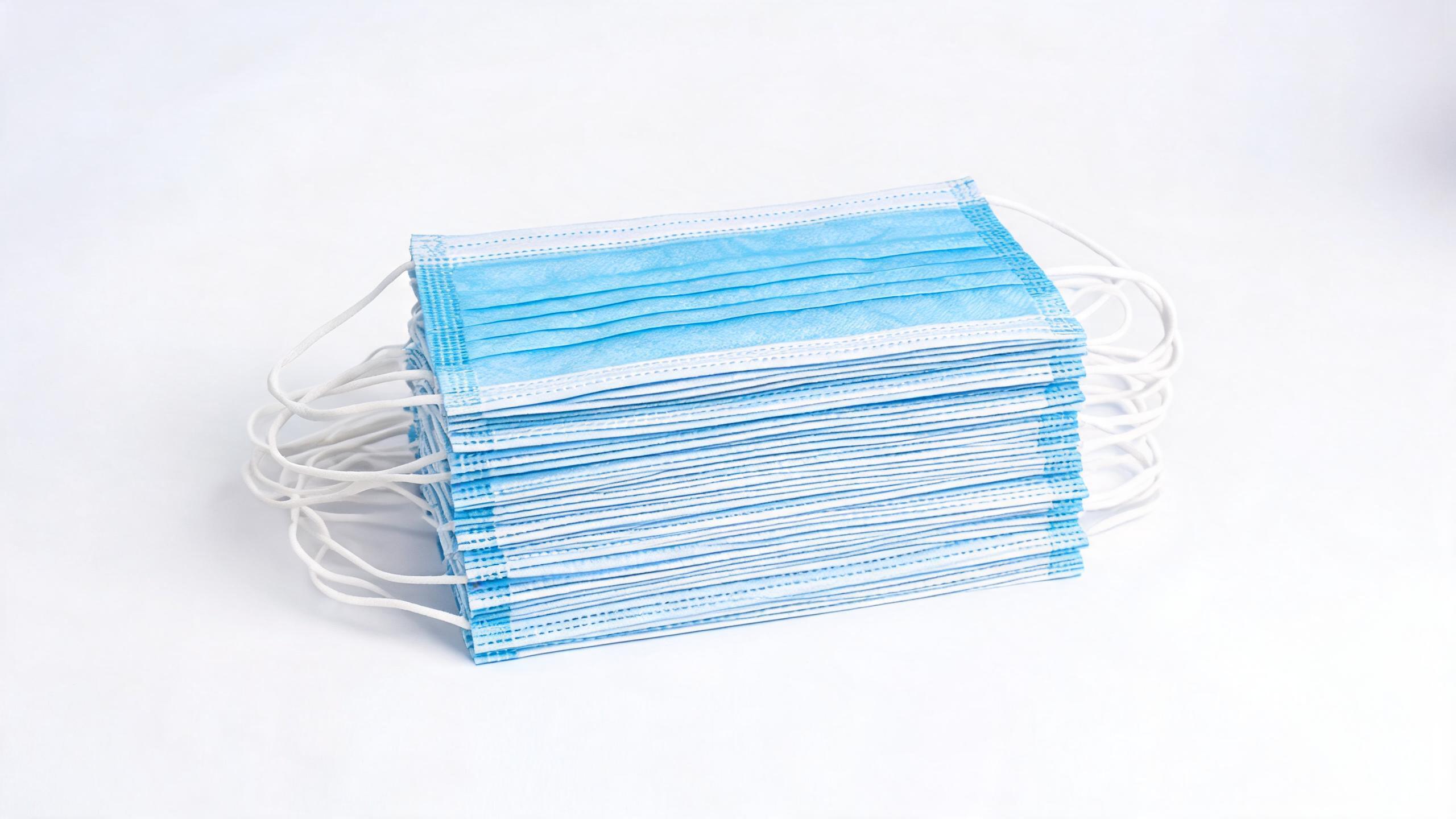
A practical guide for B2B buyers on evaluating surgical mask manufacturers. Learn how to verify production capacity, assess quality control systems, and confirm regulatory compliance before placing bulk orders. Includes checklists, red flags, and key questions to ask surgical mask suppliers.
BUYER GUIDE
• Verify production capacity with real numbers: monthly output, line count, and shift structure — not just "large capacity."
• Quality control goes beyond a certificate. Ask for in-process testing records, batch traceability, and defect rate data.
• Compliance varies by destination. EU (CE/MDR), US (FDA 510k), and other regions have different requirements — confirm your target market's specific standard.
• Always request a pre-shipment inspection and a sample run before committing to a large order.
If you are sourcing surgical masks for a hospital network, a government tender, or a wholesale distribution channel, your decision comes down to one question: can this supplier deliver the right volume, at the right quality, with the right paperwork, every time?
This article breaks down the three pillars of evaluating surgical mask manufacturers for B2B procurement: production capacity, quality control, and compliance verification. It is written for buyers who need to move beyond marketing claims and into verifiable facts.
1. Production Capacity: Can They Deliver Your Volume?
Before you ask for a price, you need to know if the manufacturer can physically produce your order quantity within your required timeline. A surgical mask supplier that sounds impressive on paper may have limited real output when you dig into the details.
What to Ask About Capacity
- Monthly output (pieces): Ask for the actual production volume of the last three months, not just the theoretical maximum. A factory claiming 10 million pieces per month but producing 4 million is a red flag.
- Number of production lines: How many automatic mask-making machines do they run? Each line typically produces 80–120 pieces per minute for 3-ply masks. Fewer lines mean lower throughput.
- Shift structure: Do they run one shift (8 hours), two shifts (16 hours), or three shifts (24 hours)? A single-shift factory may struggle with urgent orders.
- Raw material inventory: Do they stock meltblown fabric, non-woven fabric, and nose wires? A supplier that depends on just-in-time material delivery is vulnerable to supply chain disruptions.
- Order backlog: Ask how many current orders are in production. A factory running at 95% capacity may not be able to take your order without delaying others.
| Capacity Indicator | What to Look For | Red Flag |
|---|---|---|
| Monthly output (pieces) | Actual last 3 months: 5M–10M+ for medium factory | Claimed vs actual gap >30% |
| Production lines | 10–30 lines for medium volume | Fewer than 5 lines for large order |
| Shifts | 2 or 3 shifts for high-volume orders | Single shift only |
| Raw material stock | At least 2–4 weeks of material on hand | Zero stock, relies on spot purchase |
| Lead time for 1M pieces | 15–25 days | Over 40 days without explanation |
Practical Verification
Ask for a factory tour video or a live video call showing the production floor. A reputable disposable surgical mask supplier will usually accommodate this. If they refuse or offer only pre-recorded promotional videos, treat it as a yellow flag.
Also request a capacity commitment letter for your specific order volume and timeline. This is a common practice in B2B trade and helps align expectations on both sides.
2. Quality Control: Beyond the Certificate
Certificates like ISO 13485 or CE marking are entry requirements, not guarantees of consistent quality. The real test is what happens during production, not just at the end.
Key QC Checkpoints
- Incoming material inspection: Does the factory test meltblown fabric for filtration efficiency (BFE/PFE) before production? Raw material quality directly affects the final mask performance.
- In-process testing: Are masks tested at regular intervals during production (e.g., every 30 minutes)? Parameters include differential pressure (breathability), bacterial filtration efficiency (BFE), and particle filtration efficiency (PFE).
- Final inspection (AQL): What Acceptable Quality Level (AQL) does the factory use? For medical masks, AQL 1.0 or 1.5 is common for critical defects. Ask for their AQL sampling plan and recent inspection records.
- Batch traceability: Can each batch be traced back to the raw material lot, production date, and machine operator? This is essential for recall management and liability.
- Third-party testing: Do they have recent test reports from accredited labs like SGS, TÜV, or Intertek? Reports should be no older than 12 months and cover the specific mask model you are buying.
Common Quality Issues in Surgical Masks
- Low filtration efficiency: Often caused by poor-quality meltblown fabric or incorrect layering. BFE should be ≥98% for medical-grade masks.
- High differential pressure: Masks that are too hard to breathe through. Target: <5.0 mmH₂O/cm² for comfortable wear.
- Ear loop breakage: Weak attachment points or poor material. Test by pulling loops with a force gauge.
- Inconsistent size: Masks that vary in width or length can cause fit issues. Measure 10–20 samples from a batch.
3. Compliance Verification: Know Your Destination Market
Compliance is not one-size-fits-all. A mask that is legal in China may not be accepted in the EU or the US. As a B2B buyer, you must verify that the manufacturer's documentation matches your target market's requirements.
Major Regulatory Frameworks
| Market | Regulation | Key Documents Needed |
|---|---|---|
| European Union | EU 2016/425 (PPE) or EU 2017/745 (MDR) | CE Declaration of Conformity, Notified Body certificate, Technical File |
| United States | FDA 510(k) clearance or Emergency Use Authorization | 510(k) number, Establishment Registration, Device Listing |
| China | GB 19083 (medical) or YY 0469 (surgical) | NMPA registration certificate, Type test report |
| Australia | ARTG inclusion | ARTG certificate, Sponsor details |
| Canada | Medical Devices Regulations (SOR/98-282) | MDEL or Medical Device Licence |
Documents to Request from the Manufacturer
- Product certificate: Issued by a recognized body, showing the specific model and standard.
- Test report: From an accredited lab, covering BFE, PFE, differential pressure, splash resistance, and flammability (if applicable).
- Declaration of Conformity (DoC): Signed by the manufacturer, stating the product meets the applicable regulations.
- ISO 13485 certificate: Quality management system for medical devices. This is a baseline requirement for serious manufacturers.
- Factory registration: Some markets require the factory itself to be registered (e.g., FDA establishment registration).
Red Flags in Compliance
- Vague or expired certificates. Check the issue date and validity. A certificate that expired 6 months ago is not acceptable.
- Mismatched product models. The certificate lists model A, but you are buying model B. This is a common shortcut that can cause customs delays.
- No test report for the specific batch. A general report from 2021 does not cover the masks you are buying today.
- Supplier says "all certificates are available" but never sends them. This is a strong indicator of incomplete documentation.
4. Putting It All Together: A Supplier Evaluation Checklist
Use this checklist when evaluating surgical mask manufacturers for your next procurement. Not every item will apply to every order, but the more you can verify, the lower your risk.
| Category | Check Item | Status |
|---|---|---|
| Capacity | Monthly output confirmed (last 3 months) | ☐ Verified |
| Capacity | Number of production lines and shifts | ☐ Verified |
| Capacity | Lead time for your order volume | ☐ Confirmed |
| QC | Incoming material inspection records | ☐ Reviewed |
| QC | In-process testing frequency and parameters | ☐ Reviewed |
| QC | Final inspection AQL and recent reports | ☐ Reviewed |
| QC | Third-party test report (within 12 months) | ☐ Received |
| Compliance | Product certificate for target market | ☐ Verified |
| Compliance | Declaration of Conformity | ☐ Received |
| Compliance | ISO 13485 certificate | ☐ Verified |
| Compliance | Factory registration (if required) | ☐ Verified |
5. Frequently Asked Questions
What is the difference between a surgical mask and a medical mask?
In most markets, "surgical mask" is a type of medical mask designed to resist fluid splash and filter bacteria. The terms are often used interchangeably, but always check the specific standard (e.g., ASTM F2100 for US, EN 14683 for EU).
Can I trust a supplier that only offers 3-ply mask wholesale without medical certification?
Only if your end use is non-medical (e.g., general public use, dust protection). For medical or surgical applications, you must have proper certification. A supplier offering uncertified masks for medical use is a compliance risk.
How long does it take to get a sample from a surgical mask supplier?
Typically 3–7 days by express courier (DHL, FedEx). Always request samples from at least two suppliers and compare them side by side. Test for fit, breathability, and loop strength yourself.
What is a reasonable MOQ for surgical masks?
MOQ varies widely. For a disposable surgical mask supplier, 10,000–50,000 pieces per model is common. Some factories offer lower MOQ (1,000–5,000) for samples or trial orders, but the unit price will be higher.
What should I do if the manufacturer cannot provide a test report for the current batch?
Request a batch-specific test from an independent lab at your cost. If the supplier refuses, do not proceed. Batch testing is standard practice for medical devices.
Next Steps for Buyers
Evaluating surgical mask manufacturers is a process of verifying facts, not collecting brochures. Start with capacity and compliance documentation, then move to quality control records. Always request samples and a pre-shipment inspection before committing to a large order.
If you are currently sourcing and need a supplier that can provide verified production data, test reports, and compliance documentation, contact our team for a consultation. We work with manufacturers that meet the standards outlined in this guide.
For more procurement guides, see our articles on medical device sourcing and supplier evaluation.