
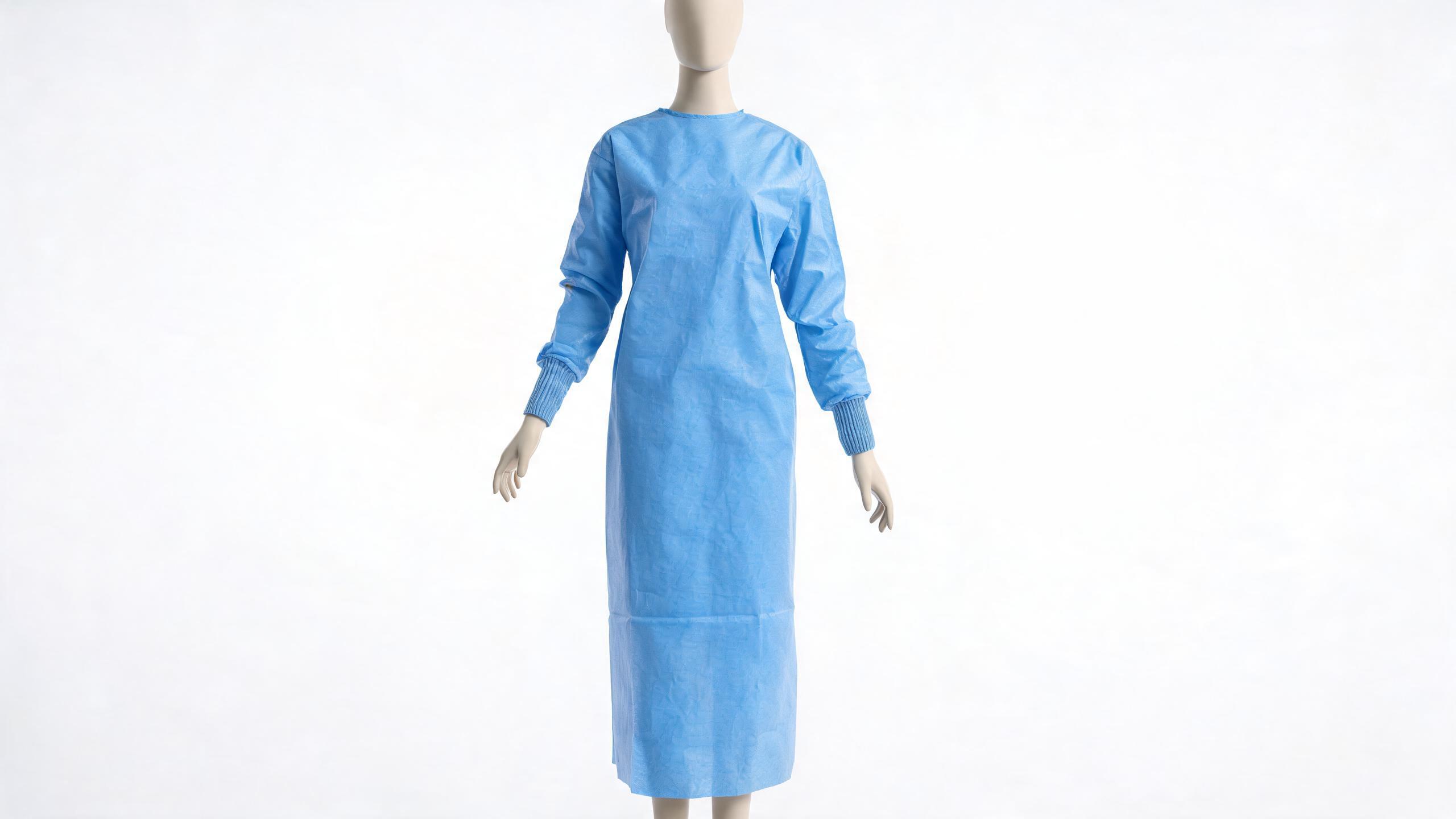
A comprehensive guide for healthcare procurement professionals on sourcing SMS nonwoven isolation gowns. Covers material types (SMS, SMMS, SBPP), EN ISO 13795 compliance requirements, key performance criteria (liquid barrier, tensile strength, microbial penetration), and a practical supplier evaluation checklist to ensure you select a reliable medical protective gown supplier.
PROCUREMENT GUIDE
- EN ISO 13795 is the primary standard for surgical gowns in Europe; performance levels (AAMI PB70 equivalent) determine barrier protection.
- SMS nonwoven material offers a balance of breathability and liquid barrier — ideal for isolation gowns and low-to-moderate risk surgical procedures.
- Supplier evaluation must go beyond price: check certification validity, production capacity, material traceability, and audit history.
- Know the difference between isolation gowns and surgical gowns — the intended use case dictates the required standard and performance level.
- Request a sample and a material specification sheet (MSS) before committing to bulk orders.
1. Why This Guide Matters
Procuring medical protective gowns is not a commodity purchase. A wrong choice — whether in material, standard, or supplier — can lead to failed audits, product returns, or worse, compromised barrier protection in a clinical setting.
This guide is written for procurement managers, hospital supply chain officers, and distributors who need to source SMS nonwoven isolation gowns or EN ISO 13795 surgical gowns from international suppliers. We cover the material science behind SMS, the regulatory framework (EN ISO 13795 and its relationship with AAMI PB70), and a practical checklist to evaluate a medical protective gown supplier.
2. Understanding Isolation Gown Material Types
Nonwoven fabrics dominate the medical gown market because they are single-use, lightweight, and can be engineered for specific barrier properties. The most common isolation gown material types include:
2.1 SMS (Spunbond-Meltblown-Spunbond)
SMS is a three-layer laminate. The outer spunbond layers provide mechanical strength and abrasion resistance. The inner meltblown layer acts as a filter — it blocks liquid droplets and microbial particles while allowing air and moisture vapor to pass through. This makes SMS the standard material for SMS nonwoven isolation gowns used in low-to-moderate risk environments.
2.2 SMMS (Spunbond-Meltblown-Meltblown-Spunbond)
Adding a second meltblown layer increases the barrier without significantly adding weight. SMMS is often used for gowns that need to meet a higher liquid barrier level (e.g., AAMI Level 2 or 3) while maintaining breathability.
2.3 SBPP (Spunbond Polypropylene) and Other Variants
Single-layer spunbond polypropylene is the lightest and most breathable option, but it offers minimal liquid barrier. It is suitable only for low-risk, non-surgical applications such as patient transport or general ward visits. For surgical use, SBPP alone is insufficient.
| Material Type | Layers | Typical Weight (gsm) | Primary Use Case | Liquid Barrier Level |
|---|---|---|---|---|
| SBPP (Spunbond) | 1 | 25–40 | Low-risk isolation, general ward | Minimal |
| SMS | 3 | 35–60 | Isolation, low-to-moderate risk surgical | Moderate (AAMI Level 1–2) |
| SMMS | 4 | 45–70 | Moderate risk surgical, ICU | High (AAMI Level 2–3) |
| Film-laminated SMS | 3 + film | 55–80 | High-risk surgical, fluid-intensive procedures | Very High (AAMI Level 3–4) |
When choosing between SMS and SMMS, ask: what is the fluid exposure risk? For a standard isolation gown used in a non-surgical ward, 40–50 gsm SMS is sufficient. For a surgical gown in a procedure with moderate fluid splash, you need at least 55 gsm SMMS or a film-laminated SMS.
3. EN ISO 13795 Compliance: What It Means for Surgical Gowns
EN ISO 13795 is the European standard for surgical gowns and drapes. It defines performance requirements and test methods for barrier properties, tensile strength, and microbial penetration. If you are sourcing EN ISO 13795 surgical gown products, you must ensure the supplier’s gown meets the applicable performance level.
3.1 Performance Levels (AAMI PB70 Equivalence)
EN ISO 13795 references the same classification system as AAMI PB70, which is widely recognized globally. The levels are based on the hydrostatic head test (liquid barrier) and the viral penetration test (ASTM F1671).
| Level | Liquid Barrier Test (Hydrostatic Head) | Viral Penetration (ASTM F1671) | Typical Application |
|---|---|---|---|
| Level 1 | Minimal (light splash) | Not required | Basic isolation, low-risk |
| Level 2 | Moderate (low pressure splash) | Not required | Blood draw, suturing, minor surgery |
| Level 3 | Moderate to high (moderate pressure) | Not required | Arterial blood draw, IV insertion, trauma procedures |
| Level 4 | High (high pressure, fluid-resistant) | Required (pass ASTM F1671) | Major surgery, high fluid exposure, infectious disease |
3.2 Key Tests Under EN ISO 13795
- Liquid barrier (hydrostatic head): Measures resistance to water penetration under increasing pressure. Higher values indicate better protection.
- Tensile strength (dry and wet): Ensures the gown does not tear during use, especially in the seams and critical zones.
- Microbial penetration (ASTM F1671): Required only for Level 4 gowns. Tests resistance to bloodborne pathogens under pressure.
- Linting (particulate release): Important for cleanroom and surgical environments where lint can contaminate the wound.
3.3 Common Compliance Mistakes to Avoid
- Claiming "EN ISO 13795 compliant" without specifying the level. A Level 1 gown is not suitable for surgery. Always ask for the level and the test report.
- Assuming all SMS gowns are surgical-grade. Many SMS isolation gowns are tested only as Level 1 or 2. If your use case requires Level 3 or 4, you need a different material or a film-laminated construction.
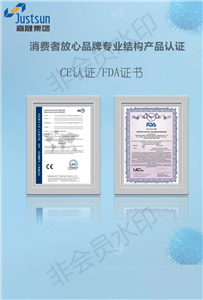
- Accepting a self-declaration without third-party testing. Reputable suppliers provide test reports from accredited labs (e.g., SGS, TÜV, Intertek).
4. How to Choose Medical Protective Gown: A Decision Framework
When you ask how to choose medical protective gown, the answer depends on three factors: intended use, risk level, and regulatory market.
4.1 Step 1: Define the Use Case
- Isolation gown (non-surgical): Used for patient care, transport, or general ward duties. Typically requires EN ISO 13795 Level 1 or 2, or equivalent. Material: SMS 35–50 gsm.
- Surgical gown (procedure): Used during invasive procedures with moderate fluid exposure. Requires Level 2 or 3. Material: SMS 50–60 gsm or SMMS.
- Surgical gown (high-risk): Used in major surgery or infectious disease settings. Requires Level 4. Material: Film-laminated SMS or reinforced nonwoven.
4.2 Step 2: Check the Regulatory Requirements of Your Target Market
- Europe: EN ISO 13795 (surgical gowns), EN 13795-1 (general). The gown must be CE-marked under the Medical Device Regulation (MDR) or the previous MDD if still valid.
- USA: AAMI PB70 (ANSI/AAMI PB70:2012). FDA-cleared as a Class II medical device for surgical gowns.
- Other markets: Many countries accept either EN ISO 13795 or AAMI PB70. Confirm with local regulatory authorities.
4.3 Step 3: Evaluate Material and Construction
- Check the fabric weight (gsm) — higher gsm generally means better barrier but less breathability.
- Look for seam construction: ultrasonic bonded seams are stronger than stitched seams for liquid barrier.
- Verify the cuff type: elastic, knit, or thumb loop. Elastic cuffs are standard for isolation gowns; knit cuffs are preferred for surgical gowns to prevent fluid run-off.
5. Supplier Evaluation Checklist for Medical Protective Gown Procurement
Selecting a medical protective gown supplier is a risk management exercise. Use the following checklist during your evaluation.
| Evaluation Criteria | What to Ask / Verify | Red Flags |
|---|---|---|
| Certification | Request a copy of the CE certificate (MDR), FDA 510(k) clearance, or equivalent. Verify the certificate number on the issuing body’s website. | Supplier says "certified" but cannot provide a certificate number or test report from an accredited lab. |
| Material Traceability | Ask for the material specification sheet (MSS) — fabric type, gsm, supplier of the nonwoven roll, lot number. | Supplier cannot name the raw material source or provides vague descriptions like "high-quality nonwoven". |
| Production Capacity | Ask for monthly output in units. For a 50,000-piece order, what is the lead time? Can they scale? | Supplier avoids giving numbers or gives a lead time that is unrealistically short (e.g., 7 days for 100,000 gowns). |
| Quality Control | Ask about in-process inspection (e.g., visual inspection at every 100 pieces), final AQL sampling (e.g., AQL 2.5 for critical defects), and test frequency. | Supplier has no QC documentation or says "100% inspection" without defining the inspection criteria. |
| Sample & Testing | Request a pre-production sample (PPS) and a test report from a third-party lab. Run your own hydrostatic head test on arrival. | Supplier charges a high sample fee without a clear refund policy, or refuses to provide a sample. |
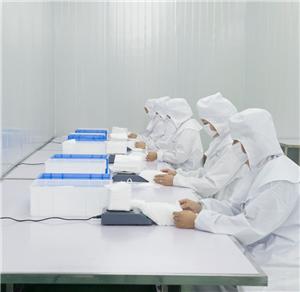
| Audit History | Ask if the factory has been audited by a third-party (e.g., BSCI, SMETA, ISO 13485) or by a previous buyer. | Supplier has no audit history or is unwilling to schedule a video tour or third-party audit. |
6. Common Mistakes in Sourcing SMS Nonwoven Gowns
- Buying on price alone. The cheapest SMS gown is often made from low-gsm (25–30 gsm) fabric that tears easily and offers minimal barrier. A gown that fails in the field costs more in returns and reputation.
- Ignoring the packaging. Medical gowns must be packaged in a way that maintains sterility (if sterile) or prevents contamination (if non-sterile). Check the packaging material and sealing method.
- Not verifying the standard for the use case. A Level 1 isolation gown is not suitable for a surgical procedure. Make sure the standard matches the end use.
- Assuming all SMS is the same. The quality of the meltblown layer varies significantly between suppliers. A gown that passes the hydrostatic head test today may fail if the supplier changes the meltblown source without notice.
7. Frequently Asked Questions (FAQ)
Q: What is the difference between an isolation gown and a surgical gown?
An isolation gown is designed for low-to-moderate risk patient care and does not require a specific level of barrier. A surgical gown is a medical device that must meet a defined performance level (e.g., EN ISO 13795 Level 3 or 4) and is used during invasive procedures. The terms are often used interchangeably in the market, but the regulatory requirements differ.
Q: Can I use an SMS isolation gown for surgery?
Only if the SMS gown is tested and certified to meet the required level (e.g., Level 3 or 4). Most standard SMS isolation gowns are only Level 1 or 2. For surgery, you need a gown that has passed the relevant tests for the intended procedure.
Q: How do I verify a supplier's EN ISO 13795 claim?
Request the test report from an accredited third-party lab (e.g., SGS, TÜV, Intertek). The report should show the specific test methods and results for hydrostatic head, tensile strength, and if applicable, viral penetration. Also, check the certificate number on the issuing body's website (e.g., the notified body for CE marking).
Q: What is the typical MOQ for SMS nonwoven gowns from a Chinese supplier?
MOQ varies by supplier and product complexity. For a standard isolation gown, MOQ is typically 10,000–50,000 pieces. For a customized surgical gown with specific features (e.g., thumb loop, reinforced seams), MOQ may be higher. Always confirm with the supplier and ask if they can offer a trial order for a smaller quantity.
8. Next Steps for Procurement Professionals
If you are actively sourcing SMS nonwoven isolation gowns or EN ISO 13795 surgical gowns, start with the following steps:
- Define your use case and required performance level.
- Shortlist suppliers who can provide the relevant certification and test reports.
- Request a sample and run your own basic tests (e.g., visual inspection, weight check, hydrostatic head test).
- Conduct a factory audit (or request a third-party audit report) to verify production capacity and quality control.
- Agree on a quality agreement that specifies material, testing, and AQL levels.
For a detailed product specification sheet or to discuss your specific procurement needs, please contact our team. We can provide samples and test reports for our SMS nonwoven gowns that meet EN ISO 13795 Level 2 and Level 3 requirements.