
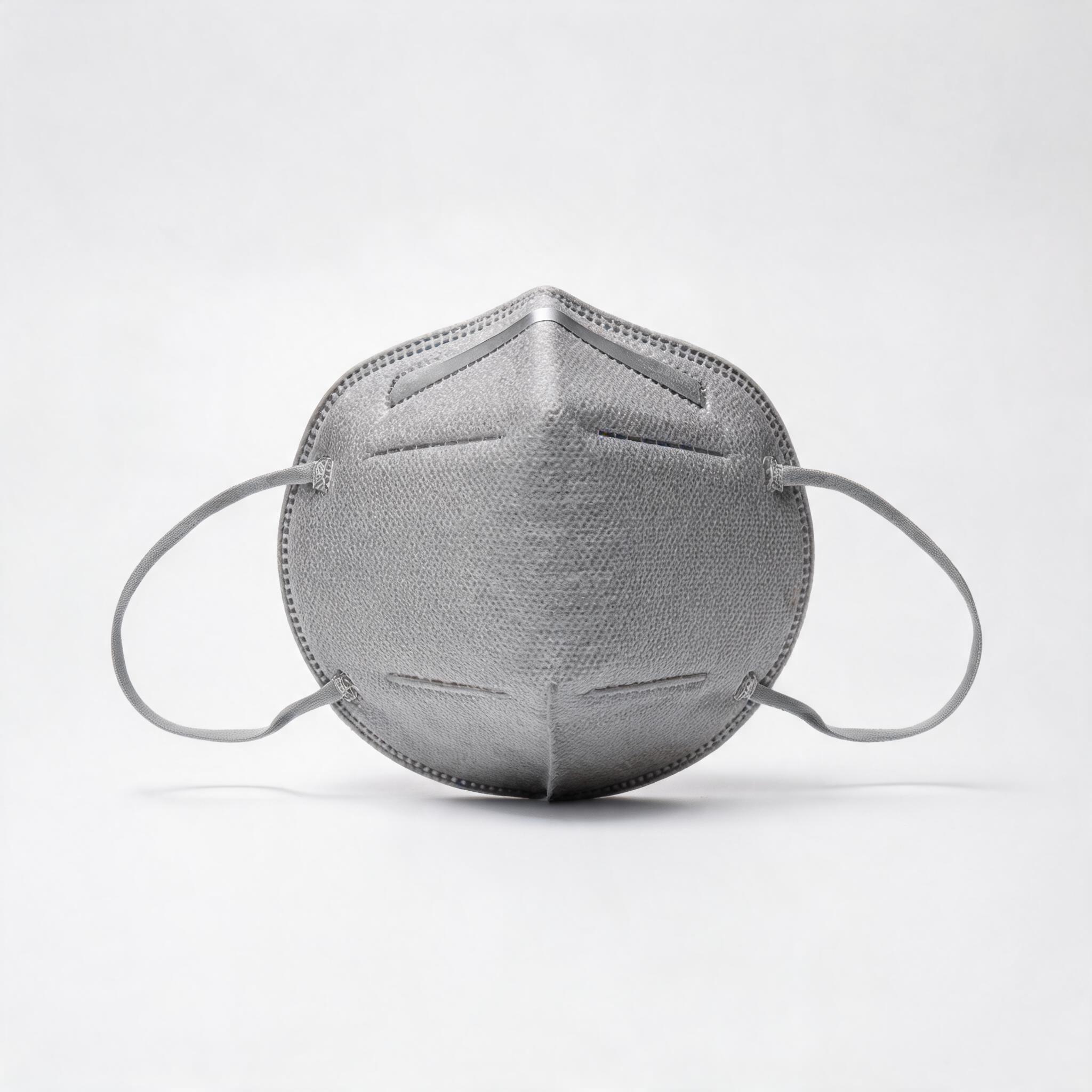
Diferansiyel basınç (ΔP) olarak ölçülen KN95 maske solunum direnci, işçi uyumunu ve güvenliğini doğrudan etkiler. Bu kılavuz, BFE ve ΔP'nin nasıl etkileştiğini, satın almada solunum direncinin nasıl değerlendirileceğini ve toplu siparişler için özel ΔP gereksinimlerinin nasıl belirleneceğini açıklar.
Understanding the Core Metric: Differential Pressure
When procuring KN95 masks for industrial or healthcare use, the term "breathing resistance" often surfaces as a critical yet misunderstood parameter. At its core, breathing resistance is quantified by differential pressure (ΔP), measured in mmH₂O/cm² or Pa/cm². This metric directly indicates how easily air passes through the filter media. For business buyers, understanding this value is not merely academic—it directly impacts worker compliance, safety margins, and operational costs.
The KN95 mask breathing resistance standard, as defined by GB2626-2019, mandates a maximum inhalation resistance of 350 Pa and exhalation resistance of 250 Pa at a continuous flow rate of 85 L/min. However, the real-world implications of these numbers go far beyond regulatory compliance. A mask with differential pressure near the upper limit may still pass certification but can cause significant discomfort during extended wear, leading to frequent adjustments or removal—both of which compromise protection.
The Science Behind BFE and Breathing Resistance
Bacterial Filtration Efficiency (BFE) is often conflated with breathing resistance, but they measure fundamentally different properties. BFE tests the percentage of aerosolized bacteria (typically 3.0 μm particles) that the filter media captures. A high BFE (≥95% for KN95) indicates effective particle capture, but it does not predict how easily you can breathe through the mask. For a deeper understanding of how these metrics compare, see our guide on KN95 mask BFE vs PFE filtration standards.
The relationship between BFE and breathing resistance is inversely proportional in many designs: higher filtration efficiency often requires denser fiber layers, which increase differential pressure. However, advanced electrostatic meltblown media can achieve high BFE (≥99%) while maintaining ΔP below 150 Pa. This is a key differentiator for procurement teams evaluating breathing resistance and filtration testing criteria. For more on this topic, our article on mask filtration standards and Delta P testing breaks down each parameter.
Why Breathing Resistance Matters for B2B Buyers
Worker Compliance and Productivity
The most expensive mask is the one that is not worn correctly. In industrial settings, workers often remove masks when they feel suffocated, especially during tasks requiring physical exertion. A 2020 study in the Journal of Occupational and Environmental Hygiene found that masks with ΔP above 250 Pa increased the likelihood of mask removal by 40% during 8-hour shifts. This directly undermines the safety investment.
For procurement managers, this means that breathing resistance should be a line item in every specification sheet, not just a footnote. When evaluating suppliers, request the ΔP value at 85 L/min flow rate—the standard test condition. If a supplier cannot provide this data, it is a red flag for quality control.
Regulatory and Legal Exposure
In regulated industries (pharmaceutical, food processing, healthcare), failure to provide adequate respiratory protection can lead to OSHA fines or liability claims. The differential pressure test is a repeatable, objective measure that can be verified by third-party labs. When writing procurement contracts, include a clause requiring ΔP documentation from each production batch. This protects your organization from relying on masks that technically pass certification but perform poorly in the field.
How to Evaluate KN95 Mask Breathing Resistance in Procurement
Step 1: Request the Test Report
Ask suppliers for a GB2626-2019 or EN149:2001+A1:2009 test report that includes:
- Inhalation resistance at 85 L/min (max 350 Pa for KN95)
- Exhalation resistance at 85 L/min (max 250 Pa)
- Flow rate used for testing (should match standard)
- Sample size (minimum 10 masks per batch)
Step 2: Compare with BFE and Particle Filtration Efficiency (PFE)
A high-performance mask should have:
- BFE ≥ 98% (for bacterial aerosols)
- PFE ≥ 95% at 0.3 μm (for NaCl aerosol)
- ΔP ≤ 150 Pa (for comfortable extended wear)
If a supplier offers BFE ≥ 99% but ΔP ≥ 300 Pa, consider whether the application justifies the trade-off. For short-duration tasks (e.g., emergency response), higher resistance may be acceptable. For 8-hour shifts, prioritize lower ΔP. To learn how to match respirator specifications to your specific industry, see our guide on choosing the right KN95 respirator for your industry.
Step 3: Conduct a Simple Field Test
Before committing to a large order, request 50–100 samples for internal testing. Have workers wear the masks for 15 minutes during typical tasks (e.g., walking, lifting, speaking). Use a subjective rating scale (1–5) for breathing ease. Compare this with the ΔP value from the test report. If workers consistently rate the mask as "hard to breathe" despite a ΔP of 150 Pa, it may indicate poor fit or design issues (e.g., nose clip placement, seal leakage).
Common Misconceptions About KN95 Breathing Resistance
"Higher Resistance Means Better Protection"
This is false. Resistance measures airflow, not filtration efficiency. A mask with high ΔP can have low BFE if the filter media is poorly designed. Conversely, electrostatic media can achieve high BFE with low ΔP. Always verify both metrics independently.
"All KN95 Masks Have the Same Breathing Resistance"
In reality, ΔP varies significantly by design:
- Flat-fold masks (e.g., 3-layer) typically have ΔP of 100–200 Pa
- Cup-shaped masks (e.g., 4-layer with foam) may have ΔP of 150–300 Pa. The KN95 Cup Respirator is an example of this design, offering rigid structural support.
- Valved masks reduce exhalation resistance but do not affect inhalation ΔP. The KN95 Valve Respirator demonstrates how a one-way valve lowers exhaled-air resistance.
For procurement, specify the mask type and required ΔP range. Avoid generic "KN95" labels without supporting data. For more on valved respirator benefits, see our article on choosing a KN95 mask with valve for industrial use.
"Breathing Resistance Only Matters for Medical Use"
False. In industrial settings, workers performing physical labor (e.g., construction, mining, manufacturing) are more sensitive to breathing resistance. A mask with ΔP of 250 Pa can cause lightheadedness after 30 minutes of heavy exertion. For these applications, target ΔP ≤ 150 Pa. For more context on fit testing and industrial safety programs, read about KN95 respirator fit testing and usage guidelines.
Real-World Use Cases and Pain Points
Scenario 1: Pharmaceutical Cleanroom
A pharmaceutical company needed masks for a Class 100,000 cleanroom (ISO 8). The procurement team initially selected a high-BFE mask (99.9%) with ΔP of 280 Pa. After three days, workers complained of headaches and dizziness. Switching to a mask with BFE 98% and ΔP 120 Pa resolved the issue without compromising cleanroom standards.
Scenario 2: Construction Site Dust Control
A construction contractor provided KN95 masks for concrete dust exposure. The masks had ΔP of 350 Pa (near regulatory limit). Workers frequently removed masks to "catch their breath," leading to respiratory irritation. The contractor switched to valved KN95 masks with ΔP 180 Pa, improving compliance by 60%. Our article on how valved KN95 masks reduce heat stress explores this benefit in depth.
Scenario 3: Healthcare Triage
A hospital emergency department used KN95 masks for staff during respiratory illness surges. The masks had ΔP 200 Pa, which was acceptable for short shifts. However, during 12-hour shifts, staff reported fatigue. The hospital now specifies ΔP ≤ 150 Pa for all KN95 procurement.
Frequently Asked Questions for Procurement
Q: What is the acceptable range for KN95 mask breathing resistance?
A: The GB2626-2019 standard allows up to 350 Pa inhalation resistance. However, for comfortable extended wear, target ΔP ≤ 150 Pa. For heavy exertion, target ΔP ≤ 100 Pa.
Q: How is differential pressure measured?
A: Using a differential pressure tester (e.g., TSI 8130) at 85 L/min continuous flow. The mask is sealed to a test fixture, and the pressure drop across the filter media is measured.
Q: Can I reduce breathing resistance by modifying the mask?
A: No. Do not drill holes, remove layers, or alter the mask. This voids the certification and reduces filtration efficiency. Instead, select a mask with lower ΔP from the start.
Q: Does a valved mask have lower breathing resistance?
A: Valves reduce exhalation resistance only. Inhalation resistance remains the same as the non-valved version. For inhalation comfort, focus on ΔP, not valve presence.
Q: How do I verify a supplier's breathing resistance claims?
A: Request a third-party test report from an accredited lab (e.g., SGS, TÜV, Intertek). Ask for batch-specific testing, not just a generic certificate. If the supplier cannot provide this, consider it a risk.
Selection Criteria for Bulk Procurement
When evaluating multiple suppliers, use this weighted scoring system:
| Criterion | Weight | Notes |
|---|---|---|
| ΔP at 85 L/min | 30% | Lower is better; target ≤150 Pa |
| BFE | 20% | ≥98% for medical/industrial use |
| PFE at 0.3 μm | 20% | ≥95% for KN95 certification |
| Fit test pass rate | 15% | ≥95% of test subjects pass |
| Price per unit | 10% | Compare total cost of ownership |
| Lead time | 5% | Confirm with supplier |
This system ensures that breathing resistance is prioritized alongside filtration efficiency, eliminating masks that pass certification but fail in practice.
How to Request a Custom Breathing Resistance Specification
For large-volume orders, you can negotiate with manufacturers to produce masks with a specified ΔP range. This is common for OEM projects where the buyer requires:
- ΔP ≤ 150 Pa for general use
- ΔP ≤ 100 Pa for high-exertion environments
- ΔP ≤ 200 Pa for short-duration emergency use
To initiate this, provide the manufacturer with:
- Target ΔP value (e.g., 120 Pa ± 20 Pa)
- Flow rate for testing (85 L/min)
- Acceptable BFE/PFE trade-off (e.g., BFE ≥ 97% if ΔP is lowered)
- Sample size for batch testing (e.g., 20 masks per 10,000 units)
The manufacturer will adjust the filter media layers (e.g., reduce meltblown density, increase electrostatic charge) to meet your specification. Note that this may increase cost by 5–15% due to tighter quality control.
Conclusion and Next Steps
Understanding KN95 mask breathing resistance is not optional for B2B buyers—it is a direct driver of worker safety, compliance, and productivity. By focusing on differential pressure alongside BFE, you can select masks that protect without suffocating. Always request third-party test data, conduct field trials, and specify ΔP requirements in your procurement contracts.
For your next bulk order, ask your supplier: "What is the ΔP at 85 L/min for this mask, and can you provide batch-specific test reports?" If they hesitate, it is time to evaluate alternative suppliers.
Ready to source masks with verified breathing resistance? Contact our team for a sample pack and test report. We provide KN95 respirators with documented ΔP values and BFE ≥ 95%, backed by CE certification and GB2626-2006 compliance.