
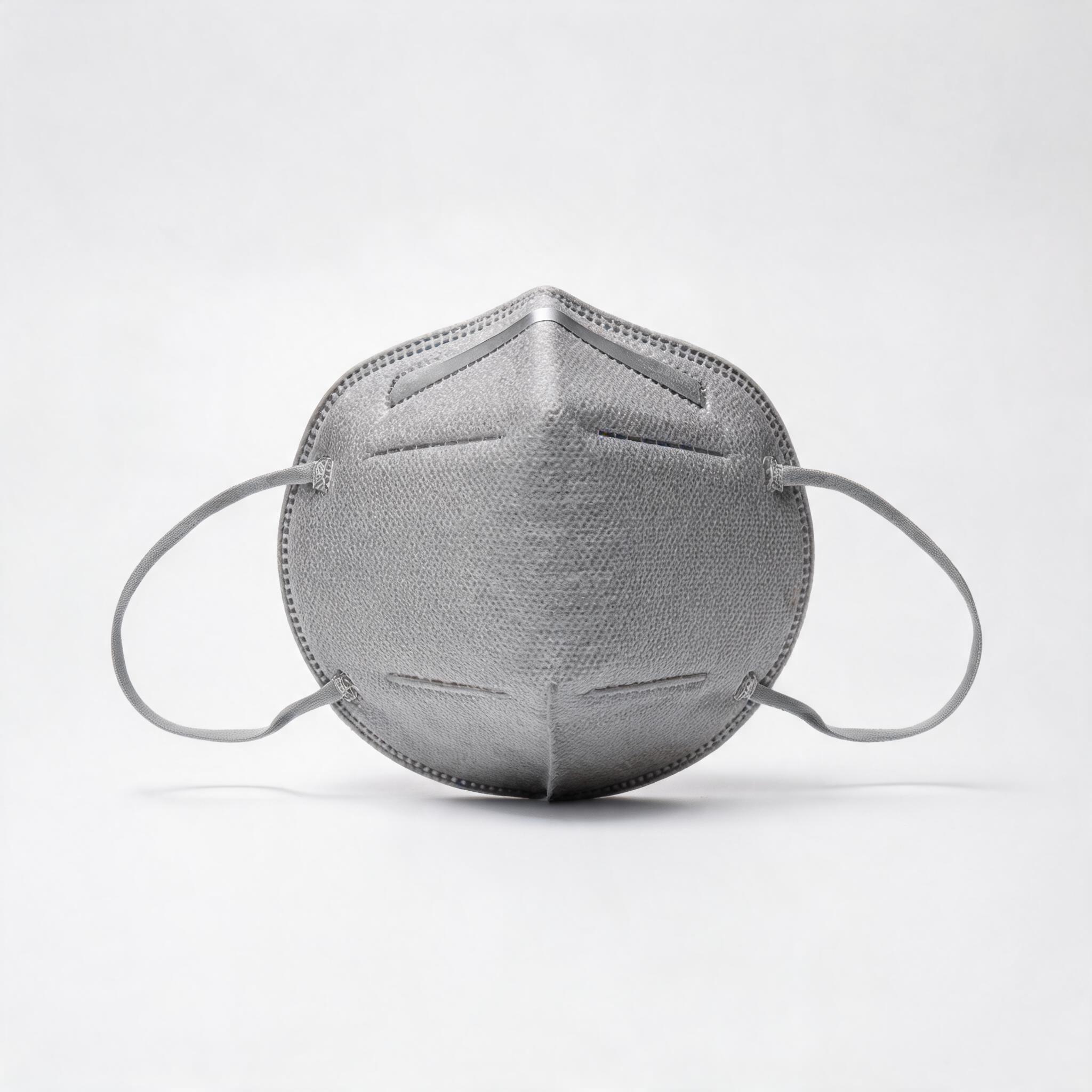
B2B tedarik için KN95 solunum cihazı kulak bandı ve baş bandı kalitesine dair ayrıntılı bir rehber: malzeme özellikleri, kalite parametreleri, test yöntemleri, yaygın hatalar ve maliyet etkisi.
When procurement teams evaluate KN95 respirators, the focus naturally falls on filtration efficiency, certification, and material composition. Yet one of the most common causes of field failure and end-user rejection has nothing to do with the filter medium-it is ear loop or head strap quality. A respirator with excellent filtration but straps that snap, lose tension, or cause pain after two hours will not protect anyone, because it will be removed or worn improperly.
Why Ear Loop Quality Is a Procurement Priority
Ear loops and head straps serve a dual function: they hold the respirator in position on the face and they provide the tension necessary to maintain a seal between the respirator edge and the skin. If strap tension is too low, the seal breaks and unfiltered air bypasses the filter. If tension is too high, the wearer experiences pain and removes the respirator. If the strap material degrades during storage or use, tension loss occurs unpredictably.
For B2B buyers, ear loop quality directly affects:
- Effective protection: Broken or loose straps = broken seal = no protection
- Consumption rates: Respirators with failed straps are discarded before their rated wear duration, increasing per-shift consumption
- End-user compliance: Painful straps drive non-compliant behavior (removal, improper adjustment)
- Product returns and complaints: Strap failures are a leading cause of customer complaints and batch rejections
Ear Loop vs Head Strap: Design Differences and Implications
KN95 respirators use two primary attachment designs, each with distinct advantages and limitations for different applications.
Ear Loop Design
Ear loops attach to both sides of the respirator and loop around the wearer's ears. They are the most common attachment method for flat-fold KN95 respirators due to their simplicity and low manufacturing cost.
Advantages: Quick donning and doffing, no adjustment needed, compact packaging, lower cost.
Disadvantages: Tension concentrated on the ears causes pain after 2-4 hours; insufficient tension for adequate seal on some face profiles; elastic relaxation occurs faster than with head straps.
Head Strap Design
Head straps (typically two straps: one upper, one lower) encircle the back of the head. This is the design used on cup-style respirators like the KN95 Valve Respirator.
Advantages: Tension distributed across the skull, allowing extended wear (8+ hours) without discomfort; higher and more consistent seal pressure; less prone to accidental removal.
Disadvantages: Slower to don and doff; requires adjustment for proper fit; more material cost; may interfere with headgear or eyewear.
Procurement guidance: For shifts exceeding 4 hours, head strap designs are strongly recommended. Ear loops are acceptable for short-duration or public-use applications where comfort over extended periods is less critical.
Ear Loop Material Specifications
The material composition of ear loops directly determines their tension, durability, and comfort. The most common materials used in KN95 ear loops include:
| Material | Characteristics | Typical Application |
|---|---|---|
| Spandex + polyester braided | High elasticity, good tension retention, soft feel | Premium respirators, extended wear |
| Latex elastic band | High initial tension, allergy risk, degrades in UV/heat | Budget products (not recommended) |
| Thermoplastic elastomer (TPE) | Consistent tension, latex-free, good aging resistance | Mid-range to premium respirators |
Latex-free materials are strongly recommended for any respirator deployed in healthcare settings, as latex allergies among patients and staff create significant liability. The ergonomic design of the respirator should specify the strap material.
Critical Quality Parameters for Ear Loops
When evaluating ear loop or head strap quality, B2B buyers should verify the following technical parameters:
Tension Force
The tension force of the strap must be sufficient to maintain a seal without causing excessive discomfort. For ear loops, typical tension ranges from 1.5 to 3.0 Newtons per strap. For head straps, 2.0 to 5.0 Newtons is common. Too little tension results in seal failure; too much causes pain and skin irritation.
Elongation at Break
This measures how far the elastic can stretch before snapping. A higher elongation at break means the strap is less likely to fail during donning. Minimum acceptable values are typically 200-300% elongation for ear loop elastic.
Tension Retention After Repeated Stretching
Straps lose tension with repeated stretching cycles (donning and doffing). A quality strap should retain at least 80% of its initial tension after 50 stretch cycles. This parameter is rarely tested by buyers but is one of the most predictive indicators of real-world strap durability.
Attachment Point Strength
The weld point where the strap meets the respirator body must withstand a minimum pull force. The GB2626 standard does not specify a minimum attachment strength, but industry practice typically requires ≥10 Newtons. Weak attachment is a primary cause of product rejection-not the strap itself breaking, but the attachment point failing.
Width and Thickness
Wider straps (≥3mm for ear loops, ≥5mm for head straps) distribute pressure over a larger area, reducing discomfort. Thinner straps concentrate force on a narrow strip of skin, causing pain and indentation marks after extended wear.
How Storage Conditions Affect Strap Quality
Elastic materials are sensitive to environmental conditions. The storage conditions that preserve respirator shelf life also affect strap elasticity:
- Temperature: High temperatures accelerate elastic degradation. Storage above 40°C can reduce strap tension by 20-40% within weeks.
- Humidity: Prolonged exposure to high humidity can degrade latex-based elastics and cause mold growth on fabric-covered straps.
- UV exposure: Ultraviolet light degrades elastic polymers. Respirators stored in transparent packaging exposed to sunlight will experience accelerated strap degradation.
- Ozone: Ozone in storage environments accelerates cracking and tension loss in latex and some synthetic elastomers.
For procurement teams managing strategic stockpiles, the strap material's aging characteristics should be a key consideration. TPE and spandex-polyester blends have significantly better aging resistance than natural latex.
Testing Ear Loop Quality in Supplier Evaluation
When evaluating KN95 suppliers, incorporate ear loop quality testing into your supplier qualification process:
- Request material specification: Ask for the material composition, width, and tension rating of the ear loops or head straps.
- Conduct pull testing: Using a simple force gauge, test the attachment point strength on a sample of 10 respirators. Record the force at which the strap detaches from the body.
- Test tension retention: Stretch each strap 50 times to simulate donning/doffing cycles, then measure residual tension. Compare with initial tension.
- Aging test: Place samples in a 40°C oven for 7 days, then retest tension and attachment strength. This simulates approximately 6 months of storage at elevated temperatures.
- Wearer trial: Have a representative sample of end-users wear the respirator for the full rated shift duration (4-8 hours) and report comfort and any strap-related issues.
Common Ear Loop Quality Failures and Their Causes
| Failure Mode | Typical Cause | Prevention |
|---|---|---|
| Strap detachment | Insufficient ultrasonic weld energy; wrong weld pattern | Specify minimum 10N pull strength; verify in QC sampling |
| Tension loss during wear | Low-quality elastic material; excessive stretching during donning | Specify spandex-polyester or TPE material; include user training on proper donning |
| Ear pain after 2-3 hours | Narrow strap width; excessive tension; ear loop design | Specify wider straps (≥3mm); consider head strap design for extended wear |
| Strap snapping during donning | Brittle elastic from aging or poor material quality | Specify elongation at break ≥200%; verify storage conditions |
The Cost Impact of Ear Loop Quality
Poor ear loop quality has measurable cost impacts that extend beyond the unit price of the respirator:
- Wasted product: Respirators with broken straps cannot be repaired and must be discarded. Even a 2% strap failure rate in a 100,000-unit order means 2,000 wasted respirators.
- Increased consumption: When straps lose tension mid-shift, wearers replace respirators prematurely, increasing daily consumption by 15-30%.
- Compliance costs: Respirators removed due to strap discomfort leave workers unprotected, creating regulatory liability.
- Reputation damage: For distributors, strap failures in the field lead to customer complaints, returns, and lost contracts.
The cost difference between a respirator with quality straps and one with marginal straps is typically $0.02-0.05 per unit. For a 100,000-unit order, this is $2,000-5,000. The cost of field failures, increased consumption, and compliance issues from poor strap quality can easily exceed $10,000-20,000 for the same order volume.
Conclusion
Ear loop and head strap quality is a critical but frequently overlooked dimension of KN95 respirator procurement. By specifying material requirements, testing attachment strength and tension retention, and matching strap design to the intended wear duration, B2B buyers can significantly reduce field failures, improve end-user compliance, and lower the total cost of ownership of their respiratory protection program. A respirator is only as good as the straps that hold it in place-and the straps are only as good as the specifications that govern their quality.