
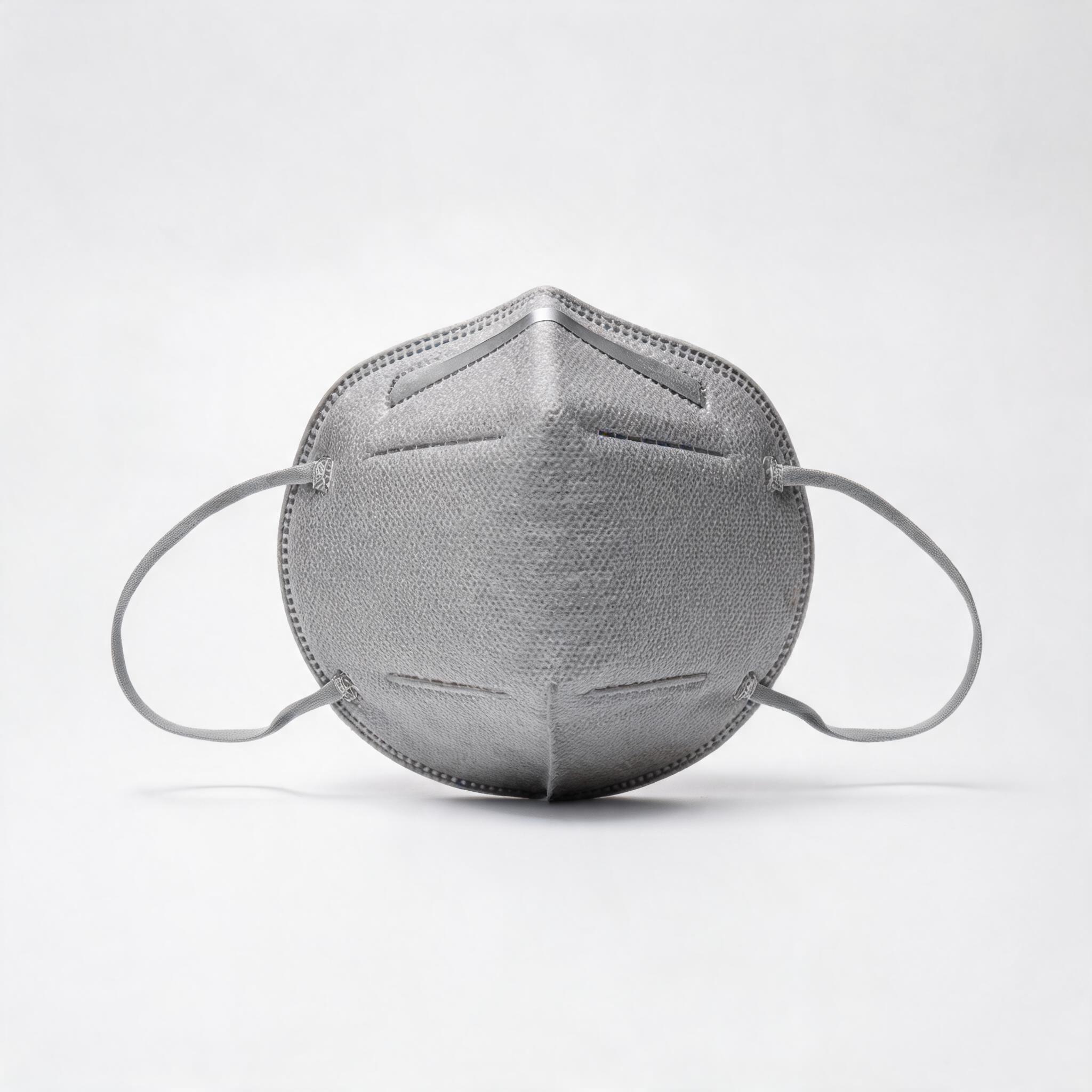
B2B alıcıları için KN95 (GB2626-2006) ve N95 (NIOSH) standartlarının pratik karşılaştırması: filtreleme performansı, pazara göre düzenleyici kabul, maliyet ve tedarik hususları ve sık yapılan tedarik hataları.
Respiratory Protection · Standard Comparison
KN95 vs N95: Which Mask Standard Should B2B Buyers Choose?
Procurement teams sourcing respiratory protection for healthcare, industrial, or government stockpile programs frequently confront a deceptively simple question: KN95 or N95? The answer matters because it determines regulatory compliance, customs clearance, end-user acceptance, and ultimately whether your shipment clears the dock or gets held up. This article breaks down the practical differences between these two standards so you can make an informed sourcing decision.
Key takeaway: KN95 (GB2626-2006) and N95 (NIOSH 42 CFR 84) both require ≥95% filtration efficiency at 0.3µm, but they are issued under different regulatory frameworks. N95 is the US standard; KN95 is the Chinese standard. Both are accepted in many markets, but acceptance depends on the destination country's import regulations.
Filtration Performance: How Do They Compare?
Both standards require the respirator to filter at least 95% of non-oil-based airborne particles at the benchmark 0.3µm particle size. The filtration mechanism is the same: meltblown polypropylene with an electrostatic charge captures particles as air passes through the filter medium.
The difference is not in filtration performance itself but in the testing protocol and certifying body:
| Parameter | KN95 (GB2626-2006) | N95 (NIOSH 42 CFR 84) |
|---|---|---|
| Filtration efficiency | ≥95% at 0.3µm | ≥95% at 0.3µm |
| Standard origin | China (GB2626-2006) | USA (NIOSH/MSHA) |
| Test method | NaCl aerosol, 85 L/min | NaCl aerosol, 85 L/min |
| Total inward leakage | ≤8% (with subject testing) | Not explicitly required |
| Breathing resistance (inhalation) | ≤350 Pa | ≤343 Pa |
| Certifying authority | Chinese labs under GB2626 | NIOSH (CDC/NIOSH) |
Regulatory Acceptance by Market
This is where the practical sourcing decision gets made. Acceptance varies by destination:
United States
N95 is the domestic standard and is universally accepted. During the COVID-19 public health emergency, the FDA issued Emergency Use Authorizations (EUAs) that temporarily accepted KN95 respirators. Post-EUA, acceptance of KN95 in US healthcare settings depends on current FDA and NIOSH guidance. For industrial use, NIOSH-certified N95 respirators are the standard. Importers should verify the current regulatory status before placing orders.
European Union
Neither KN95 nor N95 is the EU standard. The EU uses FFP2 under EN 149. However, KN95 respirators with CE marking have been widely imported and used. For EU market entry, KN95 respirators with CE certification are the relevant product. Importers should also review our guide on KN95 mask CE certification requirements for EU import.
Asia, Middle East, Latin America
KN95 is widely accepted across these regions. Many countries reference GB2626-2006 or accept CE-marked KN95 respirators. N95 is also accepted but is less commonly sourced due to higher unit cost and supply constraints from US-based manufacturers.
Cost and Supply Considerations
For B2B buyers, cost and supply chain stability are often the deciding factors:
- KN95: Typically manufactured in China at scale. Lower per-unit cost. Larger production capacity available from established manufacturers like Justsun (founded 1997, 26,100 m² facility).
- N95: Primarily manufactured by US-based companies (3M, Honeywell). Higher per-unit cost. Supply can be constrained during surge demand periods.
For buyers who need valved respirators for industrial applications, both standards offer valved options. The valve reduces exhalation resistance, which is critical for workers in high-temperature environments.
Common Sourcing Mistakes
- Assuming automatic equivalence: While filtration performance is comparable, regulatory acceptance is not universal. Always check destination market requirements.
- Ignoring fit testing requirements: Both KN95 and N95 require proper fit to achieve declared filtration. A poorly fitted respirator of either standard will underperform. See our guide on KN95 respirator fit testing and usage guidelines.
- Overlooking documentation: Whether sourcing KN95 or N95, request test reports, declaration of conformity, and batch-specific QC documentation from the supplier.
FAQ
Can KN95 and N95 be used interchangeably?
In terms of filtration performance, both achieve ≥95% at 0.3µm. However, regulatory acceptance varies by country. Check your destination market's current import and use requirements.
Which is cheaper: KN95 or N95?
KN95 respirators are generally lower in per-unit cost due to Chinese manufacturing scale. N95 respirators from US manufacturers carry a price premium. For bulk procurement, the cost difference can be significant at container-load quantities.
Does Justsun manufacture both KN95 and N95?
Justsun manufactures KN95 respirators certified to GB2626-2006 with CE marking. N95 is a NIOSH certification specific to US-based testing. For buyers needing KN95, supplier selection criteria should include verification of GB2626-2006 test reports and CE documentation.
Conclusion
The KN95 vs N95 decision comes down to three factors: regulatory acceptance in your destination market, cost and supply stability, and end-user requirements. For most buyers outside the US, KN95 with CE certification offers a cost-effective, compliant solution. For US healthcare and industrial use, NIOSH-certified N95 remains the standard. Verify current regulations before ordering, and always request full compliance documentation from your supplier.