
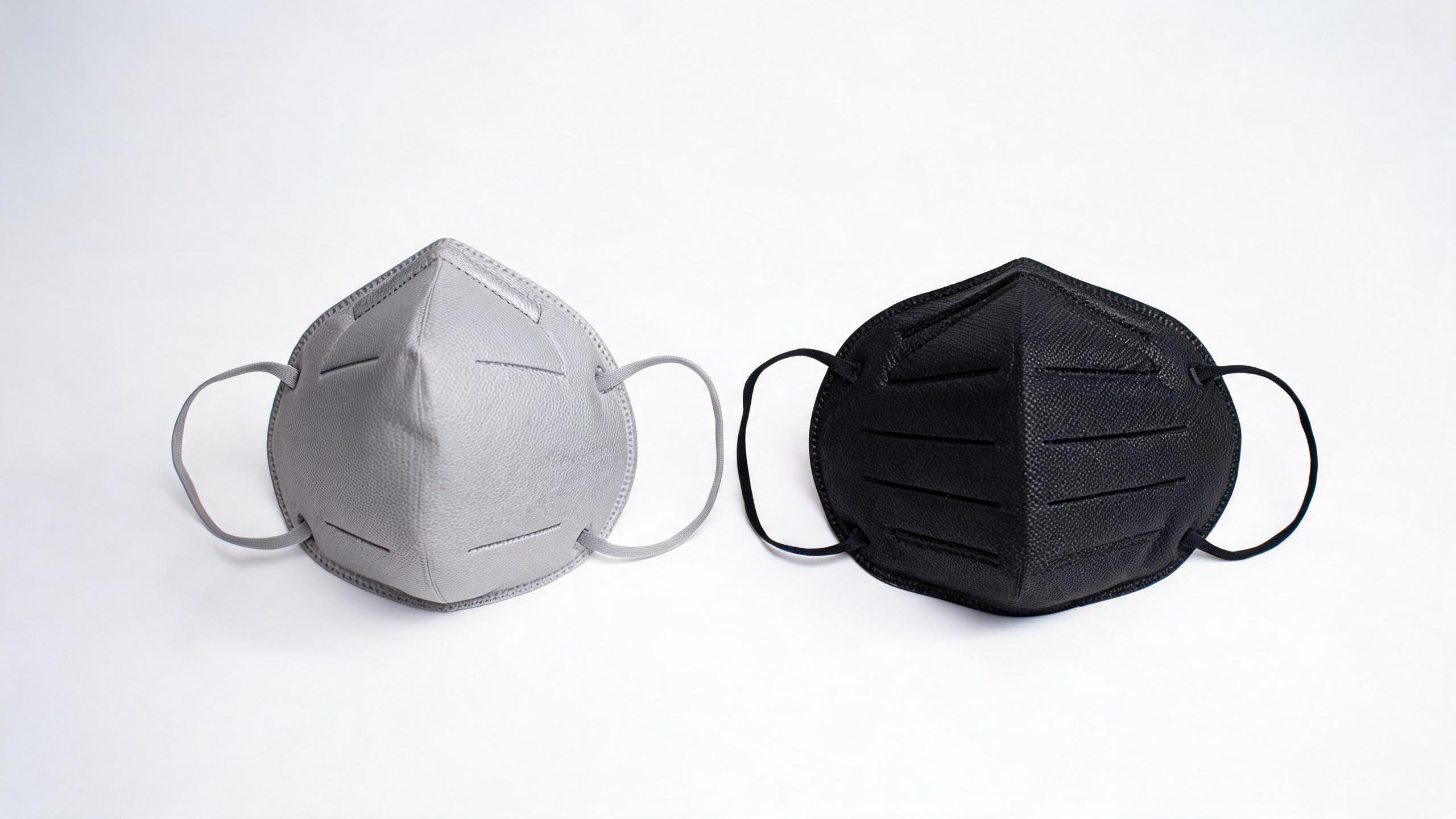
This comprehensive guide compares KN95 cup-style and foldable respirators across design, filtration, comfort, and compliance. B2B buyers will learn how to evaluate suppliers, understand GB2626 standards, and make informed bulk procurement decisions for their workforce or distribution channels.
RESPIRATOR PROCUREMENT GUIDE
- Cup-style KN95 respirators offer higher structural rigidity and consistent filtration, ideal for industrial environments and long shifts.
- Foldable KN95 respirators provide better portability, lower storage space, and improved breathability for general workplace use.
- Both designs must comply with GB2626-2019 standard for KN95 certification; verify supplier test reports and batch numbers.
- Comfort factors—nose clip material, strap tension, inner layer softness—vary significantly between designs and directly affect compliance rates.
- Bulk procurement decisions should weigh use case, workforce demographics, storage conditions, and total cost of ownership (including fit-testing waste).
Introduction: Why Design Matters in KN95 Respirator Procurement
When sourcing KN95 respirators for a workforce, distribution network, or institutional client, the first decision is often the shape: cup-style vs foldable. This is not a cosmetic choice. The design directly affects filtration efficiency, fit consistency, user comfort, storage logistics, and ultimately, compliance rates in the field.
For B2B buyers evaluating a KN95 mask supplier China, understanding these differences is critical to selecting the right product for your specific application. This guide provides a fact-based comparison of KN95 cup vs folding mask designs, covering filtration performance under GB2626 KN95 respirator standards, comfort factors, and a practical procurement selection framework.
Part 1: Design Fundamentals – Cup vs Foldable
Both designs must meet the same minimum filtration efficiency of ≥95% for non-oil particles (0.3 µm diameter) under the Chinese standard GB2626-2019. However, the way they achieve this differs.
Cup-Style KN95 Respirator
The cup-style respirator is a pre-formed, rigid shell that maintains its shape regardless of the user's face. It typically consists of multiple layers of non-woven fabric, meltblown filter media, and a hot-pressed outer shell that provides structural integrity.
- Shape: Dome-shaped, self-supporting, maintains volume when not worn.
- Construction: Multi-layer fabric hot-pressed into a rigid form; often includes a foam nose pad and adjustable nose clip.
- Common Applications: Manufacturing plants, construction sites, mining, chemical processing, healthcare (where fluid resistance is needed).
- Typical Weight: 8–12 grams per unit (varies by layer count).
Foldable KN95 Respirator (Flat-Fold / 3D)
The foldable design is a flat-fold mask that opens into a 3D shape when worn. It is typically made from multiple layers of fabric that are ultrasonically welded along the edges, with a central fold that allows it to collapse flat.
- Shape: Flat when stored, expands into a 3D cup shape when worn; often has a central seam or multiple panels.
- Construction: Multi-layer fabric (outer layer, meltblown, inner layer) with ultrasonic welding; includes a nose clip and elastic ear loops or headbands.
- Common Applications: General office environments, logistics, retail, healthcare (non-surgical), education, light industrial.
- Typical Weight: 5–8 grams per unit (lighter due to less rigid material).
| Feature | Cup-Style KN95 | Foldable KN95 |
|---|---|---|
| Shape retention | Self-supporting; maintains shape | Collapses flat; expands when worn |
| Storage volume | Bulkier; requires more space per unit | Compact; 60–70% less storage volume |
| Layer count (typical) | 4–5 layers (including rigid shell) | 4–5 layers (no rigid shell) |
| Nose clip | Aluminum or plastic strip; often wider | Aluminum strip; narrower |
| Strap type | Elastic headbands (most common) | Elastic ear loops or headbands |
| Inner surface | Foam nose pad + soft inner layer | Soft non-woven inner layer |
Part 2: Filtration Performance – What the Standard Requires
Both designs must meet the same performance criteria under GB2626-2019, the Chinese national standard for respiratory protective equipment. This standard is equivalent to the international standard for particulate respirators and is recognized in many markets.
Key GB2626-2019 Requirements for KN95
- Filtration Efficiency: ≥95% for non-oil particles of 0.3 µm diameter (tested at 85 L/min airflow).
- Exhalation Valve Leakage: (if applicable) ≤0.03% of test aerosol.
- Total Inward Leakage (TIL): ≤8% for cup-style; ≤10% for foldable (due to different fit geometries).
- Breathing Resistance: Inhalation ≤350 Pa; exhalation ≤250 Pa (at 85 L/min).
- Dead Space: ≤150 mL (CO₂ accumulation limit).
GB2626-2019
How Design Affects Filtration
Cup-style: The rigid structure ensures consistent distance between the filter media and the face. This reduces the risk of the mask collapsing against the mouth and nose during heavy breathing, which can increase breathing resistance and reduce effective filtration area. The pre-formed shape also allows for a more uniform seal around the face, especially for users with prominent facial features.
Foldable: The flat-fold design relies on the user's face shape to create the 3D volume. Proper fit depends on the nose clip being correctly molded and the ear loops or headbands providing adequate tension. If the mask is too small or the nose clip is weak, the mask may collapse inward during inhalation, reducing the effective filtration area and increasing leakage. However, well-designed foldable masks with a strong nose clip and adjustable headbands can achieve TIL values comparable to cup-style.
Part 3: Comfort Factors – Real-World Impact on Compliance
Comfort is not a luxury—it directly affects how long workers wear the respirator and how often they adjust it. A mask that is uncomfortable is more likely to be removed, adjusted, or worn incorrectly, reducing protection.
Breathability
Cup-style: The rigid shell maintains a larger air volume inside the mask, reducing the feeling of suffocation. The distance between the filter media and the face is greater, allowing for better air circulation. However, the additional layers (including the rigid shell) can increase breathing resistance slightly.
Foldable: The lighter construction and fewer layers (no rigid shell) generally result in lower breathing resistance. However, the mask may collapse against the face during heavy breathing, increasing resistance. Users with larger faces may experience the mask pressing against the nose and mouth.
Fit and Seal
Cup-style: The pre-formed shape provides a consistent fit across a wider range of face sizes. The foam nose pad helps create a seal without excessive pressure. However, users with smaller faces may find the cup-style too large, leading to gaps.
Foldable: The flat-fold design is more adaptable to different face shapes, especially for users with narrow or flat facial profiles. The nose clip must be firmly molded to the nose bridge. Ear loops can cause discomfort behind the ears during extended wear (8+ hours).
Heat and Moisture
Cup-style: The larger internal volume allows for better heat dissipation, but the rigid shell can trap heat against the face. Users in hot environments may experience increased sweating.
Foldable: The lighter fabric allows for better moisture wicking, but the mask may become damp more quickly if the user is breathing heavily. The flat-fold design can also trap moisture against the face if the inner layer is not absorbent.
Wear Duration
- Cup-style: Suitable for 4–8 hour shifts. Headbands distribute pressure evenly across the head, reducing ear discomfort. The foam nose pad prevents pressure marks on the nose bridge.
- Foldable: Suitable for up to 4 hours continuous wear with ear loops; longer with headbands. Ear loops can cause pain after 2–3 hours. The nose clip may leave marks on the nose bridge if too tight.
| Comfort Factor | Cup-Style | Foldable |
|---|---|---|
| Breathability (at rest) | Good – larger air volume | Good – lower resistance |
| Breathability (heavy work) | Better – maintains shape | May collapse – higher resistance |
| Fit for small faces | May be too large | Better – adjustable |
| Fit for large faces | Better – pre-formed shape | May be too small |
| Ear discomfort | Low (headbands) | Moderate (ear loops) |
| Nose bridge pressure | Low (foam pad) | Moderate (nose clip) |
| Heat buildup | Moderate | Lower |
| Moisture wicking | Moderate | Better |
Part 4: Procurement Selection Guide for B2B Buyers
When sourcing KN95 respirator bulk quantities, the decision between cup and foldable depends on your specific use case, workforce demographics, and operational constraints. Use the following framework to evaluate your options.
Step 1: Define Your Use Case
Industrial / Heavy-Duty Environments: Manufacturing, construction, mining, chemical processing, welding. These environments require high durability, consistent fit, and resistance to collapsing under heavy breathing. Recommendation: Cup-style. The rigid shell provides better protection against dust, fumes, and splashes. Headbands ensure the mask stays in place during movement.
General Workplace / Light Industrial: Warehousing, logistics, assembly lines, inspection. Workers need comfort for 8-hour shifts and the ability to communicate. Recommendation: Foldable. The lighter weight and lower breathing resistance reduce fatigue. Ear loops allow for quick removal and replacement.
Healthcare / Clinical: Hospitals, clinics, dental offices, laboratories. Requirements include fluid resistance, bacterial filtration, and fit testing. Recommendation: Cup-style (with headbands) for surgical applications; foldable for non-surgical areas. Many healthcare facilities prefer cup-style for its consistent seal and lower leakage.
Public / Consumer Distribution: Retail, pharmacies, schools, offices. Portability and storage are key. Recommendation: Foldable. The flat-fold design allows for easy storage in bags, desks, and vending machines. Lower cost per unit also makes foldable more attractive for consumer markets.
Step 2: Evaluate Workforce Demographics
If your workforce includes a diverse range of face sizes (small, medium, large), foldable masks offer better adaptability. If the workforce is predominantly male with larger faces, cup-style may provide a better fit. Consider conducting a fit test with a sample of your workforce before placing a bulk order.
Step 3: Assess Storage and Logistics
Storage volume: Foldable masks take up 60–70% less space per unit. A standard carton of 50 cup-style masks (approx. 0.08 m³) can hold 150–200 foldable masks. This significantly reduces warehousing costs and shipping volume.
Shipping weight: Foldable masks are 30–40% lighter per unit. For a 10,000-unit order, the weight difference is approximately 30–50 kg, which can affect freight costs.
Distribution: If you are distributing masks to remote locations or vending machines, foldable masks are easier to handle and store.
Step 4: Verify Supplier Compliance
When evaluating a KN95 mask supplier China, request the following documentation:
- GB2626-2019 test report from a CNAS-accredited laboratory (e.g., China National Institute of Standardization).
- Batch number and production date for traceability.
- Filtration efficiency test results (≥95% for 0.3 µm particles).
- Total inward leakage (TIL) test results (≤8% for cup-style; ≤10% for foldable).
- Breathing resistance test results (inhalation ≤350 Pa; exhalation ≤250 Pa).
- Material safety data sheets (MSDS) for all layers.
CNAS Accredited
Step 5: Compare Total Cost of Ownership
Bulk pricing for KN95 respirator bulk orders typically ranges:
- Cup-style: $0.20–$0.50 per unit (MOQ 10,000–50,000 pcs).
- Foldable: $0.15–$0.35 per unit (MOQ 10,000–50,000 pcs).
However, factor in the cost of fit-testing waste. If 10% of cup-style masks fail fit tests for a given workforce, the effective cost per usable mask increases. Foldable masks may have lower fit-test failure rates for diverse face shapes, reducing waste.
Part 5: Common Mistakes in Bulk Procurement
- Assuming all KN95 are the same. Not all suppliers use the same meltblown quality. Request samples and test them independently.
- Ignoring fit testing. A mask that doesn't fit is useless. Always conduct a fit test with a sample of your workforce before ordering bulk.
- Choosing based on price alone. The cheapest mask may have poor filtration, weak nose clips, or uncomfortable straps, leading to low compliance and higher replacement costs.
- Overlooking storage conditions. Cup-style masks can be damaged if stacked under heavy weight. Foldable masks are more resilient but can lose elasticity if stored in high heat.
- Not verifying the supplier's certification. Some suppliers sell "KN95" masks that are not certified to GB2626. Request the test report with the batch number.
FAQ: B2B Buyers' Questions About KN95 Cup vs Foldable
Q: Can foldable KN95 masks achieve the same filtration efficiency as cup-style?
A: Yes, if the meltblown layer quality is equivalent. Both designs must meet ≥95% filtration under GB2626-2019. The difference is in fit consistency and leakage, not raw filtration.
Q: Which design is better for workers with beards?
A: Neither design provides a perfect seal over facial hair. However, cup-style masks with a foam nose pad may offer a slightly better seal around the cheeks. The best solution is to require clean-shaven faces for respirator use.
Q: How do I know if a KN95 mask supplier China is reliable?
A: Request a factory audit or third-party inspection report. Look for a valid business license, GB2626 certification, and export history. Check for reviews or references from other B2B buyers.
Q: What is the typical MOQ for KN95 respirator bulk orders?
A: MOQ for cup-style is typically 10,000–20,000 pcs; for foldable, 10,000–50,000 pcs. Some suppliers offer lower MOQ for sample orders or trial batches.
Q: Can I mix cup and foldable in one order?
A: Yes, many suppliers offer mixed orders. This can be useful if you need different designs for different departments or applications. Confirm the MOQ per design with the supplier.
Conclusion: Making the Right Choice for Your Procurement
The choice between KN95 cup vs folding mask is not about which is "better"—it is about which is better for your specific application. Cup-style respirators offer superior structural integrity, consistent fit, and lower leakage for industrial environments. Foldable respirators provide better portability, lower storage costs, and improved comfort for general workplace use.
When sourcing from a KN95 mask supplier China, prioritize suppliers who provide transparent test reports, batch traceability, and sample testing. Request a trial batch of both designs to evaluate fit and comfort with your workforce before committing to a large KN95 respirator bulk order.
For more information on our GB2626 KN95 respirator product line, including cup and foldable options, please contact our sales team or request a sample kit.