
对于采购KN95口罩出口货物的B2B买家而言,清关是关键障碍。本指南涵盖按目的地(欧盟/美国/亚洲/中东)的所需文件、常见误区、证书验证、报关行作用及供应商合规检查。
The Documentation Trap in KN95 Mask Export
For B2B buyers sourcing kn95 mask export shipments from overseas manufacturers, the moment of truth arrives not at the factory gate, but at customs clearance. A single missing document can delay a shipment for weeks, incur storage fees, and sour buyer-supplier relationships. The keyword "kn95 mask export" is not merely a logistical term-it represents a compliance puzzle where documentation, regulations, and customs procedures intersect.
Many buyers assume that a valid CE mark or FDA listing is sufficient. In reality, customs authorities in destination countries often demand additional proof: the manufacturer's export license, a certificate of free sale, or even a notarized declaration of conformity. Without these, even high-quality KN95 masks can be rejected at the border.
Why KN95 Mask Export Documentation Differs by Destination
The regulatory landscape for kn95 mask export varies sharply between regions. For example, the European Union requires a CE marking under the PPE Regulation (EU) 2016/425, with a notified body involvement for FFP2-level masks. However, many KN95 masks are tested to the Chinese standard GB2626-2006, which does not automatically equate to EU compliance. Customs officers in the EU may request a Declaration of Conformity (DoC) and a technical file, including test reports from an accredited laboratory.
In the United States, the FDA and NIOSH have separate pathways. KN95 masks that are not NIOSH-approved may still enter under an Emergency Use Authorization (EUA), but only if the manufacturer is listed on the FDA's EUA database. Customs and Border Protection (CBP) may ask for the EUA letter, a certificate of analysis, and a statement that the masks are intended for healthcare use during the public health emergency.
For buyers in Southeast Asia, such as Indonesia or the Philippines, local regulations often require a certificate of free sale from the exporting country, plus a product registration number. The documentation chain must be complete from the factory to the end user.
The Core Documents Every KN95 Mask Export Shipment Needs
Regardless of destination, the following documents are non-negotiable for a smooth KN95 mask export process:
1. Commercial Invoice and Packing List
These must include the harmonized system (HS) code for KN95 masks (typically 6307.90.98 for textile masks or 9020.00.00 for respiratory equipment). The invoice should state the unit price, total quantity, and country of origin. Customs uses this to assess duties and verify that the masks are not misclassified.
2. Bill of Lading or Air Waybill
This is the contract of carriage. For sea freight, a clean bill of lading is required. For air freight, the air waybill must match the commercial invoice details.
3. Certificate of Origin
Many countries offer preferential tariff rates under free trade agreements if the masks are manufactured in China. A certificate of origin, issued by the China Chamber of Commerce or a local authority, proves the masks are of Chinese origin.
4. Export License (if applicable)
China does not require a general export license for KN95 masks, but certain destinations may require an export license if the masks have advanced filtration technology. Most standard KN95 masks do not fall under this category, but it is worth confirming with the supplier.
5. Certificate of Free Sale
This document, issued by the Chinese National Medical Products Administration (NMPA), confirms that the masks are legally sold in China. Some countries, like Brazil or Saudi Arabia, demand this as proof of domestic market approval.
6. Test Reports and Certificates
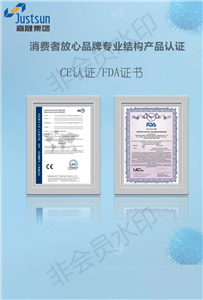
A test report from a CNAS-accredited lab (e.g., SGS, TÜV, or Intertek) showing compliance with GB2626-2006 is essential. For EU-bound shipments, a CE certificate from a notified body (e.g., BSI, DEKRA) is required. For US-bound shipments, the FDA EUA letter or NIOSH approval number must be included. The KN95 products from Justsun carry CE certification (GB2626-2006) with test reports available for buyer verification.
Common Pitfalls in KN95 Mask Export Customs Clearance
Even experienced buyers encounter delays. Here are the most frequent issues:
Misalignment Between Product Labeling and Documentation
If the masks are labeled "KN95" but the test report only covers N95 or FFP2, customs may reject the shipment. The labeling must match the certification. For example, a mask tested to GB2626-2006 can be labeled "KN95," but if the certificate mentions "FFP2," the labeling should reflect that.
Expired or Invalid Certificates
Some suppliers provide certificates that have expired or are not recognized in the destination country. For instance, a CE certificate issued by a non-notified body (e.g., a private lab) is invalid for the EU. Buyers should verify the certificate number on the official EU NANDO database.
Incomplete Technical File
The EU requires a technical file that includes the manufacturer's name, address, product description, test reports, and a risk assessment. If the file is missing, customs can detain the shipment.
Incorrect HS Code Classification
Using the wrong HS code can lead to higher duties or even seizure. For example, classifying KN95 masks as "surgical masks" (HS 3005.90) instead of "respirators" (HS 9020.00) may trigger additional regulatory scrutiny.
How to Verify Your KN95 Mask Export Supplier's Compliance
Before placing a large order, request the following from your supplier:
- A copy of the manufacturer's business license.
- The NMPA registration certificate (if applicable).
- The test report from an accredited lab.
- The CE certificate (with notified body number) or FDA EUA letter.
- A sample of the product labeling and packaging.
Cross-check the certificate numbers on official databases. For example, verify the CE certificate on the EU NANDO website. For FDA EUA, check the FDA's EUA list for medical devices.
The Role of Customs Brokers in KN95 Mask Export
A licensed customs broker in the destination country can pre-clear documentation and advise on local requirements. They can also help with filing the import declaration, paying duties and taxes, and arranging inspection if needed. For large shipments, hiring a broker is cost-effective. They can also flag potential issues, such as the need for a certificate of free sale or a specific labeling format.
Comparison: Export Requirements by Destination
| Destination | Key Certification | Additional Documents | Common Issues |
|---|---|---|---|
| EU | CE marking (PPE Reg 2016/425) | DoC, technical file, notified body cert | Non-notified body certs invalid |
| USA | FDA EUA or NIOSH approval | EUA letter, certificate of analysis | EUA revocation for some models |
| Southeast Asia | Local product registration | Certificate of free sale, CoO | Varies by country; long registration |
| Middle East | SASO or GSO certification | Certificate of conformity, free sale | Arabic labeling required |
FAQ: KN95 Mask Export Regulations and Documentation
Q: Do I need a license to export KN95 masks from China?
A: Generally, no. But if the masks contain advanced filtration materials, dual-use export controls may apply. Confirm with the supplier.
Q: What is the difference between a CE certificate and a Declaration of Conformity?
A: The CE certificate is issued by a notified body after testing. The Declaration of Conformity is a self-declaration by the manufacturer that the product meets EU requirements. Both are required for EU import.
Q: Can I use the same documentation for multiple shipments?
A: No. Each shipment requires its own set of documents, though the certificates (e.g., CE, test report) can be reused if they are still valid.
Q: How long does customs clearance take for KN95 masks?
A: Typically 3-7 business days, but delays can occur if documents are incomplete or if the shipment is selected for inspection.
Q: What happens if my shipment is rejected at customs?
A: You may need to re-export the goods, destroy them, or apply for a waiver. This can cost thousands of dollars in fees and lost time.
Selection Criteria for KN95 Mask Export Documentation Partners
When choosing a supplier or logistics partner, ask these questions:
- Do you provide a complete documentation package for export?
- Can you issue a certificate of free sale?
- Are your test reports from an accredited lab?
- Do you have experience with customs in my destination country?
A reliable supplier will have a dedicated compliance team that can produce the required documents within 24-48 hours.
Use Case: A Buyer's Journey from Inquiry to Customs Clearance
Consider a buyer in Germany sourcing 100,000 KN95 masks from a Chinese manufacturer. The buyer requests a commercial invoice and packing list, a CE certificate from a notified body (e.g., BSI), a test report showing PFE ≥95% and breathing resistance within limits, a certificate of origin, and a Declaration of Conformity. The supplier provides these within three days. The buyer then hires a customs broker in Hamburg, who pre-clears the documents. The shipment arrives in 14 days by sea, and customs clearance takes four days. The masks are released without issue.
If the buyer had skipped the CE certificate verification, they might have received a certificate from a non-notified body, leading to a rejection.
Internal Link and Inquiry CTA
If you need assistance with kn95 mask export documentation, contact our compliance team for a document checklist tailored to your destination country. We can also connect you with verified suppliers who provide complete export packages. Request a consultation today to avoid customs delays.