
KN95口罩批发进口合规是一个由法规和文件组成的多层次体系。本指南涵盖CE/FDA要求、海关检查要点、公告机构验证以及B2B买家的常见陷阱。
What KN95 Mask Wholesale Import Compliance Covers?
The Real Compliance Puzzle for B2B Buyers
For business buyers sourcing kn95 mask wholesale, the compliance landscape is not a single checkbox-it is a layered system of regulations, documentation, and verification that varies by destination country, intended use, and distribution channel. Many importers assume that one certificate, like CE or FDA, guarantees smooth customs clearance. In practice, customs officials examine multiple documents simultaneously, and missing even one can delay shipments for weeks or trigger costly re-exportation.
Why KN95 Mask Certification Differs from N95 or FFP2
The KN95 standard, defined by Chinese standard GB2626-2019, requires filtration efficiency of at least 95% for particles of 0.3 microns. However, customs authorities in the United States do not recognize KN95 as equivalent to NIOSH-approved N95 respirators for occupational use. Instead, the FDA issued Emergency Use Authorizations (EUAs) during the pandemic that allowed KN95 masks to be imported for healthcare settings under specific conditions, but those EUAs have largely expired or been revised.
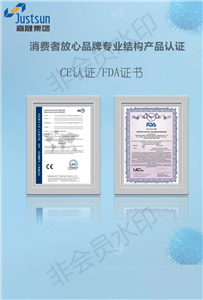
For wholesale buyers, this means that KN95 masks imported into the US today typically fall under general FDA enforcement discretion for general consumer use. In the EU, KN95 masks must carry CE marking under the Personal Protective Equipment Regulation (EU) 2016/425 for industrial use. The kn95 mask wholesale products from Justsun carry CE certification to GB2626-2006, supporting EU market access.
Core Documentation Customs Inspects for KN95 Mask Wholesale Shipments
Customs brokers and import compliance officers typically require the following documents for each shipment:
- Certificate of Analysis (CoA) from the manufacturer, showing filtration efficiency, breathing resistance, and leakage test results per GB2626.
- Declaration of Conformity (DoC) signed by the manufacturer or authorized representative.
- Technical File including design drawings, material specifications, risk assessment, and test reports from an accredited laboratory.
- CE Certificate (if importing to EU) issued by a Notified Body for Category III PPE.
- FDA Establishment Registration and Device Listing (if importing to US) for masks intended for medical use.
- Customs Tariff Classification (HS code) which for KN95 masks typically falls under 6307.90.9890 in the US.
Buyers should request these documents before placing a purchase order. A reputable kn95 mask wholesale supplier will provide them without hesitation. If a supplier cannot produce a CoA from an ISO 17025 accredited lab, that is a red flag.
CE Marking: Not a Single Certificate but a System
A common misconception is that CE marking is one certificate. In reality, CE marking for KN95 masks under the PPE Regulation requires the manufacturer to follow one of several conformity assessment modules. For masks classified as Category III, the manufacturer must involve a Notified Body for EU-type examination (Module B) and either production quality assurance (Module D) or product verification (Module F).
The Notified Body number-a four-digit code-must appear next to the CE logo on the mask packaging. Customs officials verify this number against the European Commission's NANDO database. If the Notified Body is not listed or the number is fake, the shipment is detained.
FDA Requirements: From EUA to Current Enforcement
During the pandemic, the FDA issued multiple EUAs for KN95 masks. As of 2024, most have been revoked or allowed to expire. For new imports, the FDA's enforcement policy focuses on:
- Masks not claiming medical use (general consumer use) are subject to low enforcement priority if they meet voluntary standards like ASTM F3502.
- Masks claiming medical use must have an active 510(k) clearance or be listed under a valid EUA.
- All manufacturers and importers must register with the FDA and list their devices annually.
Customs Import Compliance Beyond Certifications
Even with perfect certifications, customs may still inspect for:
- Labeling accuracy: Country of origin, manufacturer name, lot number, expiration date, and storage instructions must be in the destination country's official language.
- Packaging integrity: Masks must be individually sealed or in sealed bulk packaging to prevent contamination.
- Anti-dumping duties: Some countries impose additional duties on Chinese-made masks.
- Sanitary and phytosanitary measures: Additional certificates may be required for certain materials.
A kn95 mask wholesale importer should work with a customs broker experienced in PPE imports. The broker can pre-clear documents and advise on country-specific nuances.
How to Verify a Supplier's Compliance Claims
Before signing a contract, request these verifiable items from the supplier:
- Test report from a CNAS/ISO 17025 accredited lab showing GB2626 compliance. The report should include the test date, lab accreditation number, and specific results.
- Notified Body certificate number (for CE) and the body's name. Cross-check on the NANDO website.
- FDA registration number for the manufacturing facility. Verify on the FDA Establishment Registration database.
- Sample shipment to a third-party testing lab in your country.
- Factory audit report from a recognized inspection company like SGS, Bureau Veritas, or TUV Rheinland.
Common Pitfalls in KN95 Mask Wholesale Compliance
- Assuming one certificate covers all countries: A CE mark does not satisfy FDA requirements, and vice versa.
- Ignoring post-market surveillance: In the EU, manufacturers and importers must have a system for reporting serious incidents.
- Using expired EUAs: Some suppliers still reference pandemic-era EUAs that are no longer valid.
- Incorrect HS code classification: Misclassifying masks can lead to higher duties or customs holds.
FAQ Section
Q: Do I need CE and FDA for the same shipment?
A: No. You need CE for EU customs and FDA compliance for US customs. If shipping to both, you need both sets of documentation.
Q: Can I import KN95 masks without any certification?
A: For general consumer use in the US, you can import without full certification if the masks meet ASTM F3502 and are labeled as not for medical use. In the EU, PPE certification is mandatory for professional use.
Q: How long does it take to get CE certification for a new mask model?
A: Typically 3-6 months, depending on the Notified Body's workload.
Q: Is a KN95 mask the same as an N95?
A: No. KN95 meets Chinese standard GB2626, while N95 meets US NIOSH standard 42 CFR Part 84. They are not interchangeable for regulatory purposes.
Making Informed Decisions for Your Next Order
Navigating kn95 mask wholesale import compliance requires diligence, but it is manageable with the right preparation. Start by defining your target market and intended use. Then request the specific certifications and documents listed above from potential suppliers. Verify them independently through official databases and third-party testing. Work with a customs broker who understands PPE imports. Finally, build a compliance checklist into your procurement process to avoid surprises at the border.
If you need assistance verifying a supplier's compliance documents or want a pre-shipment inspection for your next KN95 mask wholesale order, contact our team for a consultation.