

A practical, fact-based guide for international buyers sourcing 3-ply surgical masks. This article covers the meaning of EN 14683 standards (Type I vs Type II vs Type IIR), BFE bacterial filtration efficiency requirements, key quality checks for bulk orders, and how to evaluate a disposable surgical mask supplier for long-term partnerships.
BUYER GUIDE
• EN 14683 classifies surgical masks into Type I, Type II, and Type IIR — only Type II and Type IIR are suitable for clinical use.
• BFE (Bacterial Filtration Efficiency) ≥ 98% is the minimum for Type II; verified test reports are non-negotiable.
• Bulk buyers should verify raw material certificates, packaging integrity, and shelf-life stability before committing to volume.
• A reliable disposable surgical mask supplier provides clear MOQ, lead time, and third-party testing documentation — not just a low price.
When you source a surgical mask 3-ply for a hospital, clinic, or government tender, you are not buying a commodity. You are buying a medical device that must meet defined barrier performance standards. The difference between a compliant mask and a non-compliant one can affect infection control outcomes and your liability as a distributor.
This guide walks through the European standard EN 14683, the meaning of BFE bacterial filtration efficiency ratings, and the practical criteria for evaluating a disposable surgical mask supplier for bulk international orders. The information is based on published regulatory requirements and common industry practices. Specific product details should be confirmed directly with your supplier.
1. Understanding EN 14683: The European Standard for Surgical Masks
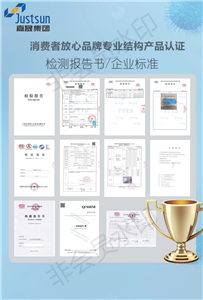
EN 14683 is the harmonized European standard that specifies requirements and test methods for surgical masks intended to limit the transmission of infective agents from the wearer to others during surgical procedures and other medical settings. It is the reference standard for CE marking of surgical masks in the European Union.
The standard classifies masks into three types based on bacterial filtration efficiency (BFE), differential pressure (breathability), and microbial cleanliness (bioburden).
| Parameter | Type I | Type II | Type IIR |
|---|---|---|---|
| BFE (Bacterial Filtration Efficiency) | ≥ 95% | ≥ 98% | ≥ 98% |
| Differential Pressure (Pa/cm²) | < 40 | < 40 | < 60 |
| Microbial Cleanliness (bioburden) | ≤ 30 CFU/g | ≤ 30 CFU/g | ≤ 30 CFU/g |
| Splash Resistance (kPa) | Not required | Not required | ≥ 16.0 |
| Intended Use | General public / non-clinical | Clinical / surgical | Clinical / surgical with fluid splash risk |
Key distinction: Type I masks are intended for patients and the general public to reduce the risk of spreading infections, not for healthcare professionals in surgical settings. EN 14683 Type II surgical mask and Type IIR are the clinically relevant grades for hospital procurement. Type IIR adds splash resistance, making it suitable for procedures where blood or fluid splashes may occur.
For international buyers, the most common specification requested in tenders is EN 14683 Type IIR. If your target market is Europe, ensure your supplier can provide a valid CE certificate (based on EU Medical Device Regulation 2017/745 or the previous MDD 93/42/EEC) and a test report from an accredited laboratory.
2. BFE Bacterial Filtration Efficiency: What the Number Actually Means

BFE bacterial filtration efficiency measures the percentage of bacteria-sized particles (typically 3.0 ± 0.3 µm) that the mask material filters out. The standard test method is ASTM F2101 (or EN 14683 Annex B), which uses a bacterial aerosol of Staphylococcus aureus.
For a Type II or Type IIR mask, the BFE must be ≥ 98%. This means at least 98 out of every 100 bacteria-sized particles are trapped by the mask's filtration layer.
What does this mean for your sourcing decision?
- Don't confuse BFE with PFE (Particulate Filtration Efficiency). PFE tests sub-micron particles (0.1 µm), while BFE tests bacteria-sized particles (3.0 µm). Both are relevant, but EN 14683 only requires BFE. For surgical masks, BFE is the regulatory metric.
- Ask for the original test report. A supplier who claims BFE ≥ 98% should provide a report from a third-party lab (e.g., SGS, TÜV, Intertek, Nelson Labs) showing the actual test result. The report should include the test method, the mask type, and the lot number.
- Check for consistency across lots. BFE can vary with raw material quality and production consistency. A single test report from one batch is not a guarantee for every shipment. Request lot-specific testing for large bulk orders.
"A BFE ≥ 98% is the regulatory floor for Type II. For hospital tenders, many buyers specify BFE ≥ 99% as an internal quality threshold. Always verify with a current test report."
3. How to Choose a Disposable Surgical Mask Supplier: 7 Criteria for Bulk Buyers
When you search for a disposable surgical mask supplier, you will find many options. Price is important, but it is not the only factor. A low-priced mask that fails compliance testing will cost you more in returns, penalties, and lost reputation.
Use the following checklist to evaluate suppliers.
3.1 Certification and Regulatory Compliance
Verify that the supplier holds valid certifications for the target market. For Europe, this means a CE certificate under MDR 2017/745 (or MDD 93/42/EEC with a transition period). For the US, FDA 510(k) clearance. For other regions, check the local medical device registration requirements.
CE FDA ISO 13485 — these are the minimum. Ask for copies of certificates and verify the certificate number with the issuing body.
3.2 Raw Material Quality and Traceability
The 3-ply surgical mask consists of three layers:
- Outer layer: Spunbond polypropylene (water-resistant, often blue or green).
- Middle layer: Meltblown polypropylene (the filtration core).
- Inner layer: Spunbond polypropylene (soft, absorbent, next to the skin).
Ask the supplier for the meltblown fabric source and its filtration efficiency. A good supplier can trace raw materials back to the batch. For bulk orders, request a sample of each layer for visual and tactile inspection.
3.3 Production Capacity and Lead Time
For bulk purchasing, you need to know the supplier's monthly output and typical lead time. A reliable supplier will give you a clear number (e.g., "Monthly capacity: 10 million pieces. Lead time for a 20-foot container: 25–30 days after confirmation.").
If the supplier cannot give a specific capacity or lead time, that is a red flag. Also ask about peak season capacity and whether they can handle urgent orders.
3.4 Quality Control and Testing
Ask about the supplier's QC process:
- Is there in-house testing for BFE, differential pressure, and microbial cleanliness?
- What is the sampling plan (e.g., AQL 1.0, 2.5)?
- Are third-party test reports provided for each production batch?
- What happens if a batch fails QC?
A supplier with a documented QC system (ideally ISO 13485 certified) is more likely to deliver consistent quality.
3.5 Packaging and Labeling
For medical use, the packaging must protect the masks from contamination and maintain sterility (if sterile). Check the following:
- Individual packaging: Usually two masks per polybag, or 50 pieces per box.
- Box labeling: Must include product name, lot number, manufacturing date, expiry date, and the EN 14683 classification.
- Outer carton: Should be strong enough for sea freight. Ask about carton dimensions and weight for a 20-foot or 40-foot container.
If you need private labeling, confirm the supplier's capability and MOQ for custom packaging.
3.6 Price Structure and Payment Terms
Get a clear price breakdown: FOB, CIF, or EXW. For bulk orders, ask for a tiered pricing table (e.g., 100,000 pcs, 500,000 pcs, 1,000,000 pcs). Common payment terms are T/T (30% deposit, 70% before shipment) or L/C at sight.
Be wary of prices significantly below the market average. A surgical mask 3-ply that costs 30% less than competitors may have compromised filtration material or skipped testing.
3.7 Communication and After-Sales Support
Evaluate how quickly and clearly the supplier responds to your technical questions. A good supplier will answer questions about standards, testing, and shipping without hesitation. They should also provide a clear process for handling complaints or returns.
4. Common Mistakes in Bulk Purchasing of Surgical Masks
Even experienced buyers make these errors. Avoid them.
- Relying on a single test report. One test from a single batch does not guarantee every shipment. Request lot-specific testing for large orders.
- Ignoring the expiry date. Surgical masks have a shelf life (typically 2–3 years from manufacture). If you are buying a large volume, ensure the remaining shelf life is sufficient for your distribution timeline.
- Not checking the differential pressure. A mask with high BFE but poor breathability (high differential pressure) will be uncomfortable for healthcare workers to wear for long periods. Type IIR allows up to 60 Pa/cm², but lower is better for comfort.
- Assuming all Type II masks are the same. There can be significant variation in fit, ear loop strength, nose wire quality, and overall construction between suppliers. Always request a pre-production sample.
- Neglecting customs and import regulations. Each country has its own medical device registration requirements. Confirm with your supplier that they can provide the necessary documentation (e.g., free sale certificate, certificate of origin, shipping documents) for your destination.
5. Step-by-Step: How to Evaluate a Surgical Mask 3-Ply Sample
Before placing a bulk order, request a sample. Here is a simple evaluation checklist:
- Visual inspection: Check the color uniformity, the welding of ear loops, and the nose wire (should be embedded and flexible).
- Layer count: Peel the mask apart to confirm three distinct layers. The middle meltblown layer should be visible and feel slightly stiff.
- Fit test: Put the mask on. Does it sit snugly against the face without gaps? Are the ear loops strong enough to hold the mask in place?
- Breathability test: Breathe normally through the mask. It should not feel suffocating. If you have a differential pressure tester, measure it.
- Documentation check: Review the test report for BFE, differential pressure, and microbial cleanliness. Ensure the reported values match the EN 14683 Type II or Type IIR requirements.
If the sample passes these checks, you can proceed with confidence. If not, ask the supplier for an explanation or look for an alternative.
6. Frequently Asked Questions (FAQ)
Q: What is the difference between a surgical mask and a medical mask?
In most contexts, they are the same. "Surgical mask" is the term used in EN 14683. "Medical mask" is sometimes used interchangeably, but the standard is the same. For clarity, always specify EN 14683 Type II surgical mask in your procurement documents.
Q: Can a 3-ply mask be used for COVID-19 protection?
A surgical mask 3-ply meeting EN 14683 Type II is suitable for use as part of infection control measures, including for COVID-19, in healthcare settings. It is not a respirator (N95 or FFP2). For aerosol-generating procedures, a higher level of respiratory protection is required.
Q: What is the typical MOQ for a bulk order of surgical masks?
MOQ varies by supplier. Common ranges: 10,000–50,000 pieces for a trial order, and 100,000–500,000 pieces for a standard container order. Always confirm with your supplier.
Q: How should I store surgical masks in bulk?
Store in a cool, dry place (15–25°C, relative humidity < 60%), away from direct sunlight and chemicals. Do not store in damp warehouses. The packaging should remain intact until use.
7. Final Recommendations for International Buyers
Sourcing a surgical mask 3-ply for bulk import is a process that requires attention to standards, testing, and supplier reliability. The key points to remember:
- Specify EN 14683 Type II or Type IIR for clinical use. Type I is not suitable for healthcare.
- Demand BFE ≥ 98% with a current third-party test report.
- Evaluate the disposable surgical mask supplier on certification, raw material traceability, QC process, and communication — not just price.
- Request a sample and perform your own inspection before committing to a large order.
- Confirm customs and import requirements for your destination country.
If you are currently evaluating suppliers for a bulk order, we welcome your inquiry. We can provide product specifications, test reports, and pricing based on your volume and destination. Contact us for a discussion tailored to your requirements.