
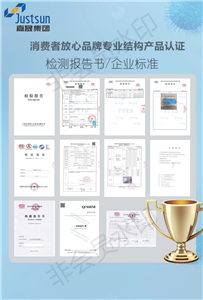
La certification GB2626 contrefaite est un risque majeur dans l'approvisionnement en KN95. Ce guide couvre la structure des certificats, les canaux de vérification en ligne, les signaux d'alerte documentaires, les protocoles de recoupement et les essais indépendants pour authentifier la certification des respirateurs KN95 dans les commandes en gros.
KN95 Mask GB2626 Authentication Codes: How to Verify Certification Authenticity in Bulk Orders
Counterfeit KN95 respirators with forged GB2626 certification documents represent one of the most significant risks in B2B PPE procurement. Unlike visible quality defects that can be caught by incoming inspection, certification forgery is invisible to standard quality checks and only surfaces when the respirators fail in the field or when regulatory authorities inspect them. This guide explains how GB2626 authentication codes and verification systems work, and how procurement teams can use them to protect against counterfeit certification in bulk orders.
Critical context: The GB2626-2006 standard itself does not include a built-in authentication code system. Authentication relies on third-party verification channels - primarily the certification body that issued the Type Approval certificate and the laboratory that performed the testing. Understanding these verification channels is essential for distinguishing genuine certificates from forgeries.
Understanding GB2626 Certification Structure
GB2626-2006 certification for KN95 respirators involves multiple documents and organizations. Procurement teams need to understand this structure to know what to verify and where to look for authentication.
The Three Key Documents
- Type Approval Certificate: Issued by an accredited certification body (such as LAII, CTC, or other CNAS-accredited bodies). This document certifies that the respirator model meets GB2626-2006 requirements. It includes the certificate number, issuing body, product model, and validity period.
- Test Report: Issued by an accredited testing laboratory. This document contains the actual test data - filtration efficiency, inhalation resistance, exhalation resistance, CO2 dead space, and visual inspection results. It includes the test report number, laboratory name, and test date.
- Factory Quality System Certificate: Issued by the certification body after auditing the manufacturer quality management system. This confirms the factory has the capability to consistently produce certified product.
The Authentication Problem
Each of these documents can be forged. Common forgery methods include:
- Altering the product model name on a genuine certificate to match a different product
- Cloning a genuine certificate number and modifying the product details
- Using an expired certificate and changing the validity date
- Fabricating an entirely fictional certificate with a real certification body name
- Using a certificate issued to a different manufacturer
Verification Channels: How to Authenticate GB2626 Certificates
1. Certification Body Online Verification
Most CNAS-accredited certification bodies maintain online databases where certificate numbers can be verified. The verification process typically involves:
- Locate the certificate number on the Type Approval Certificate (usually formatted as a series of letters and numbers).
- Visit the certification body official website and navigate to their certificate verification page.
- Enter the certificate number and, in some cases, the manufacturer name.
- Compare the online record with the document provided by the supplier. Verify: certificate number, product model, manufacturer name, issue date, expiry date, and certification scope.
Any discrepancy between the online record and the supplier-provided document indicates forgery. Common discrepancies include: different product model, different manufacturer name, expired status, or certificate not found.
2. Laboratory Test Report Verification
Accredited testing laboratories can verify their test reports through:
- Direct email inquiry to the laboratory (using contact information from the laboratory official website, not from the test report itself)
- Online report verification systems (some major laboratories offer this)
- QR code verification (some modern test reports include QR codes that link to verified online records)
When verifying, confirm: report number, test date, product model, tested parameters, and results. Pay particular attention to whether the tested product model matches the product being supplied.
3. CNAS Accreditation Verification
The certification body and testing laboratory must hold valid CNAS (China National Accreditation Service) accreditation. Verify this through:
- CNAS official website accreditation database
- Checking that the accreditation scope includes respiratory protective equipment testing
- Confirming the accreditation is currently valid (not suspended or withdrawn)
Red Flags in GB2626 Certification Documents
Beyond formal verification, procurement teams should watch for these red flags that often indicate forged or fraudulent certification:
Document-Level Red Flags
- Low-resolution or pixelated logos: Forged documents often have poor-quality copies of certification body logos, while genuine certificates use high-resolution vector graphics.
- Inconsistent fonts or formatting: Genuine certificates from a certification body use consistent typography. Mixed fonts or unusual formatting suggest document alteration.
- Missing security features: Many certification bodies use watermarks, holographic seals, or microprint. Missing or poorly reproduced security features indicate forgery.
- Certificate number format mismatch: Each certification body uses a specific number format. A number that does not match the body format is a red flag.
Content-Level Red Flags
- Test results that are too perfect: All parameters exactly at the limit (e.g., exactly 95.0% PFE) are suspicious. Genuine test results typically show natural variation.
- Test dates before the product existed: If the product model was introduced after the test date, the certificate is for a different product.
- Missing factory audit: GB2626 certification requires both type testing and factory audit. A certificate without a corresponding factory audit certificate is incomplete.
- Scope mismatch: The certificate scope should explicitly cover the product model being supplied. A certificate for a different model is not transferable.
Verification Protocol for Bulk Orders
For B2B procurement teams placing bulk orders, the following verification protocol should be implemented before any order is confirmed:
Step 1: Document Collection
Request from the supplier: Type Approval Certificate, test report, factory audit certificate, and CNAS accreditation certificates for both the certification body and testing laboratory.
Step 2: Online Verification
Verify each document through its respective online channel. Document the verification results, including screenshots of online records.
Step 3: Cross-Referencing
Confirm that: (a) the certificate number matches the online record, (b) the product model matches the product being ordered, (c) the manufacturer name matches the supplier, (d) the certificate is within its validity period, and (e) the test report parameters cover all GB2626 requirements.
Step 4: Independent Testing
For high-value or critical orders, send samples to an independent accredited laboratory for confirmation testing. This is the ultimate verification - even if documents are genuine, the actual product must meet the standard.
The Role of Anti-Fake Verification in Comprehensive Procurement
GB2626 authentication is one layer of a comprehensive anti-fake verification program. Procurement teams should combine certificate authentication with:
- Physical product inspection (material quality, construction, marking)
- Supplier facility audit (verify manufacturing capability)
- Batch-specific test reports (not just model-level certification)
- Incoming quality testing (tensile, PFE, breathing resistance)
- Supply chain traceability documentation
For GB2626 standard compliance, the most reliable verification is independent testing of actual product samples. No amount of document verification can substitute for testing the physical product.
Conclusion: Verification as a Procurement Standard
GB2626 authentication code verification is not an optional due diligence step - it is a procurement essential. The cost of verifying certificates (1-2 hours of research per supplier) is negligible compared to the cost of deploying counterfeit respirators (which can include product recall, regulatory penalties, exposure incidents, and reputational damage). By implementing a structured verification protocol that combines online certificate verification, document red-flag screening, and independent product testing, B2B procurement teams can effectively eliminate the risk of counterfeit certification in their KN95 respirator supply chain.