
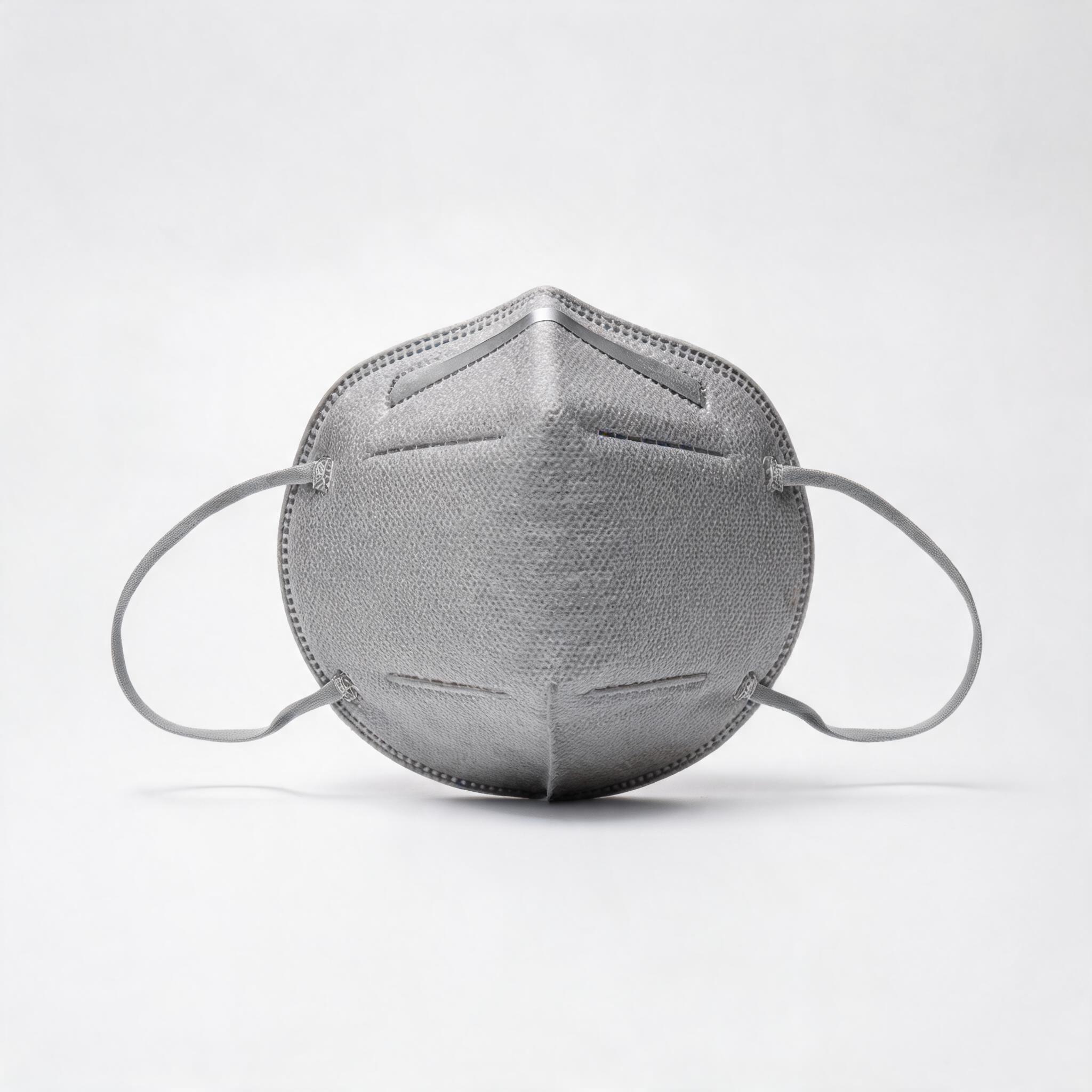
Un guide complet sur les essais de performance des respirateurs KN95 pour l'approvisionnement B2B, couvrant les indicateurs clés, l'interprétation des rapports d'essai, les méthodes de vérification, les signaux d'alerte et les questions à poser au fournisseur.
For B2B procurement teams, the test report is the single most important document in a KN95 respirator procurement file. It is the evidence that transforms a supplier's marketing claims into verifiable performance data. Yet many buyers accept test reports at face value without understanding what the numbers mean, how they were generated, or whether the testing laboratory is qualified to produce them. This guide provides a framework for reading, interpreting, and verifying KN95 performance test data.
The Core Performance Metrics in a KN95 Test Report
A complete KN95 test report should cover the following performance parameters, each tested under standardized conditions per the GB2626 standard:
1. Particle Filtration Efficiency (PFE)
The headline metric. NaCl aerosol with a count median diameter of 0.075 µm is drawn through the respirator filter at 85 L/min. The upstream and downstream particle concentrations are measured photometrically, and filtration efficiency is calculated as:
PFE (%) = (1 - downstream concentration / upstream concentration) × 100
For KN95, the minimum requirement is ≥95%. Quality respirators typically test at 97-99%, providing a safety margin against manufacturing variation and charge degradation over time.
2. Breathing Resistance
Two separate measurements:
- Inhalation resistance: Pressure drop during inhalation at 85 L/min. Maximum: ≤350 Pa.
- Exhalation resistance: Pressure drop during exhalation at 85 L/min. Maximum: ≤250 Pa.
These values directly affect wearer comfort. Understanding breathing resistance is critical for matching respirator comfort to application requirements.
3. Total Inward Leakage (TIL)
TIL is the percentage of contaminant that enters the respirator through all pathways-filter penetration plus seal leakage-during a standardized exercise protocol. For KN95, TIL must not exceed 8% for at least 46 of 50 exercises across the test panel.
TIL is the most realistic measure of actual wearer protection because it tests the respirator as worn, not just the filter material. A respirator with 99% PFE but 15% TIL provides less real-world protection than one with 96% PFE and 5% TIL.
4. Dead Space CO2
The CO2 concentration in inhaled air within the respirator's internal volume must not exceed 1%. Elevated CO2 levels cause headache, dizziness, and cognitive impairment during extended wear.
5. Visual and Dimensional Inspection
The test report should include visual inspection results for defects (tears, holes, incomplete sealing) and dimensional verification (overall size, nose clip position, strap attachment points).
How to Read a KN95 Test Report: A Section-by-Section Guide
When you receive a test report from a supplier, verify that it contains the following sections and information:
Section 1: Laboratory Identification
The report must identify the testing laboratory, including:
- Laboratory name and address
- Accreditation body (CNAS, ILAC-MRA, or equivalent)
- Accreditation certificate number
- Test report number and date
Verification step: Cross-reference the accreditation certificate number with the accreditation body's online database. Counterfeit test reports often use real laboratory names but fabricated certificate numbers.
Section 2: Product Identification
The report must clearly identify the product tested:
- Product name and model number
- Manufacturer name
- Standard referenced (GB2626-2006 or GB2626-2019)
- Protection class (KN95)
- Batch/lot number of the tested sample
Verify that the product name and model number match exactly what the supplier is offering. Some suppliers present test reports from a different product model than the one being sold.
Section 3: Test Methods and Conditions
The report should describe the test methods used, including:
- Aerosol type and particle size distribution
- Flow rate (should be 85 L/min for GB2626)
- Temperature and humidity conditions during testing
- Number of samples tested
- Equipment used (make and model)
Section 4: Test Results
Each test parameter should show:
- The measured value (not just pass/fail)
- The specification limit
- Pass/fail determination
- Individual results for each sample tested
| Parameter | Requirement | What to Look For |
|---|---|---|
| PFE | ≥95% | Actual value (97-99% indicates quality margin) |
| Inhalation resistance | ≤350 Pa | Actual value (lower = more comfortable) |
| Exhalation resistance | ≤250 Pa | Actual value (lower = more comfortable) |
| TIL | ≤8% for ≥46/50 exercises | Number of exercises passed; worst-case TIL value |
| CO2 dead space | ≤1% | Actual measured CO2 concentration |
Red Flags in Test Reports
The following issues should trigger immediate investigation:
- Missing parameters: A report that only shows PFE without TIL, breathing resistance, or CO2 is incomplete. A product cannot be certified to GB2626 with partial testing.
- Pass/fail only, no measured values: Reports that state "Pass" without showing the actual measured value provide no basis for quality comparison.
- Testing of filter material only: Some reports test the meltblown fabric alone, not the finished respirator. Filter material testing does not account for seal leakage or structural design.
- Report date older than 12 months: Test reports should be current. Manufacturing processes, material sources, and product designs change over time.
- Single sample tested: GB2626 requires testing of multiple samples. A report testing only one sample does not demonstrate batch consistency.
- Laboratory not accredited: The testing laboratory must be accredited by a recognized body. Unaccredited lab reports have no legal or regulatory standing.
Verification Beyond the Test Report
Even a legitimate test report only proves that one batch of samples met the standard at the time of testing. For ongoing procurement, additional verification is necessary:
Batch-Specific Testing
For critical applications (healthcare, government procurement), request batch-specific test reports for each shipment. This verifies that the production batch being shipped meets the same standards as the original test samples. The factory audit checklist should verify that the supplier has the capability to produce batch-specific reports.
Independent Verification Testing
For large orders, consider sending a random sample to an independent accredited laboratory for verification testing. This costs $500-2,000 but provides independent confirmation that the supplier's test report accurately represents the product.
Pre-Shipment Inspection
A third-party inspection agency can verify product dimensions, visual quality, packaging, and labeling before shipment. While not a substitute for performance testing, pre-shipment inspection catches issues like incorrect packaging, missing certification markings, or visible defects.
Understanding Test Report Limitations
Even a complete, verified test report has limitations that buyers should understand:
- Testing conditions ≠ real-world conditions: Laboratory tests use standardized conditions (85 L/min flow, 23°C, 50% RH). Real-world breathing rates, temperatures, and humidity levels differ and may affect performance.
- Sample ≠ full production: Test samples are selected to represent the production batch, but sampling cannot guarantee that every unit meets the standard.
- New product ≠ aged product: Tests are conducted on new products. Filtration efficiency may decrease over the shelf life as the electrostatic charge degrades.
- Standard test panel ≠ your workforce: TIL testing uses a standardized facial dimension panel. Your end-user population may have different facial characteristics that affect fit.
How Test Data Relates to International Standards
For buyers comparing KN95 against N95 or FFP2, understanding how test parameters map across standards is essential. The KN95 vs N95 comparison shows that while filtration thresholds are nearly equivalent, test methodologies differ:
- Flow rate: GB2626 tests at 85 L/min; EN 149 tests at 95 L/min. Higher flow rates are more demanding.
- Aerosol type: GB2626 tests only NaCl; EN 149 tests both NaCl and paraffin oil. Oil aerosol testing is more demanding for certain filter media.
- TIL vs Total Inward Leakage: Both standards include leakage testing, but the test protocols and pass criteria differ.
Supplier Questions for Test Report Verification
When evaluating KN95 suppliers, ask:
- Can you provide the complete test report (not just a summary or certificate)?
- Which accredited laboratory conducted the testing?
- What is the accreditation certificate number, and can I verify it online?
- How many samples were tested, and can you provide individual results for each?
- Was the testing conducted on the finished respirator or only on the filter material?
- Can you provide batch-specific test reports for each shipment?
- What is the date of the most recent test report, and how often do you retest?
- Have there been any significant changes to the product design or material suppliers since the last test?
Conclusion
A test report is only as valuable as the buyer's ability to read and verify it. By understanding each performance parameter, checking for completeness and red flags, verifying laboratory accreditation, and implementing ongoing verification through batch testing and independent sampling, B2B procurement teams can transform the test report from a compliance document into a powerful quality assurance tool. The test report is your evidence-don't accept it without examining it.