
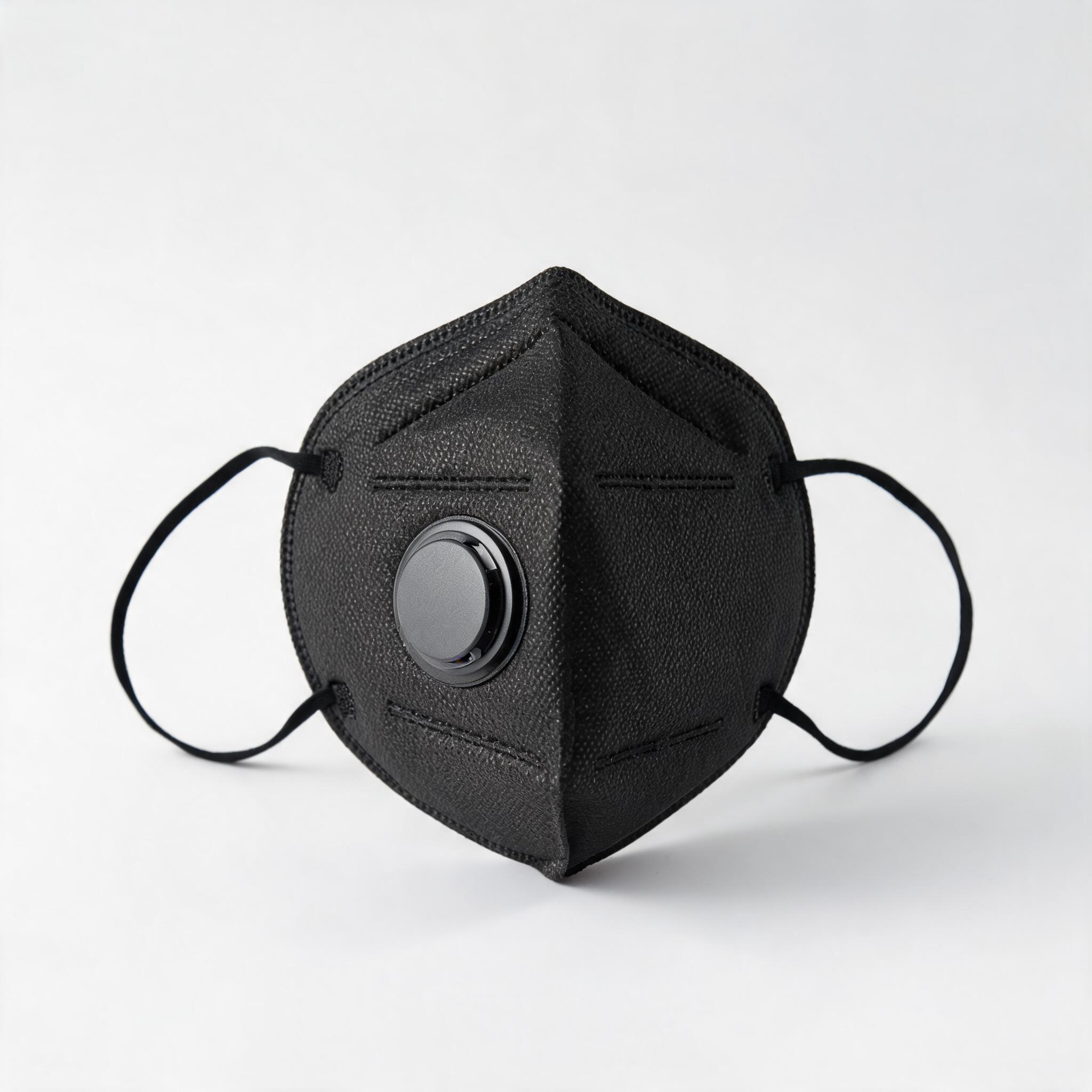
技术指南,涵盖KN95呼气阀机械原理、GB2626-2006阀门测试要求、性能优势、源头控制限制以及B2B买家的采购验证标准。
Technical Guide · Exhalation Valve
KN95 Respirator Valve Function and Performance: A B2B Procurement Guide
The exhalation valve on a valved KN95 respirator is a precision mechanical component that determines both wearer comfort and respiratory protection performance. For B2B buyers, understanding valve function, testing standards, and performance metrics is essential for selecting the right respirator for specific use cases and for evaluating supplier quality claims.
This guide covers valve mechanics, performance testing under GB2626-2006, application suitability, and procurement verification criteria for valved KN95 respirators.
Core principle: A properly functioning exhalation valve opens during exhalation to vent warm, moist air directly out of the mask, and seals completely during inhalation to force all incoming air through the filtration media. If the valve leaks during inhalation, the wearer receives unfiltered air. If it sticks during exhalation, breathing resistance increases and CO2 accumulates.
How the Exhalation Valve Works
The KN95 exhalation valve operates on a simple pressure-differential principle:
- During exhalation: The wearer exhales, creating positive pressure inside the mask. This pressure lifts the valve diaphragm (a thin rubber or silicone flap) off its seat, opening a direct pathway for exhaled air to exit without passing through the filter material.
- During inhalation: The wearer inhales, creating negative pressure inside the mask. The pressure differential pushes the diaphragm back onto its seat, sealing the valve. All incoming air is forced through the filtration layers.
- At rest (between breaths): The diaphragm rests on its seat, maintaining a sealed position.
This mechanical operation happens with each breath, typically 12–20 times per minute at rest, and up to 30–40 times per minute during exertion. The valve must reliably open and seal thousands of times per shift without degradation.
Valve Components and Materials
| Component | Common Materials | Function | Quality Indicator |
|---|---|---|---|
| Valve base/housing | Polypropylene, ABS plastic | Structural frame; holds diaphragm and creates seal seat | Rigid, no flash or molding defects |
| Diaphragm/flap | Natural rubber, silicone, EPDM | Flexible seal that opens and closes with pressure differential | Uniform thickness, no warping |
| Valve cover | Polypropylene (perforated) | Protects diaphragm from external contact; allows air passage | Securely attached; vent holes unobstructed |
| Seal seat | Integrated into valve base | Smooth surface against which diaphragm seats | No burrs, scratches, or contamination |
GB2626-2006 Valve Testing Requirements
The GB2626-2006 standard includes specific tests for valved respirators that do not apply to non-valved variants. B2B buyers should verify that these tests are included in the supplier's test report:
1. Valve Leak Rate Test
This is the most critical valve test. It measures the volume of air that leaks through the valve when it should be sealed (simulating inhalation). The standard specifies that valve leak rate must not exceed 30 mL/min at a negative pressure of 160 Pa.
A high leak rate means the valve is not sealing properly, allowing unfiltered air to bypass the filter material. This directly compromises the respirator's filtration efficiency. Request the actual measured leak rate value, not just a pass/fail confirmation.
2. Respirator Performance Testing - Resistance with Valve
For valved respirators, exhalation resistance is measured through the valve rather than through the filter material. A properly functioning valve should produce exhalation resistance significantly lower than the non-valved limit of 250 Pa-typically below 50 Pa. If the valved respirator's exhalation resistance is close to 250 Pa, the valve may be malfunctioning or poorly designed.
3. Valve Dead Space Test
The valve adds a small volume of dead space to the respirator (the internal volume of the valve housing). GB2626-2006 requires that this additional dead space not significantly increase CO2 rebreathing. The test measures CO2 concentration in inhaled air and compares valved vs. non-valved configurations.
Performance Benefits of Valved KN95 Respirators
Reduced Exhalation Resistance
The primary benefit of a valved respirator is dramatically reduced exhalation resistance. Without a valve, exhaled air must pass through all filtration layers, generating resistance of 150–250 Pa. With a functioning valve, this resistance drops to near-zero because the air exits through the open valve.
This reduction is particularly significant for:
- Workers performing physical labor (construction, manufacturing, mining)
- Healthcare workers in warm, humid environments
- Any application requiring 6+ hours of continuous respirator wear
Reduced Heat and Moisture Accumulation
Exhaled air is warm (approximately 37°C) and saturated with moisture. In a non-valved respirator, this warm, moist air passes through the filter material, where some moisture condenses. Over hours of wear, the accumulated moisture increases breathing resistance and creates a damp, uncomfortable environment inside the mask.
A valved respirator vents most of this warm, moist air directly out, keeping the mask interior cooler and drier. This directly improves breathability and comfort for extended-wear applications.
Reduced CO2 Dead Space Accumulation
By venting exhaled air directly rather than trapping it in the mask interior, the valve reduces the CO2 concentration in the dead space between breaths. This is covered in detail in our guide on CO2 dead space and breathing resistance, but the key point for procurement is: valved respirators maintain lower inhaled CO2 levels during extended wear compared to non-valved equivalents.
The Source Control Limitation: When Valved Respirators Are Inappropriate
Critical regulatory note: Valved respirators do NOT provide source control. The valve allows unfiltered exhaled air to escape, meaning a wearer who is infected (even asymptomatically) can transmit pathogens through the valve. During the COVID-19 pandemic, many jurisdictions prohibited valved respirators in healthcare and public settings.
For B2B procurement, this means valved respirators are suitable for:
- Industrial applications (construction, mining, manufacturing) where the goal is protecting the wearer from environmental hazards
- Healthcare settings where source control is not required (e.g., protecting a immunocompromised worker from environmental pathogens)
- Emergency response in non-clinical environments
Valved respirators are NOT suitable for:
- Surgical and procedural environments where sterile field protection is required
- Public health distribution where source control is a primary goal
- Settings where local regulations prohibit valved respirators (verify before procurement)
Valve Quality Assessment: What to Verify with Suppliers
1. Request the Full Valve Test Report
The test report should include:
- Valve leak rate (actual measured value, not just pass/fail)
- Exhalation resistance with valve
- Inhalation resistance (through the filter, as valve is sealed during inhalation)
- CO2 dead space measurement (if tested)
2. Visual Inspection of Valve Components
On received samples, disassemble the valve (if possible without destroying the mask) or examine through the valve cover:
- Diaphragm condition: Is the rubber/silicone flap clean, uniform in thickness, and properly seated?
- Seal seat: Is the surface smooth with no molding flash, scratches, or contamination that could prevent a seal?
- Valve cover security: Is the cover firmly attached? Can it be dislodged by normal handling?
- Vent hole clearance: Are the vent holes in the cover unobstructed?
3. Functional Testing (Simple On-Site Check)
Perform a simple valve function test:
- Hold the respirator with the valve facing you.
- Gently blow into the valve from the interior side (simulating exhalation). The diaphragm should lift and air should pass through freely.
- Place your hand over the exterior valve opening and inhale gently from the interior. The diaphragm should seal and you should feel resistance (no air passage through the valve).
- Repeat 10–15 times. The valve should function consistently each cycle.
If the valve sticks, leaks during the inhalation test, or fails to open during exhalation, the product has a valve quality defect.
4. Batch Consistency Check
Test valves from at least 10 masks across two different production lots. Consistent valve performance across lots is an indicator of manufacturing process control. Variable valve performance (some open easily, others stick) suggests inconsistent valve assembly or diaphragm material quality.
Comparing Valved vs Non-Valved KN95 for Procurement Decisions
| Factor | Valved KN95 | Non-Valved KN95 |
|---|---|---|
| Exhalation resistance | Near-zero (valve opens) | 150–250 Pa (through filter) |
| Heat/moisture buildup | Low (warm air vented) | High (air passes through filter) |
| CO2 dead space | Lower (CO2 vented with exhaled air) | Higher (CO2 trapped in dead space) |
| Source control | No (unfiltered exhaled air escapes) | Yes (exhaled air passes through filter) |
| Best use case | Industrial, extended wear, high-exertion | Healthcare, public settings, source control required |
| Unit cost | Slightly higher (valve component cost) | Lower |
| Failure modes | Valve leak (inhalation bypass), valve stick (resistance increase) | Filter resistance increase over time |
For many B2B procurement programs, a mixed portfolio is optimal: valved respirators for industrial and high-exertion applications, and non-valved respirators like the cup-style KN95 for healthcare and source-control environments.
Valve Maintenance and Storage Considerations
The valve diaphragm is sensitive to storage conditions. Natural rubber diaphragms can degrade in high-temperature or high-ozone environments. Silicone diaphragms are more resistant but still require proper storage. Key considerations:
- Store valved respirators within the same temperature range (0–40°C) specified for standard KN95 masks.
- Avoid storage near ozone-generating equipment (electric motors, copiers) which can degrade rubber diaphragms.
- Inspect valve function before deploying respirators that have been stored for more than 12 months.
- Do not attempt to clean or replace the valve diaphragm-the respirator is a single-use disposable.
For more on storage best practices, see our guide on KN95 storage conditions and shelf life management.
Conclusion: Valve Performance Is Measurable and Verifiable
The exhalation valve transforms the KN95 respirator from a filtration device into a comfort-engineered respiratory protection system. But valve performance is only as good as the manufacturing quality behind it. A valve that leaks during inhalation silently compromises protection; a valve that sticks during exhalation negates the comfort benefits.
By understanding valve mechanics, requesting complete test data, and conducting simple functional verification on received samples, B2B buyers can confidently select valved respirators that deliver both protection and comfort for their workforce's most demanding applications.
Need valved KN95 respirators for your workforce? We provide full valve test reports, leak rate data, and samples for functional testing. Contact our team to discuss your application requirements and receive a tailored product specification.